Prepare For A Power Outage: Smart Steps To Take Before The Lights Go Out
Power outages can happen with little warning. Hurricanes, winter storms, wildfires, severe thunderstorms, and even equipment failures can leave entire communities without electricity for hours or days. When the power suddenly goes out, everyday tasks like cooking, charging phones, accessing information, and keeping food safe become much more difficult. The good news is that you can prepare for a power outage and don’t need expensive survival gear or years of experience to be ready.
A few simple preparations can help you protect your family, reduce anxiety, and feel more confident when unexpected situations occur.
Learning how to prepare for a power outage is one of the most practical preparedness skills any household can develop. Small actions taken today can provide peace of mind for years to come.
⭐ Quick Answer: Prepare For A Power Outage
To prepare for a power outage, keep emergency supplies on hand, store enough food and water, maintain backup lighting, charge essential devices, and create a family emergency plan. Preparing before an outage helps reduce stress and improve safety during storms, disasters, and utility failures.
Key Takeaways
Most likely cause: Most power outages are caused by severe weather, damaged utility lines, equipment failures, or other unexpected disruptions to the electrical grid.
Usually serious? Not usually. Most outages are temporary, but they can become more challenging if your household isn’t prepared with essential supplies and a plan.
First thing to check: Make sure you have enough water, non-perishable food, flashlights, batteries, charged devices, medications, and other emergency essentials to support your household for at least 72 hours.
Best solution: Prepare in advance by building an emergency kit, storing food and water, keeping backup lighting and power sources available, and creating a family emergency plan that everyone understands.
⚡ Why It Is Important To Prepare For A Power Outage
Electricity powers nearly every aspect of modern life. When it disappears, daily routines can quickly become stressful.
Common causes of power outages in the United States include:
- Hurricanes
- Tornadoes
- Winter Storms
- Wildfires
- Severe Thunderstorms
- Flooding
- Extreme Heat Events
- Utility Equipment Failures
- Supply Chain Disruptions
Recent weather events have shown that outages can affect millions of Americans at once. Families that prepare for a power outage ahead of time often experience less panic and recover more easily.
Benefits Of Preparing Early
- Greater Peace Of Mind
- Better Family Safety
- Reduced Emergency Stress
- Increased Self-Reliance
- Less Last-Minute Shopping
- Improved Confidence During Uncertain Situations
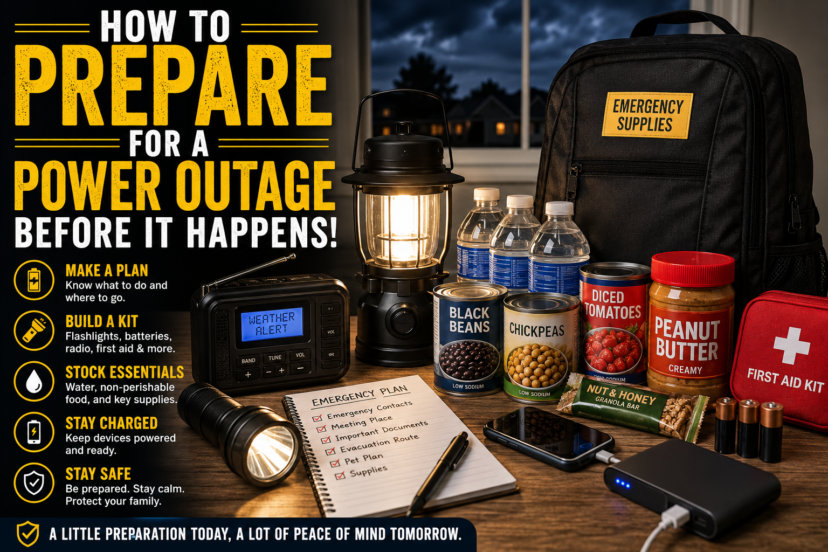
🔦 Essential Supplies To Prepare For A Power Outage
Having a few basic emergency items can make a major difference.
Flashlights And Batteries
Flashlights are safer than candles and provide reliable lighting.
Consider keeping:
- LED Flashlights
- Extra Batteries
- Battery Lanterns
- Headlamps
Store them in easy-to-find locations throughout your home.
Portable Phone Chargers
Communication becomes extremely important during emergencies.
Keep:
- Fully Charged Power Banks
- Vehicle Chargers
- Charging Cables For Every Device
Battery-Powered Or Hand-Crank Radio
Emergency alerts may still be available even when internet service is disrupted.
First Aid Kit
A basic first aid kit should include:
- Bandages
- Antiseptic Wipes
- Gloves
- Pain Relievers
- Medical Supplies Specific To Your Family
🥫 Stock Food And Water Before An Outage
Food and water are among the most important preparedness priorities.
Emergency Water Storage
Experts often recommend storing enough water for several days.
Water can be used for:
- Drinking
- Basic Hygiene
- Food Preparation
Non-Perishable Foods
Good options include:
- Canned Soup
- Peanut Butter
- Rice
- Pasta
- Granola Bars
- Oatmeal
- Canned Fruits
- Canned Vegetables
- Shelf-Stable Milk
A rotating pantry helps prevent waste and saves money.
Manual Can Opener
Many people forget this simple but essential tool.
📱 Keep Devices Charged And Ready
When severe weather is forecast, prepare for a power outage by charging important electronics before conditions worsen.
Charge:
- Smartphones
- Tablets
- Power Banks
- Medical Devices
- Laptop Computers
Download important information in advance because the internet service may become unavailable.
🧊 Protect Refrigerated Food During A Power Outage
Food safety becomes important when refrigeration stops working.
Helpful tips include:
Keep Refrigerator Doors Closed
Opening doors frequently allows cold air to escape.
Freeze Water Bottles In Advance
Frozen bottles can help maintain lower temperatures.
Use Coolers When Necessary
Ice chests can preserve food for longer periods.
Monitor Food Safety
Discard foods that may have become unsafe according to official food safety guidance.
🚗 Prepare Your Vehicle In Advance
Vehicles can become valuable resources during emergencies.
Keep:
- Fuel Tank Above Half Full
- Emergency Blanket
- Phone Charger
- Flashlight
- Water
- Snacks
For evacuation situations caused by hurricanes or wildfires, maintaining fuel levels can prevent unnecessary stress.
🌪️ How To Prepare For A Power Outage During Different U.S. Emergencies
Hurricanes
States such as Florida, Texas, Louisiana, and the Carolinas frequently experience prolonged outages.
Focus on:
- Water Storage
- Non-Perishable Food
- Backup Charging Options
Winter Storms
Northern states may face freezing temperatures and dangerous travel conditions.
Helpful items include:
- Warm Blankets
- Hand Warmers
- Shelf-Stable Foods
- Battery Lanterns
Wildfires
Western states may experience planned utility shutoffs to reduce fire risks.
Prepare:
- Evacuation Bags
- Portable Chargers
- Important Documents
- Emergency Supplies
Severe Thunderstorms
Thunderstorms can cause sudden outages even outside major disaster zones.
🏠 Create A Family Emergency Plan
Preparation is easier when everyone knows what to do.
Discuss:
Communication Plans
Choose an out-of-town contact person if local communication systems become overwhelmed.
Emergency Meeting Locations
Identify:
- Home Meeting Spot
- Neighborhood Backup Location
- Alternate Safe Areas
Special Needs Planning
Consider:
- Children
- Older Adults
- Pets
- Medical Conditions
- Prescription Medications
A written plan helps families stay calm during stressful situations.
🔋 Backup Power Options To Consider
Not every household needs a whole-home generator.
Affordable options include:
Portable Power Stations
These battery systems can charge:
- Phones
- Small Electronics
- Medical Devices
Solar Chargers
Portable solar panels may help during extended outages.
Portable Generators
Generators should always be used outdoors and according to manufacturer instructions.
Whole-Home Generators
These systems offer automatic backup power but require professional installation.
💰 Prepare For A Power Outage Without Spending A Fortune
Preparedness does not need to strain your budget.
Simple ways to build readiness include:
- Buy Supplies Gradually
- Shop Seasonal Sales
- Rotate Pantry Items
- Reuse Existing Containers
- Add A Few Items Each Grocery Trip
Preparedness is a process, not a one-time purchase.
🧰 Additional Urban Survival Strategies
Power outages often affect more than electricity.
Consider keeping:
- Cash In Small Bills
- Printed Emergency Contacts
- Paper Maps
- Extra Prescription Medications
- Hygiene Supplies
- Spare Batteries
These simple items improve overall resilience.
👨🔧 When To Consult A Professional
Seek professional guidance when dealing with utility damage, electrical problems, generator installation, contaminated water concerns, severe weather threats, or health conditions requiring specialized equipment.
Always follow recommendations from:
- Local Emergency Management Officials
- Utility Companies
- Healthcare Providers
- Licensed Electricians
- Fire Departments
- FEMA Alerts
- Weather Authorities
Never attempt electrical repairs unless properly trained and qualified.
❓ FAQs: Prepare For A Power Outage
How do I prepare for a power outage at home?
Store food and water, keep flashlights available, charge devices, and create an emergency plan for your household.
How much water should I keep for a power outage?
Many families keep several days’ worth of water and gradually build larger reserves when possible.
What foods are best during a power outage?
Non-perishable foods such as canned goods, peanut butter, oatmeal, granola bars, and shelf-stable milk are excellent choices.
Should I unplug appliances during a power outage?
Many experts recommend unplugging sensitive electronics to help protect them from power surges when electricity returns.
Is a generator necessary?
Not necessarily. Many households can improve preparedness with flashlights, power banks, and emergency supplies.
How long can food stay safe in a refrigerator without power?
Food safety depends on temperature and storage conditions. Follow official food safety guidance before consuming questionable foods.
What is the most important thing to do before a storm?
Preparing before the event arrives is usually the best strategy. Waiting until the last minute often creates unnecessary stress.
📌 Final Thoughts
Learning how to prepare for a power outage is one of the easiest ways to become more self-reliant and protect the people who matter most. You don’t need to become a survival expert or spend thousands of dollars to improve your family’s readiness.
Start small. Add a flashlight, build a simple pantry, charge your devices, and create a basic emergency plan. Over time, these small actions can provide tremendous peace of mind and help your family face future challenges with confidence.
Preparedness is not about fear—it’s about building security, resilience, and peace of mind one step at a time.
Disclaimer
This article is for general educational and preparedness purposes only. Emergency needs, regional regulations, weather risks, and household circumstances may vary. Always follow local laws, official guidance, manufacturer instructions, and recommendations from qualified professionals when making preparedness decisions.
 Explore more: