Refrigerator During Power Outage: How To Keep Food Cold And Safe Longer
Keep Your Food Safe During A Power Outage
A power outage can turn an ordinary refrigerator into a food-safety problem surprisingly quickly. Whether the cause is a hurricane, winter storm, wildfire, overloaded power grid, or damaged neighborhood power line, knowing how to manage your refrigerator during power outage conditions can help you protect your food, reduce waste, and avoid making a stressful situation even harder.
The good news is that you do not need an expensive backup power system or a basement full of emergency equipment.
A few simple habits—keeping the doors closed, knowing how long food can remain safely chilled, having ice or frozen water available, and owning an inexpensive appliance thermometer—can make a major difference.
For families building an emergency plan, this is exactly the kind of practical preparedness skill worth learning before the lights go out. You can protect your household and become more self-reliant without turning emergency preparedness into an expensive hobby.
How Long Will A Refrigerator During Power Outage Stay Cold?
An unopened refrigerator during power outage conditions can generally keep food cold for about 4 hours, according to U.S. food-safety guidance. A full freezer can maintain a safe temperature for approximately 48 hours, while a half-full freezer may stay cold for about 24 hours, provided the door remains closed.
Keep refrigerator and freezer doors shut as much as possible. If an outage continues, use coolers and ice to keep perishable foods at 40°F or below.
Key Takeaways
Most likely cause: Storms, grid failures, equipment problems, accidents, or local utility disruptions can leave a refrigerator during a power outage without cooling.
Usually serious? A short outage usually is not a major problem if refrigerator doors remain closed, but longer outages can allow perishable food to reach unsafe temperatures.
First thing to check: Note when the electricity went out, keep the doors closed, and check your refrigerator or freezer thermometer when appropriate.
Best solution: Combine good food-safety habits with appliance thermometers, frozen water, coolers, ice, and—when appropriate—a safely operated backup power source.
🧊 Why Keeping Food Cold During A Power Outage Matters
Refrigerators slow bacterial growth by maintaining low temperatures. Once the appliance loses electricity, however, the temperature gradually begins rising.
The key food-safety number to remember is 40°F.
Perishable foods such as meat, poultry, fish, milk, eggs, leftovers, and many prepared foods should generally be kept at 40°F or below. When these foods remain above safe refrigeration temperatures for too long, harmful bacteria can multiply.
That is why managing your refrigerator during power outage conditions is not simply about preventing wasted groceries. It can become a health and safety issue.
The first rule is also the easiest:
Do not keep opening the refrigerator to check the food.
Every time you open the door, cold air escapes and warmer room air enters.
Keep A Simple Outage Timeline
When the electricity fails, note the approximate time.
You can write it on a piece of paper or save it on your phone. This gives you a reference point if the outage lasts several hours.
Knowing whether power has been off for 45 minutes or five hours is much more useful than guessing later.
🚪 Keep Refrigerator And Freezer Doors Closed
During a summer blackout, the temptation to repeatedly inspect your food can be strong.
Resist it. An unopened refrigerator during power outage conditions can retain its cold temperature much longer than one that is opened every 20 minutes.
Tell everyone in the household that the refrigerator and freezer are temporarily off-limits unless something genuinely needs to be removed.
If you need several items, plan first and retrieve them all during one quick opening.
This simple habit costs nothing and may buy valuable time.
Know What You Need Before Opening The Door
If the outage occurs around mealtime, decide exactly what you want before opening the refrigerator.
For example:
- Grab Everything For Lunch At Once
- Remove Drinks From A Separate Cooler Instead
- Avoid Browsing For Snacks
- Put Frequently Needed Items In A Cooler If The Outage Will Continue
Children should also understand why the refrigerator needs to remain closed.
Preparedness works better when the entire household knows the plan.
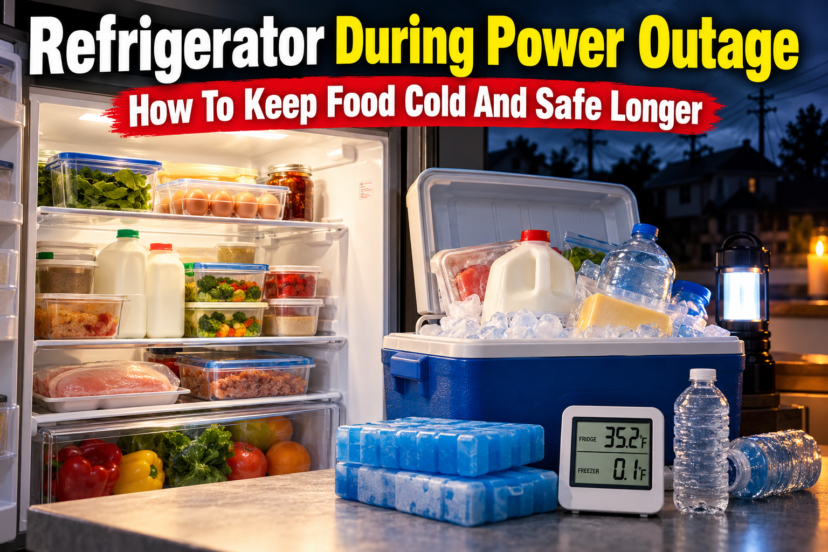
🌡️ Put Thermometers In Your Refrigerator And Freezer
One of the cheapest emergency preparedness upgrades is an appliance thermometer.
Ideally, keep one in your refrigerator and another in your freezer.
A thermometer gives you actual temperature information rather than forcing you to judge food safety by whether something still “feels cold.”
Your refrigerator should normally operate at 40°F or below, while a freezer should generally be kept at 0°F or below.
After an outage, temperature information can help you make better decisions about which foods may still be safe.
Never rely solely on smell or appearance. Food contaminated with harmful bacteria may look and smell normal.
And never taste questionable food to determine whether it is safe.
❄️ Freeze Water Before The Next Power Outage
Preparedness does not have to be complicated.
One easy strategy is keeping several containers of frozen water in your freezer.
Leave some expansion space inside the containers because water expands as it freezes.
During a blackout, these frozen containers act as additional thermal mass. They can also be moved into a cooler if your refrigerator during power outage conditions begin lasting beyond the initial safe window.
As a bonus, once the ice melts, the water may provide an additional emergency water supply if it was stored in a clean, food-safe container.
A Fuller Freezer Can Hold Cold Longer
A full freezer generally retains cold better than a partially empty freezer.
If you normally have substantial empty space, frozen water containers can help fill some of it.
You do not need to pack every inch. The goal is simply to maintain useful frozen thermal mass that helps stabilize temperatures when electricity disappears.
🧰 Have A Cooler And Ice Plan Ready
For an outage lasting more than a few hours, a cooler can become one of your most useful emergency tools.
Before hurricane season, severe winter weather, or another forecast event, consider having frozen gel packs or extra ice available.
If the refrigerator during power outage situation continues, transfer priority perishables into a cooler with sufficient ice or frozen packs to maintain 40°F or below.
Prioritize expensive or highly perishable foods, including:
- Meat And Poultry
- Seafood
- Milk And Dairy Products
- Eggs
- Leftovers
- Prepared Meals
- Medications Requiring Refrigeration
Keep drinks in a separate cooler when possible. People tend to open beverage coolers frequently, and you do not want every drink break warming your food.
🥫 Build Meals Around Shelf-Stable Foods
A resilient household should be able to prepare at least a few meals without opening the refrigerator.
You do not need specialty “survival food.”
Ordinary supermarket foods can work well.
Consider keeping a rotating supply of:
- Canned Beans
- Canned Chicken Or Tuna
- Peanut Butter
- Crackers
- Shelf-Stable Milk
- Canned Fruit
- Dried Fruit
- Oatmeal
- Ready-To-Eat Soups
- Protein Or Granola Bars
Choose foods your family actually eats and rotate them through your normal meals.
During the first hours of an outage, eating foods that do not require refrigeration helps keep your refrigerator during power outage doors closed.
It also reduces dependence on cooking appliances that may not be available.
🔌 Consider Backup Power But Use It Safely
A portable power station or properly sized backup power system may help run a refrigerator during an extended outage.
Before relying on one, check your refrigerator’s power requirements and the backup system’s rated output and capacity. Refrigerators can draw extra power when the compressor starts, so wattage alone does not tell the entire story.
Traditional portable generators can also provide emergency electricity, but they introduce a serious carbon monoxide hazard.
Never operate a fuel-burning generator inside a home, garage, basement, shed, or other enclosed or partially enclosed space.
Follow the manufacturer’s instructions and official safety guidance regarding placement and operation.
Also use proper electrical connections. Never improvise dangerous household wiring or attempt to power home circuits through an inappropriate outlet.
If you want a generator connected to household electrical circuits, consult a licensed electrician about a properly installed transfer switch or other approved setup.
🌀 Prepare Differently For Different U.S. Emergencies
The best plan depends partly on where you live.
Along the Gulf Coast and Atlantic Coast, hurricanes can cause widespread outages lasting days. Families may benefit from having extra coolers, frozen water, shelf-stable meals, and a longer-term backup power plan.
In northern states, winter storms can knock out electricity while roads are difficult or dangerous to travel.
Western communities affected by wildfires or public-safety power shutoffs may experience outages with relatively little warning.
Urban residents face another challenge: limited storage space.
Fortunately, apartment preparedness does not require a garage full of equipment. A folding cooler, appliance thermometers, several frozen water bottles, shelf-stable food, flashlights, and charged power banks can fit into a surprisingly small space.
The objective is not to prepare for every imaginable disaster.
It is to handle the most likely disruptions more calmly and safely.
🚫 What Food Should You Throw Away After A Power Outage?
Once electricity returns, do not automatically assume everything in the refrigerator is safe.
For refrigerated perishable foods, the combination of temperature and time matters.
U.S. food-safety guidance generally recommends discarding refrigerated perishable foods that have been above 40°F for 4 hours or more.
This can include meat, poultry, seafood, milk, eggs, leftovers, and certain soft cheeses.
Frozen food requires a different assessment. Food that still contains ice crystals or has remained at 40°F or below may often be safely refrozen, although its quality can decline.
When in doubt, follow current USDA and FDA food-safety recommendations rather than guessing.
Losing groceries is frustrating. Foodborne illness is worse.
🛠️ When To Consult A Professional Or Follow Official Guidance
Some emergencies go beyond normal household preparedness.
Contact your electric utility or a licensed electrician if you see damaged electrical equipment, sparking, burning smells, downed lines, or repeated unexplained electrical problems. Never approach a fallen power line.
Follow instructions from local emergency management agencies during hurricanes, wildfires, floods, evacuation orders, extended grid failures, and other severe events.
If someone depends on refrigerated medication or electrically powered medical equipment, develop an outage plan with the appropriate medical professional before an emergency occurs.
For questions about questionable food after a prolonged outage, follow current USDA, FDA, CDC, or local public-health guidance.
❓ Frequently Asked Questions
How Long Is Food Good In A Refrigerator During A Power Outage?
An unopened refrigerator generally keeps food cold for about four hours. After that, temperature becomes increasingly important. Perishable foods that have been above 40°F for four hours or longer should generally be discarded.
How Long Will A Freezer Stay Cold Without Power?
A full freezer may maintain a safe temperature for approximately 48 hours if unopened. A half-full freezer may maintain temperature for about 24 hours. Opening the freezer reduces this time.
Should I Unplug My Refrigerator During A Power Outage?
You generally do not need to unplug a refrigerator simply because electricity has failed. However, electrical conditions and manufacturer recommendations can vary. If your utility or emergency officials issue specific instructions, follow them.
Can I Put Ice In My Refrigerator During A Power Outage?
Yes. Ice, frozen gel packs, or frozen water containers can help maintain cold temperatures. For longer outages, an insulated cooler with sufficient ice may be a better place for priority perishables.
Can I Eat Food From The Refrigerator After A 6-Hour Power Outage?
Possibly, but do not decide based only on the outage duration. An unopened refrigerator normally keeps food cold for around four hours. If perishable food has been above 40°F for four hours or more, it should generally be discarded. Use a thermometer and current official food-safety guidance.
How Can I Keep My Refrigerator Cold Without A Generator?
Keep the doors closed, use appliance thermometers, add frozen water containers or cold packs, and transfer important perishables to an insulated cooler with ice when necessary. A generator is useful in some situations, but it is not the only preparedness option.
What Should I Prepare Before A Power Outage?
Keep appliance thermometers, coolers, frozen water or cold packs, shelf-stable foods, flashlights, batteries, and charged power banks available. Households facing frequent or prolonged outages may also want to consider an appropriately sized backup power system.
🏠 Small Preparedness Steps Build Real Resilience
Knowing how to protect your refrigerator during power outage conditions is a small skill, but that is exactly how practical self-reliance grows.
You do not need to buy everything at once.
Start with an appliance thermometer. Freeze a few containers of water. Make sure you own a usable cooler. Add several shelf-stable meals to your pantry. Talk with your family about keeping refrigerator doors closed when the electricity fails.
Then build from there.
When a hurricane, winter storm, wildfire, or ordinary neighborhood blackout eventually knocks out the power, those small preparations can mean less wasted food, fewer rushed decisions, and greater peace of mind.
Preparedness is not about expecting disaster around every corner. It is about knowing that when normal systems temporarily stop working, you have a practical plan to protect yourself and the people who depend on you.
Disclaimer: This article is for general educational and preparedness purposes only. Emergency needs, risks, regional regulations, and individual circumstances vary. Always follow local laws, official emergency and public-health guidance, food-safety recommendations, utility instructions, and equipment manufacturer directions when applicable.
Explore more:
- Solar Charger For Emergencies: How To Keep
- Best Portable Power Station For Home Emergencies
- Best Generator Safety Tips: 12 Rules