Food Safety Power Outage: How Long Will Food Last In A Refrigerator Without Power?
Eat Safe Food After A Power Outage
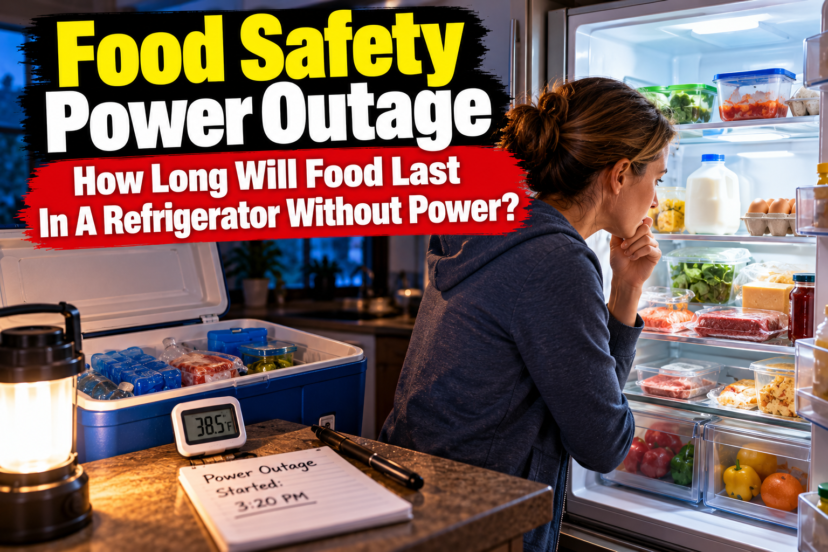
An unopened refrigerator will keep food safe for up to 4 hours during a power outage. The power has been out for several hours, and now you are looking at the refrigerator, wondering whether tonight’s chicken, milk, eggs, and leftovers are still safe. During a food safety power outage situation, knowing a few simple temperature and time rules can help you avoid both unnecessary food waste and foodborne illness.
The most important thing you can do initially is surprisingly simple: keep the refrigerator and freezer doors closed.
An unopened refrigerator generally keeps food cold for about four hours. A full freezer can maintain a safe temperature for approximately 48 hours, while a half-full freezer may stay cold for about 24 hours if you leave the door shut.
That gives most families time to make calm decisions.
You do not need to become a food-safety expert. With an appliance thermometer, a cooler, some ice, and a basic outage plan, you can handle this common emergency with much greater confidence.
🧊 Quick Answer: Food Safety Power Outage Rules
During a food safety power outage, an unopened refrigerator will generally keep food safely cold for about 4 hours. A full unopened freezer can maintain temperature for approximately 48 hours, while a half-full freezer may last around 24 hours. Refrigerated perishable food that has been above 40°F for 4 hours or more should generally be discarded. Keep doors closed, use appliance thermometers when available, and never taste questionable food to determine whether it is safe.
Key Takeaways
Most likely cause: Hurricanes, thunderstorms, winter storms, wildfires, equipment failures, and other utility disruptions can stop refrigerators and freezers from maintaining safe temperatures.
Usually serious? A short outage is usually manageable, but a longer food-safety power outage can allow perishable foods to reach temperatures where harmful bacteria can multiply.
First thing to check: Note approximately when the electricity failed and keep your refrigerator and freezer doors closed.
Best solution: Use time and temperature—not smell or appearance—to make food-safety decisions, and move priority foods to an ice-filled cooler if the outage continues.
⏰ The 4-Hour Refrigerator Rule
Four hours is the number every household should remember.
According to U.S. food-safety guidance, your refrigerator will generally keep food cold for approximately four hours without power if the door remains closed.
This does not mean every item magically becomes unsafe at exactly four hours.
Temperature matters.
Your refrigerator should normally be kept at 40°F or below. During an outage, the temperature gradually rises.
Once perishable food has been held above 40°F for too long, harmful bacteria can multiply to unsafe levels.
That is why one of the smartest and cheapest preparedness tools is an appliance thermometer.
Instead of wondering whether your refrigerator became too warm, you have actual temperature information.
When the power fails, write down the time. Then leave the door alone.
Repeatedly opening it to “check the food” only releases cold air.
🥛 Which Refrigerated Foods Need The Most Attention?
Not everything in your refrigerator carries the same risk.
Highly perishable foods deserve the most attention during a food safety power outage.
These commonly include:
- Raw Or Cooked Meat
- Poultry
- Fish And Seafood
- Milk
- Eggs
- Leftovers
- Soft Cheeses
- Cooked Pasta And Rice
- Cut Fruits And Vegetables
- Many Refrigerated Prepared Foods
If these foods have been above 40°F for four hours or more, standard food-safety guidance generally recommends discarding them.
Some other refrigerated foods may be more tolerant of temperature changes.
Certain condiments, whole uncut fruits and vegetables, hard cheeses, butter, and other foods may have different recommendations.
When deciding whether a particular item is safe, consult current USDA or FDA food-safety guidance rather than applying one rule to everything in the refrigerator.
👃 Do Not Trust The Smell Test
One of the biggest food-safety mistakes is opening a container, smelling it, and deciding:
It smells fine.
Unfortunately, dangerous bacteria do not always produce an obvious odor, strange appearance, or unpleasant taste.
Food can look completely normal and still be unsafe.
Never taste questionable food to see whether it has spoiled.
During a food safety power outage, your decision should be based primarily on reliable information about temperature, time, and the type of food.
If you cannot determine how long a high-risk perishable food has been above a safe temperature, the safest approach may be to discard it.
Throwing away groceries is frustrating.
Foodborne illness is worse.
❄️ How Long Does A Freezer Stay Cold Without Power?
Freezers give you more time than refrigerators.
A full freezer can generally maintain its temperature for approximately 48 hours if the door stays closed.
A half-full freezer may maintain temperature for approximately 24 hours.
Why the difference?
Frozen food itself acts as thermal mass. A freezer packed with frozen items holds cold better than one containing a few scattered packages surrounded by air.
You can use this principle as part of your emergency preparation.
If your freezer normally has a lot of empty space, consider freezing containers of water ahead of time. Leave room for the water to expand as it freezes.
The extra ice helps fill unused space and may help the freezer retain cold longer.
It can also be moved into a cooler during an extended outage.
🧊 Can Frozen Food Be Refrozen After A Power Outage?
Possibly. Frozen food that still contains ice crystals or has remained at 40°F or below can generally be safely refrozen or cooked, according to USDA guidance.
However, quality may decline.
Ice cream, meat, vegetables, prepared meals, and other foods may develop changes in texture or flavor after thawing and refreezing.
Food safety and food quality are not always the same thing.
A product can be safe but less enjoyable.
During a food safety power outage, do not assume that every partially thawed package must automatically be thrown away. Check for ice crystals and use temperature information when available.
When in doubt about a particular food, follow current official guidance.
🚪 Why Keeping The Doors Closed Matters So Much
During a blackout, everyone suddenly seems to want something from the refrigerator.
Try to prevent this. Every opening allows cold air to escape and warmer room air to enter.
If you need something important, decide what you want first and retrieve everything during one quick opening.
Better still, keep drinks and shelf-stable snacks outside the refrigerator during an outage.
Tell children why the doors need to remain closed.
A simple household rule can be: No opening the refrigerator unless we really need to.
This costs nothing, requires no equipment, and can significantly improve your ability to protect food during the early stages of an outage.
🧰 When Should You Move Food Into A Cooler?
If an outage appears likely to continue beyond four hours, an insulated cooler can help protect priority foods.
Use ice, frozen gel packs, or frozen water containers to maintain food at 40°F or below.
Do not wait until every refrigerator item has already become warm before thinking about your cooler plan.
Prioritize the most valuable and perishable items.
For example:
- Meat, Poultry And Seafood
- Milk And Dairy Foods
- Eggs
- Leftovers
- Important Temperature-Sensitive Items
If possible, use a thermometer inside the cooler.
Keep beverages in a separate cooler because people will probably open it much more often.
Before hurricane or severe-storm season, make sure you actually own a cooler large enough for your household’s priority foods.
🌡️ Appliance Thermometers Make Decisions Easier
An appliance thermometer may cost only a few dollars, but it can eliminate much of the guesswork during a food safety power outage.
Keep one permanently in your refrigerator and another in your freezer.
Under normal conditions, your refrigerator should remain at 40°F or below, while the freezer should generally be kept at 0°F or below.
If the power fails, the thermometer gives you useful information about how conditions changed.
This is especially important when an outage happens overnight.
You may wake up without knowing exactly when the electricity stopped.
A thermometer cannot answer every food-safety question, but it gives you more evidence than touching a package and deciding it “still feels pretty cold.”
🌀 Prepare Before Hurricane Or Winter-Storm Season
The easiest food to protect during a blackout is food you planned for in advance.
Before severe weather:
- Set Refrigerator And Freezer To Proper Temperatures
- Check Appliance Thermometers
- Freeze Water Containers
- Charge Backup Power Equipment
- Make Sure Coolers Are Accessible
- Obtain Ice If A Serious Storm Is Approaching
- Keep Shelf-Stable Meals Available
If you live in hurricane-prone areas of Florida, Texas, Louisiana, or the Southeast, outages may sometimes continue for days.
Northern households dealing with ice storms and blizzards face a different problem: stores may be difficult to reach even when outdoor temperatures are cold.
Western communities may experience wildfire-related outages or utility shutoffs.
Your food plan should reflect the emergencies most likely where you live.
🔌 Should You Use A Generator For The Refrigerator?
A properly sized generator can help keep a refrigerator or freezer operating during a longer outage.
But generator safety is essential.
Never operate a fuel-powered generator inside a house, basement, garage, shed, or other enclosed or partially enclosed location.
Carbon monoxide from generator exhaust can be deadly.
Generators also should not be connected to household electrical systems through improvised methods.
If you want to power home circuits from a generator, consult a qualified electrician about an approved connection system and follow applicable codes and manufacturer instructions.
For shorter outages, keeping refrigerator doors closed and using coolers may be simpler than immediately starting a generator.
⚠️ When To Consult A Professional Or Follow Official Guidance
Contact local public-health authorities or consult current USDA or FDA guidance if you are uncertain about food safety after a prolonged outage, especially following flooding, contamination, or a major disaster.
Floodwater can introduce additional contamination risks that are separate from refrigeration temperature.
If your refrigerator repeatedly loses cooling despite having electricity, contact a qualified appliance professional.
Contact your utility or a licensed electrician for electrical damage, sparking, burning odors, flooding around electrical equipment, or other utility hazards.
If someone has symptoms of possible foodborne illness—especially severe symptoms or symptoms affecting an infant, older adult, pregnant person, or someone with a weakened immune system—seek appropriate medical advice.
❓ Frequently Asked Questions
How Long Is Food Safe In A Refrigerator Without Power?
An unopened refrigerator generally keeps food cold for about four hours. After that, use temperature and food-specific guidance to decide what should be kept or discarded.
What Foods Should Be Thrown Away After A Power Outage?
Perishable foods such as meat, poultry, seafood, milk, eggs, leftovers, and certain prepared foods should generally be discarded if they have been above 40°F for four hours or more.
How Long Will A Freezer Stay Frozen Without Electricity?
A full unopened freezer may maintain its temperature for approximately 48 hours. A half-full freezer may maintain temperature for around 24 hours.
Can You Eat Food From The Refrigerator After A 6-Hour Power Outage?
It depends on the food and its temperature. If refrigerated perishable food has been above 40°F for four hours or longer, it should generally be discarded. Do not decide based solely on smell or appearance.
Can You Refreeze Food After A Power Outage?
Food that still contains ice crystals or has remained at 40°F or below can generally be safely refrozen or cooked, although quality may decline.
How Can I Keep Food Cold During A Long Power Outage?
Keep refrigerator and freezer doors closed initially. For longer outages, use insulated coolers with sufficient ice, frozen gel packs, or frozen water containers to keep priority perishables at 40°F or below.
How Can You Tell If Food Is Bad After A Power Outage?
Do not rely solely on smell, appearance, or taste. Use temperature, time, the type of food, and official food-safety guidance. Never taste questionable food to determine whether it is safe.
🏡 Four Numbers Can Make You Much Better Prepared
You do not need to memorize an entire food-safety manual to handle a food safety power outage with greater confidence.
Remember four numbers: 40°F — 4 Hours — 48 Hours — 24 Hours.
Keep refrigerated food at 40°F or below. An unopened refrigerator generally gives you around four hours. A full freezer may give you around 48 hours, while a half-full freezer may give you around 24.
Then add a few simple preparedness habits.
Keep appliance thermometers inside your refrigerator and freezer. Freeze a few containers of water. Own a good cooler. Keep some shelf-stable meals available. And when the lights go out, keep those refrigerator doors closed.
None of these steps requires expensive survival equipment.
They simply give you more information, more options, and more time to make good decisions.
That is what practical preparedness should do: reduce uncertainty today so you can protect your family with greater confidence tomorrow.
Disclaimer: This article is for general educational and preparedness purposes only. Food-safety conditions, individual health needs, emergencies, regional regulations, and official recommendations can vary. Always follow current USDA, FDA, CDC, local public-health, utility, and emergency-management guidance as applicable, as well as manufacturer instructions. Seek appropriate professional or medical guidance when safety or health concerns arise.
Explore more:
- First Hour Blackout Survival: What To Do
- Charge Phone Without Power: 7 Reliable Ways
- Most Common Generator Mistakes: 9 Dangerous Errors