Stored Water Shelf Life: How Long Does Emergency Water Really Last?
When you pull an old container of emergency water from the back of a closet, one question immediately comes to mind: Is this still safe to drink? Understanding stored water shelf life is an important part of emergency preparedness because simply putting water away isn’t enough. How the water was prepared, what container you used, where you stored it, and whether the container remained sealed can all affect its quality.
This matters during hurricanes, winter storms, wildfires, earthquakes, extended power outages, water main breaks, and other emergencies that can disrupt normal water service. When stores are crowded and bottled water disappears from shelves, a properly maintained home supply provides valuable peace of mind.
Fortunately, maintaining emergency water doesn’t have to be complicated or expensive. With safe containers, sensible storage conditions, clear labels, and a simple rotation routine, almost any household can build a dependable water reserve.
💧 Quick Answer: Stored Water Shelf Life
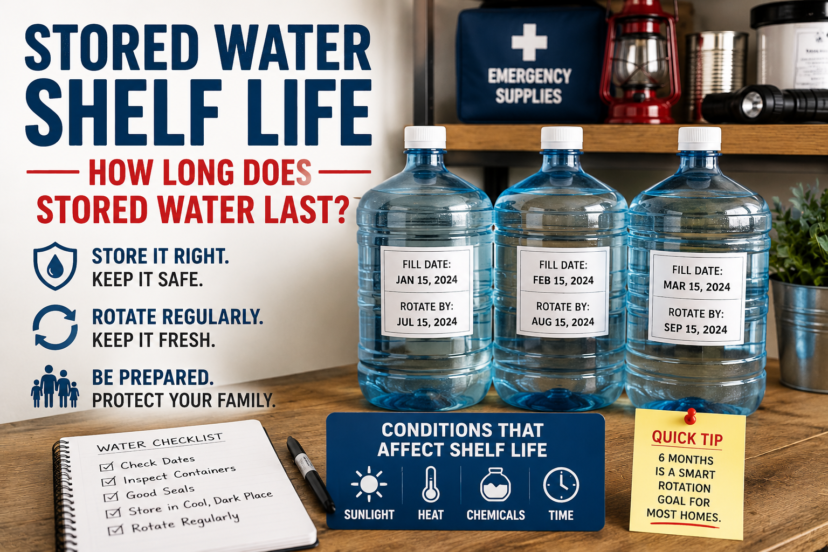
The stored water shelf life depends on how the water is packaged and stored. Commercially bottled water should generally be kept according to the manufacturer’s labeling and storage instructions. For water that you fill yourself in properly sanitized, food-grade containers, a practical emergency-preparedness approach is to replace it about every six months unless current public-health guidance or the container manufacturer recommends otherwise.
Key Takeaways
Most likely cause: Emergency water becomes questionable because containers were improperly cleaned, poorly sealed, exposed to heat or sunlight, or simply forgotten for years.
Usually serious? Potentially. Contaminated drinking water can cause illness, so questionable water should never be treated casually during an emergency.
First thing to check: Inspect the container, seal, storage date, storage conditions, and water for anything unusual.
Best solution: Improve stored water shelf life by using proper food-grade containers, keeping water cool and protected, labeling every container, and following a regular inspection and rotation schedule.
🕒 How Long Can Emergency Water Be Stored?
There isn’t one expiration date that applies to every type of emergency water.
Commercially bottled water and water you package yourself are different. Factory-sealed water is packaged under controlled conditions, while home-filled water depends much more heavily on your preparation and sanitation practices.
For home-filled emergency water, regularly replacing your supply provides a simple system that is easy for most households to maintain. A six-month rotation is commonly used for properly prepared home-filled containers.
Factory-sealed bottled water may be managed according to its package date and manufacturer’s recommendations.
Instead of asking only, “How old is this water?” also ask:
- Was The Original Water Safe?
- Was The Container Properly Sanitized?
- Was It Sealed Correctly?
- Was It Stored Away From Heat And Sunlight?
- Has The Container Been Damaged?
These factors can be just as important as age when evaluating your emergency drinking supply.
🧴 Why Stored Water Can Become Questionable
Water doesn’t suddenly “expire” like fresh food, but storage problems can make an emergency supply unsafe or undesirable.
Contamination During Filling
One major risk occurs before the container ever reaches your storage shelf.
Dirty hands, an inadequately cleaned container, contaminated equipment, or touching the inside of a cap can introduce microorganisms.
This is why sanitation matters when preparing water for long-term storage.
Poor Container Choice
Never use containers that previously held gasoline, pesticides, household cleaners, or other toxic chemicals for drinking water.
Purpose-made, food-grade water containers are the safer choice.
Some thin disposable containers are also more vulnerable to damage or leakage over time.
Heat And Sunlight
A cool, dark location is preferable for emergency water storage.
High temperatures and direct sunlight are poor conditions for long-term storage and may degrade containers or otherwise reduce the quality of your supply.
Keeping your water inside a climate-moderated part of your home when practical can simplify maintaining a dependable stored water shelf life.
🏠 Where Should You Keep Stored Water?
An interior closet, pantry, basement area, or another cool, protected location may work well.
Avoid keeping emergency drinking water beside:
- Gasoline
- Paint
- Pesticides
- Fertilizers
- Cleaning chemicals
- Automotive fluids
- Other hazardous substances
Also think about accessibility.
A large water barrel may provide substantial capacity, but one gallon of water weighs roughly 8.3 pounds. A 55-gallon drum can weigh well over 450 pounds once filled.
For many families, several smaller containers provide greater flexibility. They can be moved, rotated, inspected, and distributed around the house more easily.
Apartment residents can use the same strategy. A few appropriately sized containers in a closet or pantry can create a meaningful emergency reserve without taking over the entire home.
🔄 How Often Should You Rotate Stored Water?
For water that you fill yourself, using a regular rotation schedule is one of the easiest ways to avoid wondering whether a forgotten container is still appropriate for drinking.
Label each container with:
- Date Filled
- Contents
- Planned Rotation Date
A six-month schedule is simple because you can tie it to another household routine.
For example, check emergency water every spring and fall when you test smoke alarms or review your emergency kit.
Rotating water doesn’t necessarily mean wasting it. Water being removed from emergency drinking storage may sometimes be repurposed for appropriate household or outdoor uses if it has remained uncontaminated.
Commercially bottled water should be handled according to the manufacturer’s labeling and storage recommendations.
The goal isn’t obsessive maintenance. It is creating a predictable routine so your emergency supply remains something you can depend on.
👀 Signs Stored Water May Not Be Safe
Never rely on appearance or smell alone to determine whether questionable water is safe. Some contaminants aren’t visible.
However, obvious warning signs are still reasons to stop and investigate.
Be cautious if you notice:
- A broken or missing seal
- A leaking container
- Cracks or physical damage
- Unexpected cloudiness or particles
- Unusual odor
- Signs that the container was opened
- Chemical exposure
- Long-term exposure to extreme storage conditions
If you cannot determine how water was prepared or stored, it may not be wise to treat it as ready-to-drink emergency water.
When public health is involved, follow instructions from local health departments and emergency management agencies.
🌀 Stored Water During Hurricanes And Power Outages
Your emergency water reserve becomes particularly valuable when a disaster disrupts normal infrastructure.
Consider a hurricane warning along the Gulf Coast. Bottled water may disappear from local stores days before landfall. After the storm, damaged infrastructure could result in boil-water advisories.
Winter storms create different challenges. Power failures can affect homes with private wells because electric pumps may stop operating.
Wildfires, earthquakes, floods, and major water-main failures can also affect water quality or availability.
A maintained home supply gives you time.
Instead of rushing to a store during an emergency, you can focus on your family’s safety while monitoring official instructions.
That sense of control is one of the biggest benefits of understanding stored water shelf life and maintaining your supply before trouble starts.
🚰 How Much Stored Water Does Your Family Need?
A common emergency planning starting point is at least one gallon per person per day for several days.
For a family of four, that means:
- 3 Days: About 12 gallons
- 7 Days: About 28 gallons
- 14 Days: About 56 gallons
Your household may need more.
Increase your supply when preparing for pets, hot climates, pregnancy, nursing, medical conditions, cooking needs, or other circumstances that increase water requirements.
Don’t let a large target prevent you from beginning.
If you currently have no emergency water, start with three days. Once that’s covered, work toward seven days.
Preparedness becomes much more affordable when you build it gradually.
🛠️ How To Make Stored Water Easier To Manage
An effective water reserve should be simple enough that you’ll actually maintain it.
Create a basic inventory showing the number of containers, their size, fill dates, and rotation dates.
You can even put a reminder on your phone or calendar twice a year.
Another smart approach is to divide water between appropriately selected locations instead of creating one massive storage area. This reduces the chance that one leak, damaged container, or inaccessible room affects your entire supply.
Keep portable water available as well.
If authorities order an evacuation because of a hurricane, wildfire, or another hazard, you won’t want to move a giant water barrel. Smaller bottles and portable containers can become part of your evacuation kit.
🧪 Can You Make Old Stored Water Safe Again?
This depends entirely on what may be wrong with the water.
Boiling or approved emergency disinfection methods may address certain biological hazards, but they do not make every contaminated water source safe. For example, boiling does not reliably solve chemical contamination.
Similarly, household water filters have different capabilities. A filter designed to improve taste or remove sediment should not automatically be assumed to remove pathogens, chemicals, or every other hazardous contaminant.
If emergency officials announce that local water has been affected by flooding, sewage, industrial chemicals, or another serious hazard, follow their exact instructions.
Don’t improvise when you don’t know what the contamination is.
💰 A Low-Cost Stored Water Strategy
You don’t need an expensive preparedness system to maintain a reasonable emergency supply.
Start with enough safely packaged drinking water for three days. Add additional capacity as your budget permits.
If you purchase reusable containers, choose sizes that you can realistically lift, clean, fill, inspect, and rotate.
You can also make water maintenance part of a broader twice-yearly preparedness review.
Check:
- Drinking water
- Shelf-stable food
- Flashlight batteries
- First-aid supplies
- Prescription planning
- Pet supplies
- Backup lighting
- Emergency contact information
Small routines create preparedness without turning it into an expensive lifestyle.
⚠️ Common Stored Water Mistakes To Avoid
Several mistakes can reduce the reliability of your emergency water supply:
- Using Unknown Containers: Don’t use containers that previously held hazardous chemicals.
- Skipping Sanitation: Clean and sanitize reusable containers appropriately before filling.
- Forgetting Labels: Dates make rotation much easier.
- Storing Water Near Chemicals: Keep drinking water separated from hazardous substances.
- Ignoring Temperature: Choose cool, protected storage whenever practical.
- Depending On One Giant Container: Smaller containers provide useful flexibility.
- Assuming Clear Water Is Safe: Dangerous contamination isn’t always visible.
- Ignoring Official Alerts: Follow boil-water advisories and emergency instructions.
A straightforward system that you inspect regularly is more useful than an elaborate setup you forget about.
🩺 When To Consult A Professional
Contact local public-health or emergency management officials if there is a boil-water advisory, suspected contamination, flood damage, chemical spill, or other widespread threat to drinking water.
A licensed plumber or qualified well professional may be needed for damaged plumbing, contaminated private wells, backflow concerns, or problems involving household water systems. Electrical professionals may be necessary when emergency water access depends on pumps, generators, or other powered equipment.
Seek medical advice if someone becomes ill after drinking potentially contaminated water.
During severe disasters, always prioritize instructions from local, state, and federal emergency authorities.
❓ FAQs About Stored Water Shelf Life
1. Does Stored Water Actually Expire?
Water itself doesn’t spoil in the same way as food, but contamination, container deterioration, and poor storage can make a supply questionable. Proper preparation and storage are essential.
2. How Long Can Water Be Stored In Plastic Containers?
It depends on the container, water source, preparation method, and storage conditions. Use food-grade containers intended for drinking water and follow current public-health and manufacturer guidance.
3. Should Emergency Water Be Replaced Every Six Months?
A six-month replacement schedule is a practical approach commonly used for water that households fill themselves. It also creates an easy routine for inspecting containers and storage conditions.
4. How Long Does Unopened Bottled Water Last?
Check the date and storage instructions printed on the bottle or package and follow the manufacturer’s recommendations. Keep commercially bottled water protected from excessive heat, sunlight, and chemicals.
5. What Is The Best Way To Store Water Long Term?
Use properly cleaned and sanitized food-grade containers intended for potable water, seal them securely, label them, and store them in a cool, dark location away from chemicals.
6. Can I Drink Water That Has Been Stored For Years?
Age alone doesn’t tell you whether water is safe. If you don’t know how the water was prepared, whether its container remained secure, or how it was stored, don’t assume it is safe for drinking simply because it looks clear.
7. Can Boiling Make Old Stored Water Safe?
Boiling can address certain disease-causing organisms when performed according to official guidance, but it doesn’t remove every possible hazard, especially many chemical contaminants. Follow public-health instructions when contamination is suspected.
🌟 Final Thoughts: Make Stored Water Part Of Your Preparedness Routine
Understanding stored water shelf life isn’t about memorizing one expiration date. It’s about creating an emergency water system you know has been prepared, stored, inspected, and maintained properly.
Start small.
Store enough safe drinking water for a few days. Use appropriate containers. Write the date on them. Keep them in a cool, protected location and add water inspection to your normal preparedness routine.
Then gradually increase your supply as your budget and space allow.
Those small steps can make a major difference when a hurricane approaches, a winter storm knocks out power, or your community suddenly issues a boil-water advisory.
You don’t have to become a survival expert to become more self-reliant. A dependable water reserve is one practical step toward protecting your family and gaining greater confidence and peace of mind before the next emergency arrives.
Preparedness And Safety Disclaimer
This article provides general educational and emergency-preparedness information only. Individual water needs, storage conditions, treatment requirements, emergencies, and regional regulations vary. Always follow local laws, current public-health and emergency-management guidance, manufacturer instructions, and evacuation or boil-water orders when applicable. Seek qualified professional or medical assistance when a situation presents potential health or safety risks.
 Explore more: