Rainwater Collection For Beginners: A Simple Guide To Storing Water Safely At Home
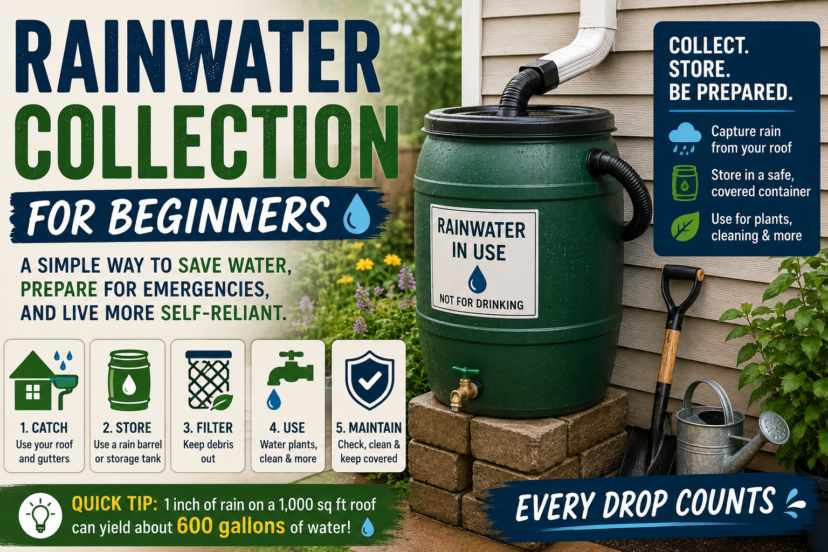
What if part of your emergency water plan literally fell from the sky? Rainwater collection is one of the simplest ways homeowners can become more self-reliant while creating a useful backup water source for gardening, cleaning, and certain emergency needs. You don’t need an elaborate off-grid system, huge property, or expensive underground tank to get started. For many households, a roof, gutter, downspout, and properly designed rain barrel are enough to begin.
The value becomes especially clear when everyday systems are disrupted. Hurricanes can damage water infrastructure, winter storms can interrupt power to private wells, wildfires can strain local utilities, and temporary water restrictions can make outdoor water use difficult.
Collected rainwater isn’t automatically safe to drink, but it can still become an important part of a layered preparedness plan. With realistic expectations, appropriate equipment, and good maintenance, even beginners can start capturing a resource that would otherwise disappear down the storm drain.
💧 Quick Answer: Rainwater Collection
Rainwater collection typically involves directing runoff from a roof through gutters and downspouts into a covered rain barrel or storage tank. Beginners should start with a properly designed container that has a secure lid, debris screening, controlled overflow, and a safe outlet. Collected rainwater is generally best treated as non-potable unless it has been properly treated and confirmed suitable for drinking under applicable health guidance.
Key Takeaways
Most likely cause: Most households lose potentially useful rainwater because roof runoff simply flows through gutters and downspouts into the yard or storm drainage system.
Usually serious? No, but improperly collected water can create contamination, mosquitoes, overflow, and property drainage problems.
First thing to check: Review local rainwater harvesting rules, inspect your roof and gutters, and decide how you intend to use the collected water.
Best solution: Start rainwater collection with a covered, purpose-built barrel or tank connected to a clean gutter system, with debris screening and safe overflow management.
🌧️ How Rainwater Collection Works
A basic system is surprisingly straightforward.
Rain lands on your roof and flows toward the gutters. The gutters carry that runoff to a downspout, where it can be redirected into a storage container.
A beginner system normally has several basic components:
- Catchment Surface: Usually your roof
- Gutters: Carry runoff toward the downspout
- Debris Screen: Helps keep leaves and larger debris out
- Downspout Diverter: Directs water toward storage
- Storage Container: Holds collected water
- Overflow Outlet: Directs excess water safely away
- Spigot Or Outlet: Allows you to use stored water
More advanced systems may include first-flush diverters, pumps, multiple tanks, finer filtration, and treatment equipment.
You don’t need all of that on day one.
A simple rain barrel can teach you how quickly water accumulates and how much your household can realistically use.
🏠 How Much Rainwater Can Your Roof Collect?
One of the biggest surprises for beginners is just how much water a roof can capture.
As a useful estimate, one inch of rain falling on 1,000 square feet of roof can produce roughly 600 gallons of water before accounting for losses.
That means even a relatively small storm can fill a typical 50- or 55-gallon rain barrel quickly.
For example, if part of your roof drains 500 square feet into one downspout, one inch of rainfall represents roughly 300 gallons of potential runoff before losses.
Your barrel might fill long before the storm ends.
This makes overflow management essential.
Instead of simply allowing excess water to spill beside the foundation, direct overflow toward an appropriate drainage area and away from structures according to local requirements.
Good rainwater collection should help your property—not create a new moisture problem.
🛢️ Choosing A Rain Barrel Or Storage Tank
For beginners, a purpose-built rain barrel is often the easiest option.
Common residential barrels hold approximately 40 to 60 gallons. Larger tanks can hold hundreds or even thousands of gallons, but bigger isn’t automatically better.
Consider:
- Available Space
- Local Rainfall
- Roof Drainage Area
- Intended Uses
- Container Weight
- Overflow Management
- Winter Temperatures
- Maintenance Requirements
- Local Regulations
Remember that water is heavy.
A 55-gallon barrel can weigh more than 450 pounds when full. It needs a strong, stable, level foundation.
Never place a large water container on an unstable stack of blocks, weak deck, or poorly supported platform.
If you need water pressure at the spigot, an appropriate sturdy raised base may help, but the entire structure must safely support the filled barrel.
🦟 Keep Mosquitoes And Debris Out
An uncovered barrel full of rainwater can quickly become a maintenance problem.
Your rainwater collection container should be securely covered and designed to prevent mosquitoes from entering and breeding.
Use appropriately sized screening at openings while keeping lids securely closed.
Gutters should also be maintained.
Leaves, pine needles, roof debris, animal droppings, insects, and other material can enter roof runoff. Keeping gutters and screens clean reduces the amount of debris entering your storage system.
Check your system after major storms.
A few minutes of maintenance can catch clogged screens, loose connections, overflowing gutters, and damaged components before they become bigger problems.
🚰 Is Collected Rainwater Safe To Drink?
Do not assume that rainwater collected from your roof is automatically safe for drinking.
Although rain may begin relatively clean, it can pick up contaminants from the atmosphere, roof, gutters, storage equipment, animals, insects, and environmental pollution.
Roof runoff may potentially contain:
- Bird And Animal Droppings
- Bacteria And Other Microorganisms
- Dirt And Organic Material
- Roofing Residues
- Metals
- Chemicals
- Other Environmental Contaminants
This distinction is critical for emergency preparedness.
Untreated roof-collected water can be extremely useful for appropriate non-potable purposes, but drinking it requires a much higher level of safety consideration.
If rainwater is intended for potable use, follow state and local health requirements and obtain guidance regarding appropriate treatment, disinfection, testing, storage, and system design.
A simple screen or ordinary household pitcher filter should not automatically be considered sufficient to make roof runoff safe to drink.
🌱 Best Uses For Collected Rainwater
The easiest way to benefit from rainwater is to use it for tasks that don’t require drinking-quality water, where permitted.
Potential uses may include:
- Watering Ornamental Plants
- Irrigating Landscaping
- Certain Garden Uses
- Outdoor Cleaning
- Washing Tools
- Other Approved Non-Potable Uses
During an emergency, having non-potable water available can also preserve your commercially bottled or properly stored drinking water for consumption.
For example, if your municipal supply is interrupted after a hurricane, you don’t necessarily want to use valuable bottled drinking water for every cleanup task.
This is where rainwater collection becomes part of a broader resilience strategy rather than a replacement for your regular emergency drinking-water supply.
🌀 Rainwater Collection For Emergency Preparedness
Different parts of the United States face different water-related risks.
Along the Gulf Coast and Southeast, hurricanes and tropical storms can disrupt infrastructure. In parts of Texas and the Southwest, drought and extreme heat make water conservation particularly valuable.
Western communities may face wildfire-related disruptions, while northern states can experience winter storms that knock out power to homes using electric well pumps.
Rainwater doesn’t solve every emergency.
A drought, for example, may leave your barrel empty precisely when water is most valuable.
That’s why you should never make collected rainwater your only emergency water plan.
A stronger strategy includes several layers:
- Stored Potable Water: Ready-to-drink emergency water.
- Portable Water: Bottles or containers you can evacuate with.
- Rainwater: An additional resource for suitable uses.
- Treatment Knowledge: Understanding appropriate emergency treatment methods.
- Official Information: Knowing where to find local water and disaster instructions.
Redundancy makes a household more resilient.
🔧 How To Set Up A Beginner Rainwater Collection System
You can create a basic system without turning your backyard into a construction project.
Step 1: Choose The Downspout
Watch your home during rainfall and identify a downspout receiving useful roof runoff.
Make sure there is enough room for a barrel and safe access.
Step 2: Prepare A Stable Base
A full barrel is extremely heavy. Install it on a level, stable surface capable of supporting the load.
Step 3: Install The Diverter
Use a rain-barrel diverter or appropriate downspout connection according to the manufacturer’s instructions.
Step 4: Screen The Water Entry
Install appropriate screening to reduce debris and prevent mosquito access.
Step 5: Plan The Overflow
This is easy to overlook.
When the barrel fills, additional water needs somewhere safe to go. Route overflow away from your foundation and toward an appropriate drainage location.
Step 6: Test The System
During the next rain, watch what happens.
Check for leaks, gutter overflow, unstable supports, clogged screens, and water pooling near the house.
Small corrections now make your rainwater collection system much easier to maintain.
🧹 How To Maintain Stored Rainwater
Rain barrels are not “install it and forget it” equipment.
Check the system periodically and after significant storms.
Your maintenance routine should include:
- Cleaning Debris Screens
- Removing Gutter Debris
- Checking Lids And Openings
- Inspecting For Mosquito Access
- Checking The Barrel For Damage
- Testing Spigots And Connections
- Inspecting Overflow Drainage
- Cleaning The Container As Appropriate
Don’t allow stagnant water and accumulated organic debris to become a long-term problem.
In freezing climates, follow the barrel manufacturer’s winterization instructions. Water expands when frozen and may damage containers, fittings, and hoses.
⚠️ Common Rainwater Collection Mistakes
A few mistakes can turn a useful preparedness project into an unnecessary headache.
Using An Unknown Container
Don’t repurpose containers that previously held toxic chemicals, fuel, pesticides, or unknown substances.
Ignoring The Overflow
A barrel can fill rapidly during heavy rain. Poor overflow placement can send water toward the foundation.
Leaving The Barrel Open
Open water can collect debris and provide mosquitoes with access.
Assuming Rainwater Is Drinking Water
Roof runoff should not automatically be considered potable simply because it came from rain.
Forgetting The Weight
Large tanks need appropriate structural support.
Ignoring Local Rules
Rainwater harvesting laws, plumbing codes, mosquito-control requirements, and potable-use rules can vary by location.
Check applicable state and local requirements before installing your system.
💰 Start Small And Expand Your System Later
One of the best things about rainwater collection is that you don’t have to build the perfect system immediately.
Start with one barrel.
Learn how quickly it fills, how often you use the water, and whether your overflow arrangement works.
If you consistently empty the barrel between storms, you may decide to add another container or install a larger tank.
If you rarely use the water, expanding may not make sense.
This approach keeps costs manageable while helping you build a system around your actual needs instead of buying equipment simply because it looks impressive.
Preparedness works best when it is practical.
🩺 When To Consult A Professional
Seek professional guidance if you plan to connect a rainwater system to household plumbing, use collected water for drinking, install a large storage tank, or make structural changes to support heavy water storage.
Licensed plumbers, qualified rainwater-system professionals, local health departments, building officials, and water-quality specialists can help address potable-water requirements, backflow prevention, treatment, plumbing codes, and testing.
Contact emergency management or public-health officials during major disasters or suspected contamination events. Seek medical advice if someone becomes ill after consuming questionable water.
Electrical equipment such as pumps should be installed and used according to manufacturer requirements and applicable electrical codes, with professional assistance when appropriate.
❓ Frequently Asked Questions About Rainwater Collection
1. Is It Legal To Collect Rainwater In The United States?
Rainwater harvesting rules vary by state and locality. Many areas allow or encourage it, while specific requirements may apply to system design, capacity, potable use, or plumbing connections. Check current state and local regulations before installation.
2. What Is The Easiest Way To Start Collecting Rainwater?
For many homeowners, a covered rain barrel connected to an existing gutter downspout is the simplest starting point. Include debris screening and properly managed overflow.
3. How Much Rainwater Can I Collect From My Roof?
One inch of rainfall on approximately 1,000 square feet of roof represents roughly 600 gallons of potential collection before accounting for losses.
4. Can You Drink Rainwater From A Rain Barrel?
Don’t assume roof-collected rainwater is safe to drink. It may contain microorganisms, chemicals, metals, or other contaminants. Potable use requires appropriate treatment and should follow local public-health requirements.
5. How Long Can Rainwater Stay In A Barrel?
There isn’t one safe storage period that applies to every system. Water quality depends on the catchment surface, contamination, container design, temperature, maintenance, and intended use. Regularly inspect and maintain your system rather than relying only on time.
6. Do Rain Barrels Attract Mosquitoes?
They can if mosquitoes can access standing water. A secure lid and properly fitted screening help prevent mosquitoes from entering the container.
7. What Size Rain Barrel Should A Beginner Buy?
A 40- to 60-gallon barrel is a manageable starting point for many households, although the best capacity depends on roof area, rainfall, available space, intended use, and how quickly you use the collected water.
📌 Conclusion: Start Rainwater Collection One Barrel At A Time
Rainwater collection is a good example of preparedness that can be useful even when there isn’t an emergency.
You can conserve treated tap water, keep a backup supply available for suitable non-potable tasks, and become less dependent on a single water source—all with a relatively simple system.
Start with one downspout and one appropriately designed barrel.
Make sure the container is covered, manage overflow carefully, maintain the system, and understand the difference between collected rainwater and safe drinking water.
Then see how the system fits into your household.
If it works well, expand gradually.
Real self-reliance doesn’t require an enormous budget or complicated survival equipment. It comes from building useful systems before you need them.
One rain barrel won’t make your home completely independent, but it can be another practical layer of resilience—and another step toward feeling more prepared, capable, and confident when everyday systems don’t work as expected.
Preparedness And Safety Disclaimer
This article is for general educational and emergency-preparedness purposes only. Rainwater harvesting laws, water-quality requirements, permitted uses, plumbing codes, and emergency conditions vary by state and locality. Always follow local laws, public-health and emergency-management guidance, manufacturer instructions, and applicable building and plumbing requirements. Consult qualified professionals when potable water, plumbing, electrical systems, structural loads, contamination, or health concerns are involved.
 Explore more: