Bad Stored Water: 9 Warning Signs Your Emergency Water May No Longer Be Safe
How to recognize bad stored water? Imagine the power has been out for two days after a major storm. Your local water system issues an advisory, so you reach for the emergency water you’ve had stored in a closet for years. Then you notice something strange: the container looks cloudy, the cap seems loose, or the water has an unusual smell.
Is it safe?
Recognizing bad stored water is an important emergency preparedness skill. Water doesn’t spoil exactly like milk or meat, but improper containers, contamination, damaged seals, heat, chemicals, and poor storage conditions can make a supply questionable or unsafe.
The good news is that maintaining emergency drinking water doesn’t require expensive equipment or survival expertise. A simple system of safe containers, clear labels, regular inspections, and sensible rotation can help your family stay ready for hurricanes, winter storms, wildfires, earthquakes, power outages, and unexpected water disruptions.
Knowing what to check now can prevent uncertainty when you need that water most.
💧 Quick Answer: Bad Stored Water
Possible signs of bad stored water include cloudiness, unusual particles, unexpected odors, damaged or leaking containers, broken seals, or evidence that the water was exposed to chemicals or contamination. However, dangerous microorganisms and chemicals aren’t always visible, so clear-looking water isn’t automatically safe. If the source, preparation method, or storage history is uncertain, don’t rely on appearance alone to determine safety.
Key Takeaways
Most likely cause: Improper sanitation, damaged containers, broken seals, poor storage conditions, or contamination during filling can make emergency water questionable.
Usually serious? Potentially. Contaminated drinking water can cause illness, and some dangerous contaminants cannot be seen, smelled, or tasted.
First thing to check: Inspect the container, seal, storage date, water appearance, and storage conditions before using your emergency supply.
Best solution: Prevent bad stored water by using properly sanitized food-grade containers, keeping them sealed in a cool and protected location, and following a regular inspection and rotation schedule.
🔍 Why Stored Water Can Go Bad
Water itself doesn’t suddenly reach an expiration date and become spoiled. The bigger issue is what can happen to the water while it is being prepared, packaged, and stored.
Contamination may begin when a reusable container isn’t properly cleaned and sanitized. Touching the inside of the cap or opening during filling can also introduce microorganisms.
Storage conditions matter too.
Extreme heat, direct sunlight, damaged containers, and exposure to household chemicals can make an emergency supply less dependable.
This is why knowing the history of your stored water is so important. A container of clear water found in a garage isn’t necessarily safe just because nothing looks wrong.
Your goal isn’t to become a water-quality expert. It’s to create a system that reduces uncertainty before an emergency begins.
⚠️ 9 Signs Your Stored Water May Be Bad
Some problems are obvious, while others require looking at the container and storage conditions rather than the water itself.
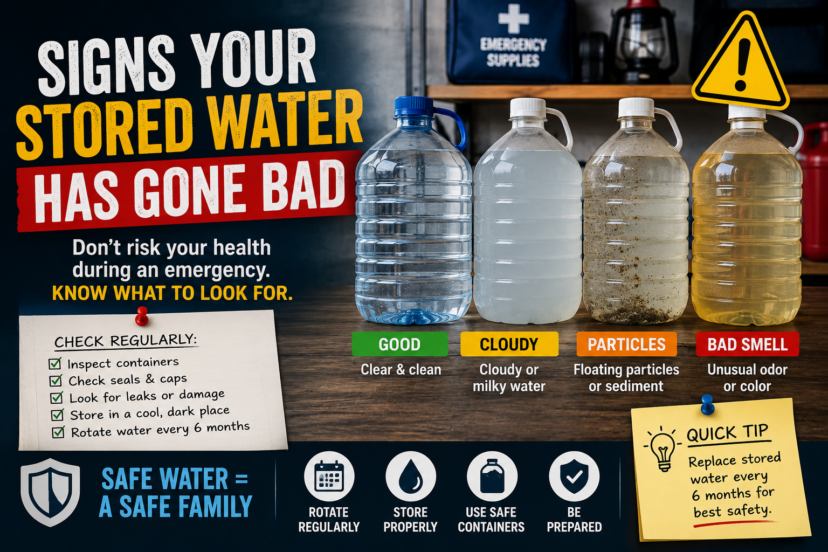
1. The Water Looks Cloudy
Unexpected cloudiness is one reason to question stored drinking water.
If water was clear when you stored it but has developed a noticeably cloudy appearance, don’t simply assume it is harmless.
Cloudiness alone cannot tell you exactly what happened, but an unexplained change deserves caution.
2. You See Floating Particles Or Sediment
Visible particles, unusual sediment, or material floating in the water can indicate that something changed during storage.
Don’t attempt to judge safety simply by removing the visible material.
If your emergency water contains unexplained debris, treat the supply as questionable until you can determine what caused it.
3. The Water Has An Unusual Odor
An unexpected smell can be another warning sign of bad stored water.
Open the container only when you’re actually evaluating or using it because opening emergency water unnecessarily can introduce contamination.
If the water smells noticeably unusual, don’t taste it to “see if it’s okay.”
Smell can identify some problems, but the absence of an odor does not prove that water is safe.
4. The Container Is Leaking
A leaking container should immediately get your attention.
Leaks may mean the container was punctured, cracked, degraded, or improperly sealed. Once the integrity of the container is compromised, you can no longer be confident that the water remained protected from outside contamination.
Move leaking containers away from the rest of your emergency supplies and inspect nearby containers for damage.
5. The Seal Is Broken Or Loose
A secure closure is essential for maintaining stored drinking water.
If a cap has loosened, a factory seal is broken unexpectedly, or you can’t tell whether the container has been opened, the water’s storage history becomes uncertain.
This is especially important for supplies that have been sitting untouched for months or years.
6. The Container Looks Damaged
Look for cracks, bulging, warping, punctures, or other physical damage.
Heat and poor storage conditions can sometimes affect plastic containers, while accidental impacts can damage containers stored in garages, closets, or basements.
A questionable container means a questionable emergency water supply.
7. Water Was Stored Near Chemicals
Your emergency water should not share storage space with gasoline, pesticides, paint, automotive fluids, strong household cleaners, or other hazardous chemicals.
Chemical contamination can be especially concerning because normal emergency treatment methods don’t necessarily make chemically contaminated water safe.
If you suspect chemical exposure, don’t assume boiling will solve the problem.
8. You Don’t Know Where The Water Came From
Water should begin with a safe drinking-water source.
Finding an old container marked simply “water” isn’t enough if nobody remembers when it was filled, where the water came from, or how the container was prepared.
Good labeling prevents this problem.
Every home-filled container should include the fill date and contents so future you doesn’t have to guess during an emergency.
9. You Don’t Know What Was Previously In The Container
This is one of the biggest red flags.
Never use containers that previously held gasoline, pesticides, cleaning products, or other toxic substances to store drinking water.
Washing such containers doesn’t automatically make them appropriate for potable water.
Use food-grade containers intended for drinking-water storage.
👀 Can Water Look Fine And Still Be Unsafe?
Yes.
This is one of the most important things to understand about bad stored water.
Not every dangerous microorganism or chemical changes water’s color, smell, or taste. Crystal-clear water can still contain contaminants.
That’s why the history of the water matters.
Ask yourself:
- Was It From A Safe Drinking-Water Source?
- Was The Container Appropriate For Potable Water?
- Was The Container Properly Sanitized?
- Did It Remain Securely Sealed?
- Was It Protected From Chemicals?
- Was It Stored Under Appropriate Conditions?
A visual inspection is useful, but it is only one part of evaluating an emergency water supply.
🏠 How To Prevent Bad Stored Water At Home
Prevention is much easier than trying to determine whether questionable water can be rescued years later.
Start with food-grade containers intended for potable water. Clean and sanitize reusable containers according to current public-health recommendations and manufacturer instructions.
Fill them with water from a known safe source and avoid unnecessarily touching the inside of caps and openings.
Then label every container.
Include the fill date and, if you’re using a rotation schedule, your planned replacement date.
Store water in a cool, dark, protected area away from direct sunlight and hazardous chemicals.
An interior closet, pantry, or suitable basement location may be more appropriate than a hot garage or outdoor shed.
🔄 How Often Should You Check Emergency Water?
Make water inspection part of your normal emergency preparedness routine.
Checking your supply about twice a year creates an easy schedule for many households. You could inspect it when changing smoke-alarm batteries or reviewing your emergency food supply.
Look for:
- Leaking Containers
- Damaged Caps
- Broken Seals
- Cracks Or Warping
- Unusual Water Appearance
- Chemical Exposure
- Missing Labels
- Excessive Heat Or Sunlight Exposure
For home-filled water, follow current public-health guidance regarding replacement. A six-month replacement schedule is commonly recommended for water stored in properly sanitized containers.
Commercially bottled water should be stored and managed according to its labeling and manufacturer guidance.
🌀 Why Safe Water Matters During Real Emergencies
Imagine a hurricane approaching Florida or the Gulf Coast. Store shelves can empty quickly as families buy bottled water.
Or consider a severe winter storm that knocks out electricity to a home relying on a private well. Without power to the pump, normal water access may disappear.
Wildfires, floods, earthquakes, and major water-main breaks can create similar problems.
This is exactly when you don’t want to discover bad stored water in your emergency supply.
Properly maintained water gives your household a buffer. Instead of immediately searching for supplies during a crisis, you can focus on safety, official alerts, and your family’s immediate needs.
Preparedness buys time, and time reduces stress.
🚰 Can Bad Stored Water Be Treated And Used?
Sometimes water affected by certain biological contaminants may be made safer using methods recommended by public-health authorities, but you should not assume every questionable supply can be rescued.
Boiling can address many disease-causing organisms when performed correctly, but it does not make chemically contaminated water safe.
Water filters also vary considerably. Some remove sediment, while others are designed for particular microorganisms or contaminants.
A basic pitcher filter shouldn’t automatically be treated as an emergency purification system.
When contamination is suspected during a disaster, follow instructions from local health officials regarding boiling, disinfection, filtration, or avoiding the water entirely.
💰 Build A Safer Water Supply Without Spending A Fortune
You don’t need hundreds of gallons of expensive emergency water.
A common preparedness starting point is at least one gallon per person per day for several days.
Start with three days if you’re building your first emergency supply. For a family of four, that’s approximately 12 gallons.
Then gradually work toward a larger reserve as your budget and available space allow.
Smaller containers have several advantages. They’re easier to lift, inspect, rotate, and take during an evacuation.
Remember that water weighs roughly 8.3 pounds per gallon. A five-gallon container can weigh more than 40 pounds when full.
Practical preparedness should fit your household rather than create another problem.
🛡️ Create A Simple Water Safety System
The easiest way to avoid bad stored water is to remove guesswork.
Create three simple habits:
- Store It Correctly: Use appropriate containers and safe water.
- Label It Clearly: Record what it is and when it was stored.
- Inspect It Regularly: Check containers and storage conditions twice a year.
You can keep a basic water inventory with your emergency plan.
If you have 30 gallons stored, write down where those containers are located and when they should be inspected or rotated.
That five-minute record could save a lot of confusion during an emergency.
🩺 When To Consult A Professional
Contact your local public-health department or emergency management agency when officials report contaminated drinking water, sewage problems, chemical spills, major flooding, or other hazards affecting your community’s water supply.
Consult a licensed plumber or qualified well professional if you suspect contamination from household plumbing, damaged pipes, backflow, or private-well problems. A licensed electrician may be needed when well pumps, generators, or electrical systems create safety concerns.
If anyone becomes ill after consuming potentially contaminated water, seek appropriate medical advice.
During a severe disaster, follow official emergency instructions rather than relying solely on general home-preparedness information.
❓ Frequently Asked Questions About Bad Stored Water
1. How Can You Tell If Stored Water Has Gone Bad?
Warning signs can include unexpected cloudiness, particles, unusual odors, damaged containers, leaks, or broken seals. However, unsafe contamination isn’t always visible, so storage history and preparation methods also matter.
2. Does Stored Water Actually Go Bad?
Water doesn’t spoil like perishable food, but it can become contaminated or questionable because of poor sanitation, inappropriate containers, damaged seals, chemical exposure, or improper storage.
3. Is Cloudy Stored Water Safe To Drink?
Unexpected cloudiness should be treated cautiously. Because appearance alone cannot identify the cause or determine safety, don’t assume cloudy emergency water is safe.
4. Can You Drink Water That Has Been Stored For Years?
Age alone doesn’t determine safety. The original water source, container, sanitation, seal integrity, and storage conditions all matter. If the history is unknown, don’t assume old water is safe simply because it looks normal.
5. Can Boiling Fix Bad Stored Water?
Boiling can kill many disease-causing microorganisms when performed according to official guidance, but it doesn’t remove every hazard. In particular, boiling should not be expected to make chemically contaminated water safe.
6. What Is The Best Container For Emergency Water?
Food-grade containers specifically intended for potable water are generally a practical option. Follow manufacturer instructions for cleaning, filling, sealing, and storage.
7. How Often Should Emergency Water Be Replaced?
For water you fill yourself, a six-month replacement schedule is a commonly recommended preparedness practice. Follow current public-health guidance and manufacturer instructions. Commercially bottled water should be managed according to its labeling.
🌟 Final Thoughts: Don’t Wait Until An Emergency To Check Your Water
The worst time to discover bad stored water is when your faucets stop working.
Spend a few minutes today looking at your emergency supply.
Check the containers. Read the labels. Look for leaks. Make sure the water isn’t sitting beside chemicals or baking in direct sunlight. If you can’t remember when a container was filled, improve your labeling system going forward.
Then put a reminder on your calendar to inspect everything again in about six months.
Preparedness doesn’t have to mean spending thousands of dollars or turning your home into a warehouse.
It’s about solving small problems before they become big ones.
A dependable water supply is one of those simple preparations that can give your family greater independence, confidence, and peace of mind when hurricanes, winter storms, wildfires, blackouts, or unexpected infrastructure failures disrupt normal life.
Start small, stay consistent, and make safe drinking water one of the foundations of your family’s emergency plan.
Preparedness And Safety Disclaimer
This article is for general educational and emergency-preparedness purposes only. Water conditions, individual needs, emergency circumstances, treatment requirements, and regional regulations can vary. Always follow local laws, public-health and emergency-management guidance, boil-water or evacuation notices, and manufacturer instructions. Consult qualified medical, plumbing, electrical, water-quality, or other professionals when health or safety concerns require expert assistance.
 Explore more: