Best Generator Safety Tips: 12 Rules Every Homeowner Should Know Before The Next Power Outage
When the lights go out during a hurricane, winter storm, or severe thunderstorm, a portable generator can make life much easier. It may keep refrigerators cold, charge phones, power lights, and run certain essential equipment until utility service returns. But generators also create serious hazards when they are placed, fueled, or connected incorrectly. Learning the best generator safety tips before an emergency gives you time to prepare without the pressure of figuring everything out in the dark.
The good news is that safe generator use does not have to be complicated. A few firm rules—especially keeping generators outdoors and away from the home, preventing electrical backfeeding, and handling fuel correctly—can dramatically reduce avoidable risks.
The goal is simple: have useful backup power without creating a second emergency. Preparing your generator, supplies, and household plan ahead of time can provide greater confidence and peace of mind when the grid goes down.
⚡ Quick Answer: Best Generator Safety Tips
The best generator safety tips are to operate fuel-burning portable generators outdoors, keep them well away from doors, windows, and vents, point exhaust away from occupied structures, use working carbon monoxide alarms, keep the generator dry, avoid overloading it, and never connect it directly to household wiring without properly installed transfer equipment. Always follow the generator manufacturer’s instructions and current local safety guidance.
Key Takeaways
Most likely cause: Serious generator incidents often result from unsafe placement, carbon monoxide exposure, improper electrical connections, overloading, or unsafe fuel handling.
Usually serious? Yes. Generator mistakes can lead to carbon monoxide poisoning, electric shock, fires, burns, equipment damage, and potentially fatal injuries.
First thing to check: Before an outage, confirm that you have a safe outdoor operating location, working carbon monoxide alarms, suitable cords, enough properly stored fuel, and a clear operating plan.
Best solution: Following the best generator safety tips means treating placement, ventilation, electricity, fuel, weather protection, and maintenance as equally important parts of your emergency-power plan.
🏠 Why Generator Safety Matters During A Power Outage
Portable generators usually burn gasoline, propane, or another fuel to produce electricity.
That combustion creates carbon monoxide, or CO—a poisonous gas you cannot see or smell.
This is one of the most important differences between a portable fuel-burning generator and a rechargeable battery power station.
Electrical hazards also matter.
Incorrectly connecting a generator to household wiring can energize electrical lines unexpectedly. This dangerous practice, often called backfeeding, can put utility workers, neighbors, and household occupants at risk.
Add flammable fuel, wet weather, hot engine components, and extension cords, and it becomes clear why generators require careful planning.
Fortunately, most homeowners can greatly improve safety by learning a few basic rules before an outage happens.
☠️ 1. Never Run A Portable Generator Indoors
This is the most important generator safety rule.
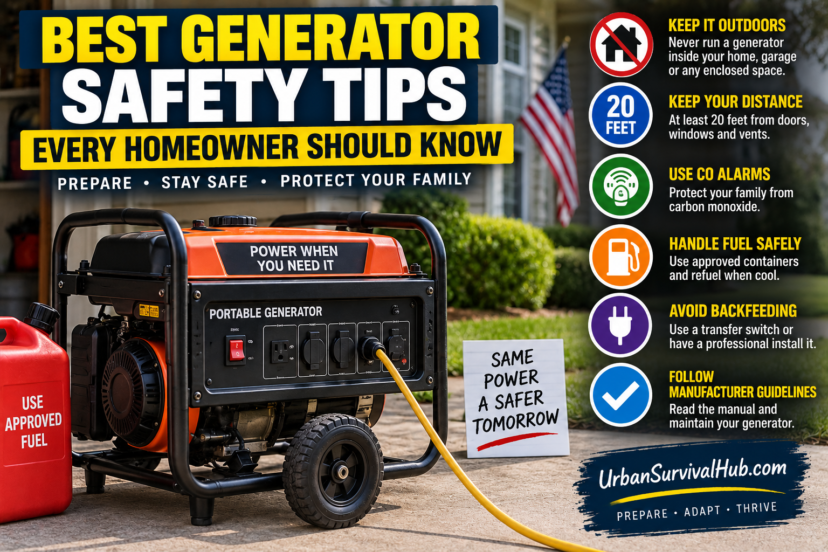
Never operate a portable fuel-burning generator inside an occupied home, garage, basement, shed, crawl space, or other enclosed or partially enclosed area.
Opening garage doors or windows does not make an unsafe location safe.
Carbon monoxide can build up quickly without warning.
A generator belongs outdoors, positioned according to the manufacturer’s instructions and official safety recommendations.
Everyone who may operate the generator should know this rule.
Do not wait until an outage to explain it.
📏 2. Keep The Generator Well Away From Your Home
Moving a generator just outside a doorway is not enough.
A commonly recommended safety practice is to operate portable generators at least 20 feet away from the home, where feasible, with exhaust directed away from the building.
Keep exhaust away from:
- Doors
- Windows
- Air Intakes
- Vents
- Crawl-Space Openings
- Neighboring Occupied Structures
Generator placement should be planned before hurricane or winter-storm season.
Measure a suitable location and determine how you will safely supply electricity from that point.
Among the best generator safety tips, proper outdoor placement deserves special attention because dangerous exhaust can enter a home through openings you may not immediately notice.
🚨 3. Install And Test Carbon Monoxide Alarms
A generator should never be your only line of defense against a power outage—and distance should not be your only defense against carbon monoxide.
Every home using fuel-burning equipment should have appropriate carbon monoxide alarms installed according to applicable codes, manufacturer instructions, and safety guidance.
Test alarms regularly and replace batteries or units when required.
If a carbon monoxide alarm sounds, move to fresh air and follow emergency instructions rather than trying to locate the source yourself.
Possible carbon monoxide poisoning symptoms can include headache, dizziness, weakness, nausea, vomiting, chest pain, and confusion.
If exposure is suspected, get to fresh air and seek emergency medical assistance.
🔌 4. Never Backfeed Electricity Into Your House
Some homeowners try to power their home by connecting a generator to a household receptacle using an improvised cord.
Do not do this.
Backfeeding can send electricity through household wiring and potentially onto utility lines, creating a deadly electrocution risk.
If you want a generator to supply selected household circuits, have a qualified electrician install appropriate transfer equipment according to applicable electrical codes and manufacturer requirements.
A transfer switch or other approved system isolates generator power from utility power.
This is one area where DIY improvisation can create serious consequences.
⚙️ 5. Don’t Overload Your Generator
Generators have limits.
Before an emergency, determine the running and starting wattage requirements of the equipment you plan to operate.
Refrigerators, freezers, pumps, air conditioners, and other motor-driven equipment may briefly require additional power when starting.
Create a priority list rather than attempting to run everything at once.
For example:
- Refrigerator Or Freezer
- Essential Lighting
- Phone Charging
- Communications Equipment
- Other Necessary Appliances
Compare the combined load with your generator’s rated capacity.
One of the best generator safety tips is also one of the easiest: know your generator’s limits before plugging things in.
🔌 6. Use The Right Extension Cords
Extension cords used with a generator need to be appropriate for the equipment and environment.
Use cords rated for outdoor use and capable of handling the electrical load.
Before each use, inspect cords for:
- Cracked Insulation
- Exposed Wires
- Damaged Plugs
- Loose Connections
- Signs Of Overheating
Keep connections away from standing water and high-traffic areas where people could trip.
Avoid daisy-chaining multiple extension cords or power strips unless specifically permitted by the equipment manufacturers.
If you are unsure what cord gauge or rating is appropriate, consult the generator manual or a qualified electrician.
🌧️ 7. Keep The Generator Dry
Power outages often occur during rain, hurricanes, thunderstorms, or snow—the exact conditions that make electricity more dangerous.
Do not operate a generator in standing water or expose electrical components to rain, contrary to manufacturer instructions.
At the same time, never solve the rain problem by moving a running generator into a garage or other enclosed space.
Use a weather-protection solution specifically designed and approved for safe generator operation that maintains required airflow, clearances, and exhaust safety.
Keep your hands dry when operating electrical equipment whenever possible.
Planning weather protection before the storm is much safer than improvising after the power goes out.
⛽ 8. Store Generator Fuel Safely
Gasoline and other generator fuels create fire and vapor hazards.
Store approved fuels only in appropriate, labeled containers and follow local fire codes, manufacturer instructions, and storage requirements.
Keep fuel away from:
- Flames
- Pilot Lights
- Sparks
- Heaters
- Hot Equipment
- Children
Do not store gasoline casually inside living areas.
Also consider how much fuel you realistically need. Storing excessive quantities can create unnecessary risk and may violate local rules.
Propane and other fuels have their own storage requirements, so never assume the same practices apply to every fuel type.
🔥 9. Turn The Generator Off Before Refueling
A running generator becomes hot.
Fuel spilled onto hot engine components can ignite.
Before adding fuel, turn the generator off and allow it to cool according to manufacturer instructions.
Never rush refueling because the refrigerator or lights have stopped.
Keep a flashlight nearby so you can see what you are doing during nighttime outages without relying on the generator itself.
This simple habit is one of the best generator safety tips for reducing avoidable fire and burn hazards.
🧯 10. Keep Combustible Materials Away
Generators produce heat in addition to exhaust.
Leaves, cardboard, dry grass, gasoline containers, cleaning supplies, and other combustible materials should not be piled around the equipment.
Maintain the clearances specified by the manufacturer.
Before hurricane season or winter, inspect your planned generator location.
Remove clutter and identify where fuel, cords, and accessories will be stored.
A clean setup makes safe operation much easier when you’re working in poor weather or darkness.
🛠️ 11. Maintain And Test Your Generator Before You Need It
An emergency is a bad time to discover that your generator will not start.
Check it periodically according to its maintenance schedule.
Depending on the model, maintenance may involve inspecting:
- Oil
- Air Filters
- Spark Plugs
- Fuel System
- Battery
- Electrical Connections
- Cords And Accessories
Follow the manufacturer rather than relying on a generic schedule because maintenance requirements vary.
Run practice tests when appropriate.
Make sure household members who may need the equipment understand basic operation, shutdown, and safety procedures.
📋 12. Create A Generator Emergency Plan
The best generator safety tips become much more useful when written into a simple household plan.
Your plan can identify:
- Where The Generator Goes
- Who Is Allowed To Operate It
- Where Fuel Is Stored
- Which Appliances Get Priority
- Where Extension Cords Are Kept
- How To Shut The Generator Down
- What To Do If A CO Alarm Activates
- Which Electrician Or Repair Service To Contact
Store the manual where you can find it without internet access.
You may also want a printed checklist attached to your emergency supplies.
During a hurricane or major winter storm, people are tired and distracted. A checklist reduces the need to rely on memory.
🌀 Generator Safety During Hurricanes And Severe Storms
Hurricanes create a particularly difficult combination of prolonged outages, heavy rain, flooding, and high demand for generators and fuel.
Prepare before a storm approaches.
Test your generator, obtain appropriate fuel legally and safely, check CO alarms, and inspect extension cords.
Never operate a generator in a flooded area.
After a hurricane, conditions around the home may have changed. Fallen branches, standing water, structural damage, and damaged electrical systems can make your normal setup unsafe.
If you suspect electrical damage, wait for qualified professionals.
Emergency power is useful, but it should never take priority over personal safety.
❄️ Generator Safety During Winter Power Outages
Winter storms create another temptation: moving a generator closer to the house because of snow, wind, or freezing temperatures.
Do not sacrifice carbon monoxide safety for convenience.
Keep the generator outdoors at the required safe distance and follow manufacturer recommendations for cold-weather operation.
Never use generators, grills, camp stoves, or other outdoor combustion devices inside a home as an improvised heat source.
If indoor temperatures become dangerously low, follow local emergency guidance and consider relocating to an appropriate warming center or safer location rather than taking risks with combustion equipment.
🏙️ Are Generators A Good Choice For Apartments?
Portable fuel-burning generators generally create major challenges for apartment residents because safe outdoor placement and exhaust clearance may not be available.
Never operate one on an enclosed balcony, inside an apartment, in a hallway, or in a garage simply because no other space is available.
A rechargeable portable battery power station may be more practical for keeping phones, lights, laptops, and certain small devices operating without combustion exhaust during use.
Apartment residents should also follow building rules, local fire regulations, and emergency-management guidance.
Preparedness equipment should match the place where you actually live.
👷 When To Consult A Professional
Generator installation and household electrical connections are situations where professional expertise matters.
Contact a licensed electrician if you want a generator connected to household circuits, an electrical panel, a transfer switch, an interlock where legally permitted, or other permanent equipment.
For permanently installed standby generators, follow manufacturer requirements and use qualified installers for electrical and fuel connections.
Contact emergency services or appropriate medical professionals immediately if carbon monoxide poisoning is suspected.
During hurricanes, floods, wildfires, winter storms, or other major disasters, follow directions from emergency management officials, fire departments, utilities, and public-health agencies.
If your home’s electrical system has been exposed to floodwater, fire, or major structural damage, do not attempt to restore power yourself.
❓ FAQs: Best Generator Safety Tips
How Far Should A Generator Be From The House?
Portable generators are commonly recommended to be operated at least 20 feet from a home, where feasible, with exhaust directed away from doors, windows, vents, and occupied structures. Always follow the manufacturer’s instructions and current official guidance.
Can I Run A Generator In My Garage With The Door Open?
No. A garage—even with the main door open—is not considered a safe location for a portable fuel-burning generator. Carbon monoxide can accumulate or enter the home. Operate the generator outdoors at the appropriate distance.
Can I Run A Generator In The Rain?
Generators must be protected from moisture and should never be operated in standing water. Use only weather protection and operating methods permitted by the manufacturer while maintaining safe outdoor placement and ventilation.
Can A Generator Be Plugged Into A House Outlet?
Do not connect a generator to a household outlet to backfeed the home’s wiring. If you want to supply household circuits, have a qualified electrician install approved transfer equipment that safely isolates the generator from utility power.
Should I Turn Off A Generator Before Refueling?
Yes. Turn the generator off and allow it to cool according to manufacturer instructions before refueling. Spilling fuel onto hot engine components can cause a fire.
Do I Need A Carbon Monoxide Detector If My Generator Is Outside?
Yes. Proper outdoor generator placement and working carbon monoxide alarms provide separate layers of protection. Install and maintain alarms according to applicable safety requirements and manufacturer instructions.
What Should I Do If My Carbon Monoxide Alarm Goes Off While Using A Generator?
Move everyone to fresh air and follow emergency guidance immediately. Contact emergency services as appropriate. Do not ignore or disable the alarm, and do not re-enter an unsafe area simply to investigate the generator.
🛡️ Final Thoughts: Safe Backup Power Starts Before The Outage
Learning the best generator safety tips is not about making emergency preparedness complicated. It is about preventing a useful tool from becoming an additional hazard.
Start with the essentials.
Choose your outdoor generator location before the next storm. Test your carbon monoxide alarms. Inspect your extension cords. Learn the generator’s wattage limits. Store fuel properly. Keep the manual accessible. If you want to power household circuits, arrange professional installation of appropriate transfer equipment.
Most importantly, make sure everyone in your household understands that a fuel-burning generator never belongs inside a home, garage, basement, or other enclosed space.
These preparations do not require you to become an emergency-management expert.
They simply give your family a safer, more organized way to respond when the electricity goes out.
A generator can provide valuable independence during hurricanes, winter storms, severe weather, and grid outages—but the safest emergency power plan is the one you understand and practice before you actually need it.
Preparedness and Safety Disclaimer: This article is for general educational and preparedness purposes only. Generator requirements, electrical codes, fuel-storage rules, equipment specifications, and regional regulations may vary. Always follow local laws, official emergency and fire-safety guidance, utility instructions, manufacturer requirements, and advice from qualified professionals when applicable.
Explore more: