Family Emergency Water Supply: How Much Water Should You Keep For A Family Of Four?
Preparing an Emergency Water Supply
When the power goes out, or the water supply becomes unsafe, one of the first questions families ask is simple: how much water do we actually need? Building a dependable family emergency water supply is one of the most practical ways to reduce stress during hurricanes, winter storms, wildfires, water-main breaks, and other emergencies.
For a family of four, the numbers can add up quickly, but that does not mean you need to fill your garage with expensive equipment. A realistic water plan can start small and grow over time.
The goal is to make sure everyone in your household has enough safe water for drinking, basic food preparation, and essential hygiene during a disruption. With a few suitable containers, a little storage space, and a clear plan, you can create a water reserve that gives your family greater confidence, self-reliance, and peace of mind.
💧 Quick Answer: How Much Family Emergency Water Supply Do You Need?
A practical starting point is one gallon of water per person per day for drinking and basic sanitation. For a family of four, that means about 12 gallons for three days, 28 gallons for seven days, and 56 gallons for two weeks. You may need more during hot weather, illness, pregnancy, heavy activity, or if you have pets.
Key Takeaways
Most likely cause: Families often underestimate water needs because they think only about drinking and forget cooking, medications, pets, and basic hygiene.
Usually serious? It can be. An inadequate family emergency water supply can become a serious concern during extended outages, contamination events, hurricanes, or winter storms.
First thing to check: Count how many gallons of safe drinking water you currently have and compare that amount with your household size and emergency goal.
Best solution: Build your supply gradually using food-grade containers, safe storage practices, regular inspections, and a backup water-treatment method.
🏠 Why A Family Emergency Water Supply Matters
Most Americans are used to turning on a faucet and getting safe water instantly.
During an emergency, that convenience can disappear.
A broken water main may interrupt service for hours. A severe winter storm may freeze pipes. Hurricanes and floods can damage municipal systems. Wildfires can affect utilities, and power outages can interrupt private well pumps.
Even when water continues flowing, a local authority may issue a boil-water or do-not-drink advisory.
A household water reserve gives you time to respond without immediately rushing to crowded stores.
A good family emergency water supply can help cover:
- Drinking
- Preparing Food
- Mixing Infant Formula When Appropriate
- Taking Medications
- Basic Hygiene
- Limited Dishwashing
- Pet Water
It also provides something less obvious but equally valuable: peace of mind.
🚰 How Much Water Does A Family Of Four Need?
A useful preparedness benchmark is one gallon per person per day.
For four people, the basic calculation is:
- 1 Day: 4 Gallons
- 3 Days: 12 Gallons
- 7 Days: 28 Gallons
- 14 Days: 56 Gallons
- 30 Days: 120 Gallons
This is a planning baseline, not a guarantee that every household will need exactly the same amount.
Actual needs may be higher.
You may need extra water if your household includes young children, older adults, pregnant family members, people with certain medical needs, or pets.
Hot weather can also increase drinking needs significantly.
If you live in places such as Arizona, Texas, Florida, or Southern California, summer emergencies may require more water than the basic minimum.
📅 Should You Store Three Days, Seven Days, Or Two Weeks?
The right target depends on your location, storage space, budget, and likely hazards.
For many families, three days is a useful starting point.
However, longer disruptions do happen.
Hurricanes can interrupt utilities for days. Ice storms may block roads and damage power infrastructure. Major earthquakes can affect water systems for longer periods.
A practical approach is to build your family emergency water supply in stages.
Start With Three Days
For a family of four, aim for about 12 gallons.
This is achievable even in a small apartment.
Expand To One Week
Once your three-day supply is established, build toward about 28 gallons.
A one-week reserve provides much more flexibility during extended outages.
Work Toward Two Weeks
If space allows, approximately 56 gallons gives a family of four a stronger buffer.
You do not need to reach this goal overnight.
Add water gradually during normal shopping trips or purchase reusable water containers one at a time.
🧴 What Type Of Water Should You Store?
Commercially bottled water is one of the easiest options.
It is convenient, sealed, and simple to rotate.
You can also store tap water in clean, food-grade containers designed for potable water, following manufacturer and public-health guidance.
Good options may include:
- Commercial Bottled Water
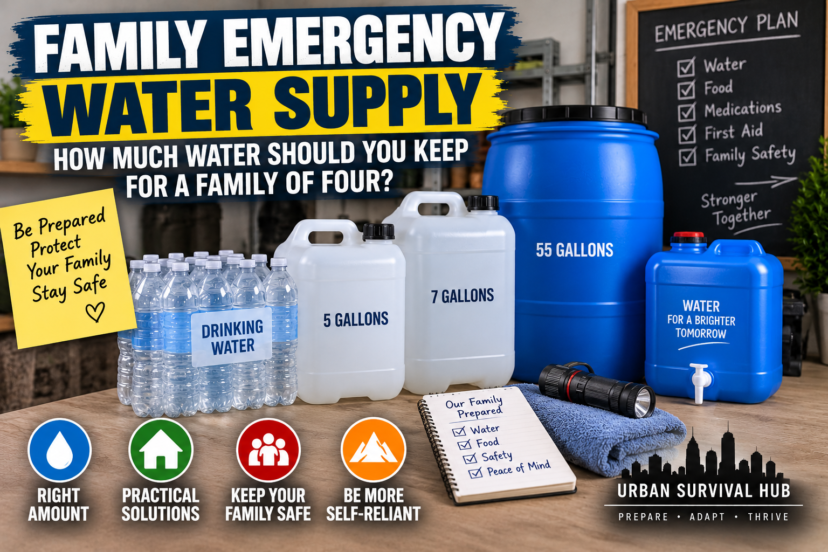
- Five-Gallon Food-Grade Jugs
- Seven-Gallon Water Containers
- Stackable Water Containers
- Larger Potable-Water Barrels
Avoid random household containers that were not designed for drinking water.
Never use containers that previously held gasoline, pesticides, cleaning chemicals, solvents, or other hazardous substances.
🛢️ What Size Containers Work Best For A Family Of Four?
A combination of container sizes often works better than one large tank.
For example, a family could store:
- Several Cases Of Bottled Water
- Two 5-Gallon Containers
- Two 7-Gallon Containers
- One 15- Or 20-Gallon Container
Or, if you have adequate space, a 55-gallon food-grade barrel could cover much of a two-week planning target.
The downside of large barrels is weight.
A 55-gallon barrel filled with water can weigh more than 450 pounds.
Once filled, it is essentially stationary.
Smaller containers are easier to carry, rotate, divide among family members, and take during evacuation.
For most households, the best family emergency water supply combines portability with enough total capacity.
🌡️ Where Should Emergency Water Be Stored?
Water should ideally be stored in a cool, dry, protected area.
Avoid places exposed to extreme heat, direct sunlight, chemicals, or physical damage.
Possible locations include:
- Interior Closets
- Pantries
- Utility Rooms
- Protected Basement Areas
- Sturdy Ground-Level Storage Areas
- Temperature-Moderate Garage Spaces
Avoid placing large, heavy containers on weak shelving.
Water weighs about 8.3 pounds per gallon, so even a 5-gallon container can weigh more than 40 pounds.
Spread supplies between a few locations when practical.
That way, a basement flood, garage problem, or damaged storage area does not eliminate your entire reserve.
🐕 Don’t Forget Water For Pets
One of the easiest preparedness mistakes is calculating water only for the people in the household.
Pets need water too.
A large dog may consume considerably more water than a small cat, and needs can rise during hot weather or stressful situations.
Speak with your veterinarian if you are unsure how much emergency water your animal needs.
Include pet water in your family emergency water supply rather than treating it as an afterthought.
You should also keep bowls, food, medications, carriers, and other pet supplies with your emergency kit.
☀️ When Should You Store More Than One Gallon Per Person Per Day?
The one-gallon guideline is a starting point.
Some situations call for more.
Consider increasing your reserve when:
- Temperatures Are Very Hot
- Someone Is Pregnant
- A Family Member Is Sick
- People Are Doing Physical Work
- You Have Infants Or Young Children
- You Have Multiple Pets
- You Expect A Long Utility Disruption
- You Live In A Disaster-Prone Region
For example, families in hurricane-prone Gulf Coast areas may choose to maintain a larger reserve during hurricane season.
Households in earthquake-prone areas may also prefer a longer supply because damaged infrastructure can take time to repair.
Preparedness works best when it reflects your actual risks.
🧼 How To Keep Stored Emergency Water Safe
Good storage habits matter just as much as quantity.
Before filling reusable containers, clean and sanitize them according to their manufacturer instructions and appropriate public-health guidance.
Once filled:
- Seal Containers Tightly
- Label Them With The Fill Date
- Keep Them Away From Chemicals
- Protect Them From Heat And Sunlight
- Inspect Them Periodically
- Replace Or Rotate Water As Recommended
Check containers for cracks, leaks, damaged caps, cloudiness, odors, or other signs of problems.
Your family emergency water supply should be something you can confidently use, not something you discover has been leaking behind a shelf for two years.
🔄 Why You Need More Than Stored Water
Stored water should be the foundation of your plan, but it should not be your only layer.
A longer emergency could outlast your supply.
That is why families may also want a suitable backup water-treatment option.
Possible emergency tools include:
- Water Filters
- Purification Systems
- Appropriate Disinfection Supplies
- Clean Collapsible Containers
- Manual Pumps Or Siphons
However, no single treatment method handles every type of contamination.
Boiling may help with biological contamination when official guidance recommends it, but it does not make chemically contaminated water safe.
Always follow local emergency and public-health instructions.
🏙️ Family Emergency Water Supply Tips For Apartments
Apartment residents often assume they cannot store enough water.
You may have more options than you think.
Instead of a large barrel, use smaller containers distributed throughout appropriate storage spaces.
For example:
- Keep Bottled Water In A Pantry.
- Put A 5-Gallon Jug In A Closet.
- Store Another Container Under A Sturdy Table Or Shelf.
- Keep A Small Supply With Evacuation Gear.
Even 12 gallons can provide a family of four with a basic three-day reserve.
Start there.
You can improve your preparedness later as space allows.
🚗 Keep Some Water Ready For Evacuation
Not every emergency lets you stay home.
Wildfires, hurricanes, gas leaks, flooding, and other hazards may require evacuation.
That means part of your family emergency water supply should be portable.
A few bottles or small jugs can be stored with evacuation supplies.
Avoid making every container so large that it cannot be moved quickly.
Portable water is also useful if you become stranded during a road closure or major winter storm.
Vehicle storage should be inspected regularly because temperatures inside cars can become extreme.
⚠️ Common Family Water Storage Mistakes
Families often make the same mistakes when creating emergency supplies.
Watch for these:
- Storing Too Little Water
- Forgetting Pets
- Using Non-Food-Grade Containers
- Keeping Water Near Gasoline Or Chemicals
- Storing Everything In One Place
- Forgetting To Inspect Supplies
- Making Every Container Too Heavy
- Depending Only On A Water Filter
- Waiting Until A Storm Is Approaching To Buy Water
A simple, organized plan beats a large but poorly maintained stockpile.
👷 When To Consult A Professional Or Follow Official Guidance
Some water emergencies require professional help or official direction.
Follow instructions from your local water utility, health department, and emergency management agency during boil-water notices, chemical contamination events, floods, hurricanes, and other disasters.
Call a licensed plumber if your water supply may have been affected by sewage, backflow, damaged pipes, or plumbing contamination.
If your emergency water system uses electric pumps, wells, or other powered equipment, qualified electricians or well professionals may be necessary.
Seek medical guidance if someone drinks potentially contaminated water and develops concerning symptoms.
During an active emergency, official local instructions should always take priority over general preparedness advice.
❓ FAQs: Family Emergency Water Supply
How Much Water Should A Family Of Four Store For An Emergency?
Using one gallon per person per day as a basic planning guideline, a family of four needs about 12 gallons for three days, 28 gallons for one week, and 56 gallons for two weeks.
Is 20 Gallons Enough For A Family Of Four?
Twenty gallons provides about five days of water using the one-gallon-per-person-per-day baseline. Actual needs may be higher depending on weather, health, activity, pets, and sanitation requirements.
How Much Water Does A Family Of Four Need For Two Weeks?
A basic two-week supply is about 56 gallons. Consider storing additional water if you live in a hot climate, have pets, or have household members with additional medical or hydration needs.
How Long Can Emergency Water Be Stored?
That depends on the container, water source, preparation method, storage environment, and manufacturer or public-health recommendations. Label and inspect stored water and follow current guidance for replacement or rotation.
Is Bottled Water Good For Emergency Storage?
Yes. Commercially bottled water is convenient and easy to store. Keep it in a cool, protected location and follow manufacturer recommendations regarding storage and dates.
Should I Store Water In A 55-Gallon Barrel?
A food-grade 55-gallon barrel can be useful for households with sufficient space. However, it becomes extremely heavy when filled and requires a stable location and a practical method for dispensing water.
Do I Need Emergency Water If I Have A Water Filter?
Yes. Filters vary in what they remove, and some emergencies involve contaminants that household filters cannot safely address. Stored drinking water provides an immediate supply while filtration can serve as an additional backup layer.
🛡️ Final Thoughts: Build Your Family Water Supply One Step At A Time
Creating a dependable family emergency water supply does not have to be expensive, intimidating, or complicated.
For a family of four, start with 12 gallons.
Once that feels manageable, work toward 28 gallons.
If you have the room and budget, consider building toward 56 gallons or more.
The exact number matters less than making steady progress.
Choose safe containers. Store them carefully. Include pets. Keep some water portable. Add a backup treatment method. Check your supplies periodically.
These simple actions can make a major difference when a hurricane, winter storm, wildfire, power outage, or water emergency disrupts normal life.
Preparedness is not about expecting the worst every day. It is about knowing that when something unexpected happens, your family has options.
A few gallons today can mean less stress, greater independence, and much more confidence tomorrow.
Preparedness And Safety Disclaimer: This article is for general educational and preparedness purposes only. Emergency water needs, health considerations, regional hazards, and regulations vary. Always follow local laws, official emergency-management and public-health guidance, water-utility notices, and manufacturer instructions when applicable.
 Explore more:
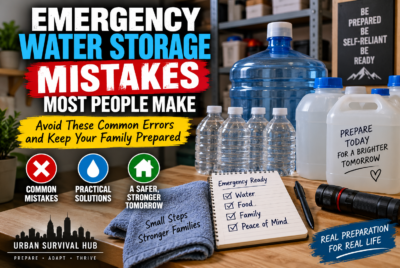
- Emergency Water Storage Mistakes Most People Make
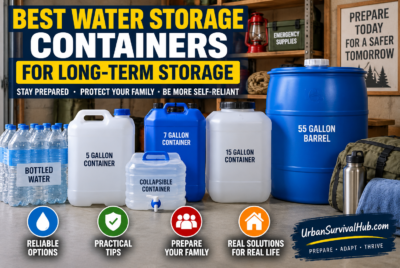
- Best Water Storage Containers For Long-Term Storage
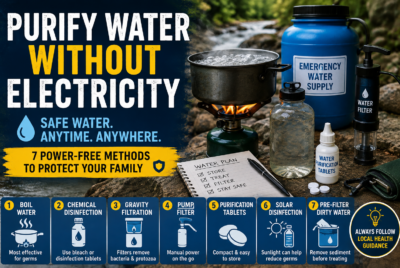
- Purify Water Without Electricity