Apartment Emergency Preparedness: 11 Smart Ways To Stay Safe In A Small Space
Protect Yourself Without Extra Space Or Expensive Gear
Apartment emergency preparedness means planning for disasters and disruptions while working within an apartment building’s space, safety rules, and shared systems.
Start by identifying local hazards, learning your building’s evacuation procedures, storing emergency water and food, preparing a compact go-bag, and keeping reliable lighting and communication supplies.
Also plan for elevator outages, limited heating or cooling, and temporary water interruptions. A small, well-organized emergency kit and a clear evacuation plan can make a meaningful difference.
For millions of Americans living in apartments, situations like this highlight why apartment emergency preparedness matters.
Unlike homeowners, apartment residents often have limited storage, shared utilities, building restrictions, and fewer backup power options. However, these challenges don’t mean you need expensive survival equipment or a dedicated storage room.
With a few smart decisions, you can prepare for common emergencies while keeping your living space comfortable and organized.
Whether you rent a small studio, live in a high-rise building, or share an apartment with family members, practical preparedness starts with understanding your risks, organizing essential supplies, and knowing how to respond when everyday services suddenly stop working.
Key Takeaways
Most Likely Cause: Power outages, severe weather, building fires, water interruptions, or other emergencies affecting shared apartment systems.
Usually Serious? Not always, but high-rise buildings, limited exits, and disrupted utilities can increase safety risks.
First Thing To Check: Your building’s emergency procedures, evacuation routes, stairwells, and available emergency supplies.
Best Solution: Build a practical apartment emergency preparedness plan with compact supplies, reliable communication methods, and clear safety procedures.
🛡️ Why Emergency Preparedness Is Different In Apartments
Living in an apartment creates challenges that homeowners may not experience.
You probably cannot install a permanent generator, modify electrical systems, or store large quantities of emergency equipment.
You may also depend on building management for water, heating, security, and access to shared spaces.
Common Apartment Emergency Risks
Some of the most important risks include:
-
Power Outages: Elevators, lighting, internet access, and some water systems may stop working.
-
Building Fires: Smoke and blocked exits can make evacuation dangerous.
-
Severe Weather: Hurricanes, tornadoes, and winter storms may interrupt essential services.
-
Water Interruptions: Broken pipes or damaged infrastructure can leave residents without running water.
-
Extreme Temperatures: Apartments may become dangerously hot or cold without heating or air conditioning.
-
Evacuation Problems: Crowded stairwells, mobility limitations, and damaged exits may complicate evacuation.
The goal isn’t to prepare for every imaginable disaster. It’s to identify the most realistic problems and create simple solutions.
📋 11 Essential Apartment Emergency Preparedness Strategies
1. Learn Your Apartment Building’s Emergency Procedures
Before purchasing emergency equipment, understand how your building operates during emergencies.
Ask your property manager or landlord about fire evacuation procedures, emergency stairwells, alarm systems, and designated gathering areas.
Find at least two possible exits when available.
Walk the stairwell routes so you know where they lead.
If you live in a high-rise, learn the building’s specific instructions for fire emergencies and severe weather.
Important: Never use elevators during a fire evacuation. In some high-rise situations, authorities may direct residents to remain inside their units rather than evacuate. Follow building-specific instructions and emergency responders.
2. Build A Compact Apartment Emergency Kit
You don’t need a large storage closet to prepare for emergencies.
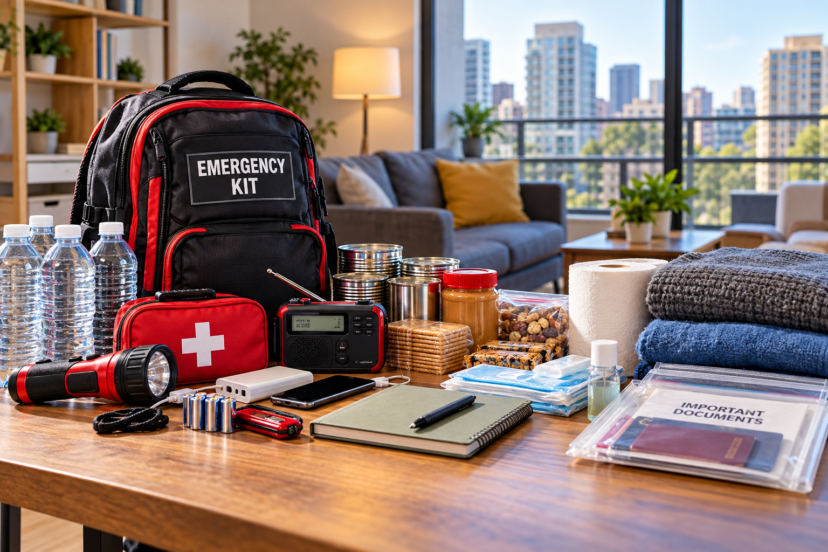
A sturdy backpack, plastic storage container, or under-bed organizer can hold essential supplies.
Your basic apartment survival kit should include:
-
Flashlights And Extra Batteries
-
Battery-Powered Emergency Radio
-
First Aid Supplies
-
Portable Phone Charger
-
Nonperishable Food
-
Drinking Water
-
Prescription Medications
-
Personal Hygiene Supplies
-
Copies Of Important Documents
-
Emergency Contact Information
Choose compact, multipurpose products whenever possible.
Keep essential evacuation supplies in a bag you can carry easily.
3. Store Emergency Water In Small Spaces
Water storage is one of the biggest challenges for apartment emergency preparedness.
Ready.gov recommends storing at least one gallon of water per person per day for drinking and sanitation, with a three-day supply for evacuation and a two-week supply for home use when possible.
For one person, a basic three-day supply means three gallons.
For a family of four, that means twelve gallons.
Instead of storing one large container, consider several smaller bottles or containers that fit under sturdy furniture or inside lower cabinets.
Avoid placing heavy water containers on high shelves.
Rotate stored water according to the manufacturer’s recommendations and keep containers away from excessive heat and direct sunlight.
4. Prepare Food That Requires Little Or No Cooking
During an extended power outage, electric stoves, microwaves, and refrigerators may become unavailable.
Stock foods that can be eaten without cooking.
Good options include:
-
Canned Beans And Vegetables
-
Peanut Butter
-
Crackers
-
Shelf-Stable Milk
-
Canned Tuna Or Chicken
-
Dried Fruit
-
Nuts And Granola Bars
-
Ready-To-Eat Meals
Choose foods your household already enjoys.
Keep a manual can opener with your supplies.
Never use charcoal grills, camping stoves, or fuel-burning cooking equipment inside an apartment, hallway, or enclosed balcony. Carbon monoxide can build up quickly and become deadly.
5. Prepare For Apartment Power Outages
A blackout can affect more than your lights.
Depending on the building, elevators, electronic locks, ventilation, internet connections, and water pumps may also be affected.
Keep rechargeable power banks charged and store flashlights where everyone can find them.
Battery-powered LED lanterns are especially useful because they provide room lighting without open flames.
Avoid candles when possible because they create unnecessary fire risks.
If you rely on electrically powered medical equipment, speak with your healthcare provider about appropriate backup arrangements.
Never connect a portable generator to an apartment electrical system or operate one indoors, in garages, or on balconies.
6. Create A Clear Apartment Evacuation Plan
Every apartment household needs a plan for leaving safely.
Identify your primary exit, an alternative route when available, and a safe outdoor meeting location.
Keep shoes, keys, identification, and a compact emergency go-bag accessible.
If you have children or pets, include their needs in the evacuation plan.
For residents with mobility limitations, contact building management to discuss available emergency assistance procedures.
Practice your plan occasionally without blocking shared hallways or disturbing neighbors.
Remember that some emergencies require sheltering indoors instead of evacuation. Always follow official instructions for the specific situation.
7. Prepare For Winter Storms And Extreme Heat
Temperature emergencies can become particularly dangerous in apartments.
During winter storms, heating systems may fail, leaving residents exposed to cold indoor conditions.
Store warm blankets, layered clothing, insulated socks, and suitable sleeping bags.
During extreme heat, keep drinking water available and monitor indoor temperatures.
Battery-powered fans may improve comfort but cannot reliably prevent heat illness in dangerously hot conditions.
If your apartment becomes unsafe because of extreme temperatures, move to an officially designated warming or cooling center when travel is safe.
Never use gas ovens, outdoor heaters, or camping equipment to heat your apartment.
8. Keep Important Documents And Emergency Contacts Ready
Disasters can interrupt internet access or force residents to leave quickly.
Keep waterproof copies of essential documents, such as identification, insurance information, medical details, and emergency contacts.
Store digital backups securely when possible.
Write down important phone numbers instead of relying entirely on your smartphone.
Choose an out-of-state contact who can help relay messages if local communication networks become unreliable.
Protect sensitive personal information by keeping documents in a secure location.
9. Plan For Pets And Family Members With Special Needs
Apartment emergency planning should consider everyone in the household.
For pets, prepare carriers, food, water, medications, identification, and cleanup supplies.
Check which nearby emergency shelters or accommodations accept animals.
Families with infants may need diapers, formula, and extra clothing.
Older adults and people with disabilities may require medication lists, mobility equipment, accessible transportation, or medical backup power.
Discuss specialized needs with appropriate professionals before an emergency.
10. Work With Neighbors And Building Management
One advantage of apartment living is having neighbors nearby.
A small network of trusted residents can improve communication and mutual assistance during emergencies.
Consider exchanging contact information with neighbors you know and trust.
Ask building management how emergency alerts will be delivered if electricity or internet service fails.
You can also discuss accessibility concerns, stairwell safety, and procedures for reporting damaged utilities.
However, never enter unsafe areas or attempt rescues that should be handled by trained emergency responders.
11. Review Your Apartment Emergency Supplies Regularly
Emergency preparedness works best when it becomes a simple household habit.
Check your supplies every six months.
Replace expired food, test flashlights, recharge power banks, and update contact information.
Review evacuation procedures if you move to another apartment or if your building changes its emergency policies.
A few minutes of maintenance can prevent unpleasant surprises during a real emergency.
💰 Budget-Friendly Apartment Emergency Preparedness Tips
You don’t need hundreds of dollars to become better prepared.
Start with items you already have, such as a backpack, flashlight, spare blankets, and reusable storage containers.
Purchase additional supplies gradually during normal shopping trips.
Prioritize drinking water, shelf-stable food, basic first aid, communication, and lighting.
Dollar stores and discount retailers may offer affordable storage containers, batteries, and basic household supplies.
However, choose reliable, safety-certified electrical products rather than purchasing the cheapest unfamiliar chargers or power equipment.
A simple, dependable setup is more valuable than a collection of expensive gadgets you rarely use.
🏙️ Smart Storage Ideas For Small Apartment Emergency Kits
Limited space doesn’t have to limit your preparedness.
Consider using:
-
Under-Bed Containers: For lightweight emergency supplies and blankets.
-
Lower Cabinet Shelves: For drinking water and canned food.
-
Closet Organizers: For compact emergency bags.
-
Labeled Storage Bins: For batteries, hygiene supplies, and first aid materials.
-
A Small Grab-And-Go Backpack: For items needed during evacuation.
Keep supplies accessible without blocking doors, windows, stairwells, or other escape routes.
Avoid storing heavy containers above sleeping areas or where they could fall during an earthquake.
🚨 When To Consult A Professional
Some apartment emergencies require professional assistance.
Contact building management or local emergency officials for evacuation procedures, shelter information, damaged building systems, and disaster warnings.
Consult medical professionals if someone depends on electricity-powered medical equipment, refrigerated medications, or specialized healthcare supplies.
Report gas leaks, electrical damage, plumbing failures, or structural concerns to qualified professionals. Never attempt dangerous utility repairs yourself.
If you smell gas, notice serious structural damage, or face an immediate threat, leave the dangerous area when safe and contact emergency services.
❓ FAQs About Apartment Emergency Preparedness
1. How Do You Prepare For Emergencies In An Apartment?
Start by learning your building’s evacuation procedures, storing water and food, preparing a compact emergency kit, and creating a communication plan. Include backup lighting and supplies for power outages.
2. What Should Be In An Apartment Emergency Kit?
Include drinking water, nonperishable food, flashlights, batteries, a first aid kit, medications, phone chargers, hygiene products, important documents, and emergency contact information.
3. How Much Emergency Water Should I Store In An Apartment?
Plan for at least one gallon per person per day. A three-day supply is a useful starting point, while a two-week home supply provides greater resilience when storage space permits.
4. How Can I Prepare For A Power Outage In A High-Rise Apartment?
Keep battery-powered lighting, charged power banks, drinking water, food, and necessary medications available. Learn stairwell routes and ask building management which systems have emergency backup power.
5. Can You Use A Generator In An Apartment?
Fuel-powered portable generators should never be used indoors, on balconies, or in enclosed spaces. Battery-based portable power stations may be suitable for some apartment needs when used according to manufacturer instructions and building rules.
6. What Is The Best Emergency Food For Apartment Living?
Shelf-stable foods requiring little or no preparation are practical choices. Examples include canned beans, peanut butter, crackers, nuts, canned meat, and ready-to-eat meals.
🌟 Conclusion: Small Spaces Can Still Be Well Prepared
Apartment emergency preparedness doesn’t require a large home, expensive equipment, or advanced survival knowledge.
What matters most is having a realistic plan, dependable supplies, and a clear understanding of your building’s safety procedures.
Start with a few essentials: identify your exits, store drinking water, prepare emergency lighting, and create a contact list.
Then gradually improve your supplies and practice your plan.
Living in a small space doesn’t mean you have to feel unprepared.
With simple, affordable steps, you can build greater independence, protect the people who matter most, and feel more confident when unexpected emergencies happen.
Preparedness and Safety Disclaimer: The information on this website is for general educational purposes only and is not a substitute for professional advice. Emergency needs, building requirements, and regional regulations may vary. Always follow local laws, official emergency guidance, building safety procedures, and manufacturer instructions when applicable.
Explore more:
- Food Safety Power Outage: How Long Will Food Last
- Backup Power For Home: 7 Essential Options
- Family Emergency Plan: 11 Simple Steps