Family Emergency Plan: 11 Simple Steps To Keep Your Family Safe And Prepared
How To Create A Family Emergency Plan Before Disaster Strikes
A family emergency plan is a simple set of instructions that helps household members respond safely during disasters and unexpected emergencies.
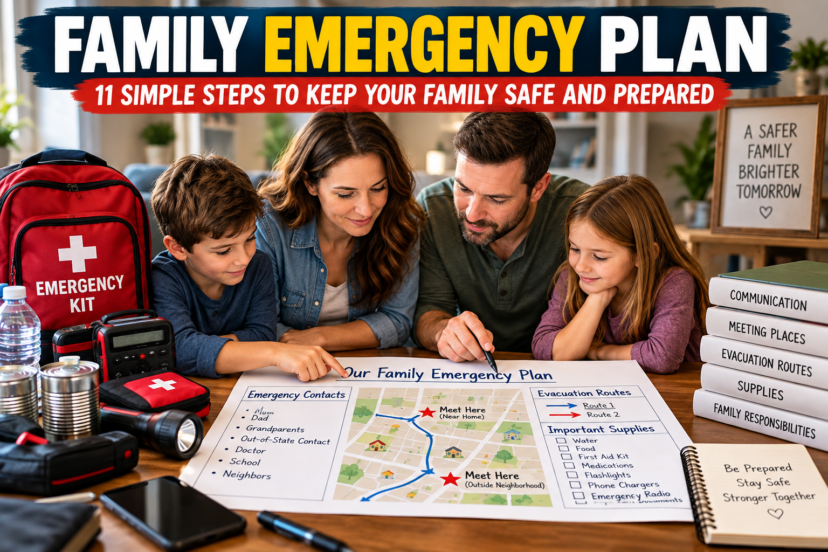
It should include emergency contacts, evacuation routes, meeting locations, communication methods, essential supplies, and responsibilities for each family member.
Start by identifying local hazards, choosing two meeting places, creating a contact list, and practicing your plan together. Keep printed copies available and review the plan at least twice a year.
Imagine a powerful storm knocks out electricity across your neighborhood. Your children are at school, your phone battery is running low, and local roads are closing. Would everyone in your household know what to do next?
That’s why creating a family emergency plan is one of the smartest and most affordable steps you can take toward better emergency preparedness.
Emergencies rarely happen at convenient times. Hurricanes, wildfires, winter storms, extended power outages, and other unexpected events can disrupt everyday routines within minutes.
The good news? You don’t need expensive survival equipment, advanced training, or a large budget to prepare your family.
A practical emergency plan helps everyone understand where to go, how to communicate, what supplies to keep available, and how to respond safely when normal routines suddenly change.
Whether you live in a small apartment or a suburban home, the goal is simple: replace confusion with clear decisions and give your family greater confidence during uncertain situations.
Key Takeaways
Most Likely Cause: Severe weather, power outages, fires, or unexpected emergencies that disrupt normal family routines.
Usually Serious? Not always, but emergencies can become dangerous when families lack clear instructions or reliable communication.
First Thing To Check: Whether everyone knows emergency contacts, evacuation routes, and safe meeting locations.
Best Solution: Create a practical family emergency plan, prepare basic supplies, and practice together regularly.
🛡️ Why Every Household Needs A Family Emergency Plan
Many people assume they will have enough time to make decisions when an emergency happens.
Unfortunately, stressful situations can make even simple choices difficult.
A well-organized household emergency plan reduces uncertainty by establishing important decisions before a crisis begins.
Common Emergencies Families Should Prepare For
Depending on your location in the United States, potential emergencies may include:
-
Hurricanes: Strong winds, flooding, and extended electricity outages.
-
Wildfires: Rapid evacuations and dangerous smoke conditions.
-
Winter Storms: Blocked roads, extreme cold, and heating disruptions.
-
Tornadoes: Sudden warnings requiring immediate shelter.
-
Earthquakes: Structural damage and interruptions to essential services.
-
Power Outages: Loss of refrigeration, lighting, communications, or medical equipment power.
Your plan should focus first on the hazards most likely to affect your community.
📋 11 Steps To Create A Family Emergency Plan
1. Identify The Biggest Emergency Risks In Your Area
Start by learning which disasters are most common where you live.
For example, families in Florida may prioritize hurricanes, while households in California may focus on earthquakes and wildfires.
Check local emergency management websites, community alerts, and official evacuation information.
Ask yourself:
-
Could our home experience flooding?
-
Are wildfires or severe storms common?
-
Would we need to evacuate quickly?
-
Could a power outage create medical or heating problems?
Understanding local risks helps you prepare for realistic situations instead of trying to plan for every possible disaster.
2. Create A Family Emergency Contact List
Every family emergency plan needs a reliable communication system.
Write down important phone numbers and keep copies in wallets, backpacks, vehicles, and emergency kits.
Include:
-
Parents And Guardians
-
Children’s Schools And Daycare Providers
-
Nearby Relatives Or Trusted Neighbors
-
Doctors And Medical Providers
-
Local Emergency Services And Utility Companies
-
An Out-Of-State Emergency Contact
Choose someone outside your immediate region who can help relay information if local communications become unreliable.
Teach children when and how to call 911. Explain that 911 is for emergencies requiring police, fire, or medical assistance.
3. Choose Two Emergency Meeting Locations
Family members may become separated during an evacuation or unexpected emergency.
Choose two meeting locations:
Meeting Place One: Near Your Home
Select a recognizable, safe location outside the house, such as a designated tree or a neighbor’s driveway, away from traffic and other hazards.
Meeting Place Two: Outside Your Neighborhood
Choose a relative’s home, community facility, or another suitable location that everyone can identify.
Make sure each family member understands when to use these locations and what to do if either becomes unsafe or inaccessible.
Never return to a dangerous building simply to reach a meeting place.
4. Plan Multiple Evacuation Routes
Evacuation planning is especially important in communities vulnerable to hurricanes, flooding, or wildfires.
Identify at least two possible ways to leave your neighborhood, while recognizing that official evacuation routes and instructions take priority.
Keep a printed regional map in your vehicle or emergency supplies.
Your evacuation plan should also identify:
-
Transportation Options
-
Possible Temporary Accommodations
-
Pet-Friendly Shelter Alternatives
-
Essential Items To Take
-
Assistance Needed By Older Adults Or People With Disabilities
If authorities order an evacuation, follow their instructions promptly.
5. Prepare A Basic Family Emergency Kit
A family emergency plan works best when essential supplies are ready before you need them.
According to Ready.gov, households should prepare supplies that support basic needs during emergencies.
A practical starter kit includes:
-
Drinking Water: Generally one gallon per person per day, with at least a three-day supply for evacuation.
-
Nonperishable Food: At least three days of easy-to-prepare meals.
-
Flashlights And Extra Batteries
-
Battery-Powered Or Hand-Crank Emergency Radio
-
First Aid Supplies
-
Prescription Medications And Medical Essentials
-
Phone Chargers And Power Banks
-
Hygiene Products
-
Copies Of Important Documents
-
Pet Food And Supplies, If Needed
For sheltering at home, plan for a longer disruption when practical. Ready.gov recommends working toward a two-week supply of water for home use.
You can build your kit gradually by purchasing a few extra items during regular grocery trips.
6. Assign Emergency Responsibilities
During a stressful situation, clear responsibilities help everyone act more efficiently.
Adults can take responsibility for collecting emergency supplies, helping children, checking official alerts, or assisting relatives who need support.
Older children may help locate their shoes, jackets, or personal emergency bags.
However, children should never be responsible for dangerous tasks or for rescuing others.
Assign backup responsibilities in case someone is away from home when an emergency occurs.
7. Plan For Children, Older Adults, And Pets
Not every family member has the same emergency needs.
Young children may need comfort items, extra clothing, formula, or age-appropriate explanations.
Older adults and people with disabilities may require mobility assistance, medication schedules, accessible transportation, or backup power for essential medical devices.
Pets also need food, water, carriers, medications, and identification.
If someone depends on electrically powered medical equipment, develop a backup plan with their healthcare provider and equipment supplier before an outage.
A useful emergency plan considers everyone’s needs rather than assuming one solution works for the entire household.
8. Create A Family Communication Backup Plan
Cellular networks may become overloaded or unavailable during major disasters.
Establish several ways to communicate.
For example:
-
Send Short Text Messages When Calls Cannot Connect.
-
Contact Your Designated Out-Of-State Relative.
-
Use Official Emergency Alerts And Local Radio Broadcasts.
-
Keep Important Phone Numbers On Paper.
-
Establish A Safe Procedure If Communication Fails.
Avoid relying entirely on internet-based applications.
Make sure everyone understands that their immediate safety comes before attempting to contact other family members.
9. Prepare Your Home For Common Emergencies
Your household emergency plan should also address basic home safety.
Install and maintain smoke alarms and carbon monoxide alarms according to manufacturer instructions and local requirements.
Keep appropriate fire extinguishers accessible and learn how to use them safely.
Know where your main water shutoff valve is located.
Have qualified professionals explain gas and electrical shutoffs when appropriate. Never operate damaged equipment or attempt hazardous utility repairs yourself.
Secure heavy furniture where earthquake risks exist, and keep exits clear.
Small preventive improvements can reduce injuries and property damage during emergencies.
10. Practice Your Family Emergency Plan
Writing a plan is only the beginning.
Practice helps family members remember what to do when they feel nervous or rushed.
Try a short family emergency drill twice a year.
You might practice:
-
Leaving The Home Through A Safe Exit
-
Reaching The Outdoor Meeting Location
-
Finding Emergency Contact Information
-
Collecting An Emergency Go-Bag
-
Explaining What To Do If Family Members Are Separated
Keep drills calm and age-appropriate.
For children, emphasize simple instructions and reassurance rather than frightening disaster scenarios.
11. Review And Update Your Plan Regularly
A family emergency plan should change as your household changes.
Review it at least every six months and after important life events, such as moving, changing schools, or developing new medical needs.
Check phone numbers, meeting locations, evacuation information, and emergency supplies.
Replace expired food, medications, and batteries as appropriate.
An outdated plan can create confusion, so regular reviews are just as important as creating the original document.
💰 How To Build A Family Emergency Plan On A Budget
Emergency preparedness doesn’t require expensive equipment.
Start with the items you already own.
An ordinary backpack can become an emergency go-bag. A notebook can hold your contact list, and a printed map can provide navigation backup.
Prioritize necessities before purchasing specialized survival gear.
For example, focus on drinking water, shelf-stable food, lighting, communication, and necessary medications.
Add supplies over several weeks instead of purchasing everything at once.
The most valuable parts of your plan—communication, meeting locations, and practicing safe decisions—often cost nothing.
🗓️ A Simple Family Emergency Planning Checklist
Your Household Preparedness Checklist
🧑🚒 When To Consult A Professional
Some emergency situations require guidance beyond basic household preparation.
Contact local emergency management officials for evacuation procedures, shelter locations, and disaster-specific instructions.
Consult medical professionals when planning for serious health conditions, prescription medication storage, or medical equipment that requires electricity.
Hire licensed electricians, plumbers, or other qualified professionals when dealing with damaged utilities, backup electrical systems, gas leaks, or unsafe home conditions.
During immediate danger, follow official warnings and contact emergency services when necessary.
❓ FAQs About Family Emergency Plans
1. What Should Be Included In A Family Emergency Plan?
Include emergency contacts, meeting locations, evacuation routes, communication backups, essential supplies, household responsibilities, and plans for children, pets, and people with medical needs.
2. How Do You Make A Family Emergency Plan For Free?
Start with a handwritten contact list, free local evacuation maps, and household discussions. Use existing supplies and free planning resources from Ready.gov to create a practical plan without spending money.
3. How Often Should You Update Your Family Emergency Plan?
Review your plan at least every six months and whenever contact information, household needs, school arrangements, or local evacuation procedures change.
4. What Is The Most Important Part Of A Family Emergency Plan?
Clear communication is one of the most important elements. Everyone should know how to reach trusted contacts, where to meet, and what to do if communication systems fail.
5. How Can I Teach Young Children About Emergency Preparedness?
Use short explanations, simple safety rules, and calm practice drills. Teach children their emergency contacts, safe meeting locations, and when to call 911.
6. What Should Families Do During A Power Outage?
Use flashlights, monitor official updates, preserve refrigerated food by keeping appliance doors closed, and check on vulnerable household members. Never operate fuel-powered generators, grills, or camping stoves indoors or in garages.
7. What Is The Difference Between An Emergency Plan And An Emergency Kit?
An emergency plan explains what your family will do, where everyone will go, and how members will communicate. An emergency kit contains physical supplies such as water, food, flashlights, medications, and first aid materials. Both are important.
🌟 Conclusion: Start Your Family Emergency Plan Today
Creating a family emergency plan is one of the simplest ways to build greater confidence, safety, and self-reliance.
You don’t need to predict every disaster or invest in expensive survival equipment.
Start with a conversation, write down emergency contacts, choose meeting locations, and gather a few essential supplies.
Then practice your plan and improve it over time.
The goal isn’t to prepare perfectly for every emergency. It’s to help your family make safer decisions when unexpected situations arise.
A few practical steps today can make a meaningful difference tomorrow.
Preparedness And Safety Disclaimer: The information on this website is for general educational purposes only and is not a substitute for professional advice. Emergency needs and regional regulations may vary. Always follow local laws, official emergency guidance, and manufacturer instructions when applicable.
Explore more: