Bug Out Bag Essentials: 25 Must-Have Items Every Emergency Bag Should Include
What are the 25 must-have items in your bug out bag essentials? Unexpected emergencies can happen at any time. Hurricanes, wildfires, severe storms, chemical spills, and other disasters sometimes force families to leave home quickly with little warning. During these stressful moments, having a well-prepared bug out bag can provide peace of mind and help you focus on keeping your loved ones safe.
Fortunately, building an emergency bag doesn’t require expensive gear or survival expertise. A few carefully chosen supplies can help you become more self-reliant, reduce panic, and improve your readiness for unexpected situations.
Learning about bug out bag essentials is one of the simplest ways to build confidence and prepare for the unexpected.
⭐ Quick Answer: Bug Out Bag Essentials
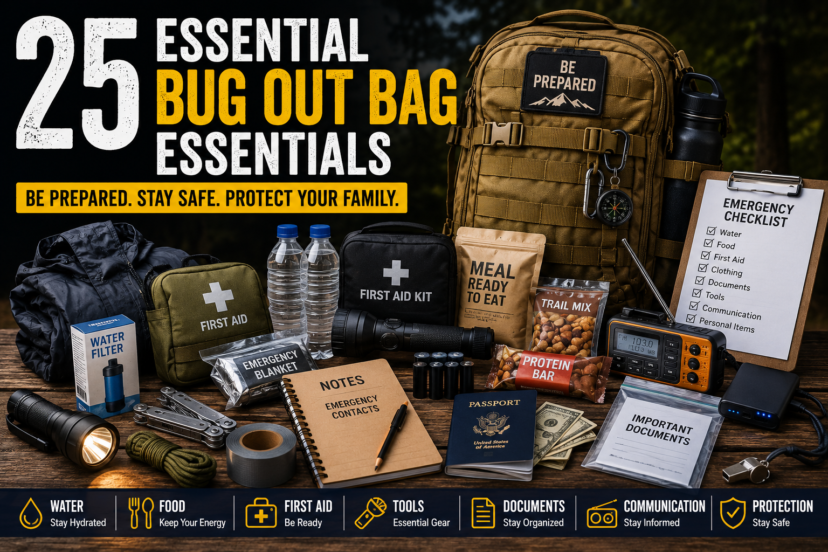
Bug out bag essentials include water, food, first aid supplies, flashlights, batteries, important documents, medications, clothing, hygiene items, and communication tools. A properly packed emergency bag helps families evacuate quickly and remain self-sufficient for several days.
Key Takeaways
Most likely cause: Many people don’t have a ready-to-go emergency bag, making it harder to evacuate quickly during disasters or other unexpected emergencies.
Usually serious? It can be. Delays caused by missing essential supplies may increase stress and make it more difficult to stay safe and self-sufficient during an evacuation.
First thing to check: Review your bug out bag to make sure it contains enough water, non-perishable food, medications, first aid supplies, important documents, clothing, and other essentials for every family member.
Best solution: Pack a complete bug out bag with essential supplies for at least 72 hours, store it in an easily accessible location, and inspect and update the contents regularly so it’s always ready to use.
🎒 Why Bug Out Bag Essentials Matter
A bug out bag is a portable emergency kit designed to support you during an evacuation or short-term disaster.
Common situations that may require evacuation include:
- Hurricanes
- Wildfires
- Tornadoes
- Flooding
- Winter Storms
- Power Outages
- Hazardous Material Incidents
- Civil Emergencies
Having bug out bag essentials ready before disaster strikes helps reduce stress and eliminates last-minute scrambling.
Benefits Of A Prepared Emergency Bag
- Greater Peace Of Mind
- Faster Evacuations
- Improved Family Safety
- Increased Self-Reliance
- Reduced Emergency Stress
- Better Disaster Readiness
⚡ How Long Should A Bug Out Bag Support You?
Most preparedness experts recommend building a bag that can sustain one person for approximately 72 hours.
Your supplies should help cover:
- Water Needs
- Food Requirements
- Shelter Needs
- Medical Supplies
- Basic Hygiene
- Communication
Remember that every family has unique needs based on age, climate, health conditions, and location.
🧰 25 Bug Out Bag Essentials Every Family Should Include
1. Durable Backpack
Choose a comfortable backpack with multiple compartments and padded straps.
2. Drinking Water
Water is your highest priority.
Include:
- Bottled Water
- Water Pouches
- Collapsible Water Containers
3. Water Filter Or Purification Tablets
These can help provide safe drinking water during emergencies.
4. Non-Perishable Food
Examples include:
- Energy Bars
- Trail Mix
- Peanut Butter
- Freeze-Dried Meals
5. Manual Can Opener
Useful if you pack canned foods.
6. Flashlight
LED flashlights provide reliable lighting and conserve battery power.
7. Extra Batteries
Always carry spare batteries for critical devices.
8. Battery-Powered Or Hand-Crank Radio
Emergency information can be lifesaving.
9. Portable Phone Charger
Power banks help maintain communication.
10. First Aid Kit
Include:
- Bandages
- Antiseptic Wipes
- Gloves
- Pain Relievers
11. Prescription Medications
Maintain an emergency supply whenever possible.
12. Important Documents
Keep copies of:
- Identification
- Insurance Information
- Emergency Contacts
Use waterproof storage bags.
13. Cash In Small Bills
Electronic payment systems may be unavailable.
14. Multi-Tool
A quality multi-tool can assist with many everyday tasks.
15. Emergency Blanket
Compact blankets help conserve body heat.
16. Change Of Clothing
Pack:
- Socks
- Underwear
- Lightweight Layers
17. Rain Gear
Ponchos and lightweight jackets help protect against severe weather.
18. Sturdy Shoes
Comfortable footwear is often overlooked but extremely important.
19. Hygiene Supplies
Include:
- Toothbrush
- Toothpaste
- Wet Wipes
- Hand Sanitizer
20. Face Masks
Masks may be useful during wildfire smoke events or dusty conditions.
21. Work Gloves
Protect your hands during cleanup or debris removal.
22. Whistle
A whistle can help rescuers locate you.
23. Duct Tape
Duct tape is versatile and useful for temporary repairs.
24. Local Maps
GPS systems and cellular service may fail during disasters.
25. Emergency Contact List
Keep phone numbers written on paper in case devices lose power.
🌪️ Customize Bug Out Bag Essentials For Your Region
Different parts of the United States face different threats.
Hurricane Areas
Residents along the Gulf Coast and Atlantic Coast may prioritize:
- Extra Water
- Rain Gear
- Waterproof Containers
Wildfire Regions
Western states may benefit from:
- N95 Masks
- Eye Protection
- Evacuation Maps
Winter Storm Regions
Northern states should consider:
- Extra Blankets
- Hand Warmers
- Cold Weather Clothing
Urban Areas
City residents may want:
- Transit Maps
- Cash
- Portable Chargers
👨👩👧 Consider Special Family Needs
Every emergency bag should reflect the needs of the people using it.
Children
Include:
- Snacks
- Comfort Items
- Diapers If Needed
Older Adults
Consider:
- Prescription Medications
- Mobility Aids
- Hearing Aid Batteries
Pets
Pack:
- Pet Food
- Water Bowl
- Leash
- Vaccination Records
💰 Build Bug Out Bag Essentials On A Budget
Preparedness does not need to become expensive.
Smart ways to save money include:
- Buy Supplies Gradually
- Shop Sales
- Use Existing Backpacks
- Rotate Food Items
- Reuse Containers
Preparedness is a long-term process, not a one-time purchase.
🔄 Review And Update Your Emergency Bag Regularly
Supplies should not be forgotten after they are packed.
Check your bug out bag essentials every six months.
Replace:
- Expired Food
- Medications
- Batteries
- Seasonal Clothing
Regular maintenance helps ensure everything works when needed.
🏙️ Better Urban Survival Strategies
Bug out bags work best when combined with other preparedness measures.
Consider:
- Family Communication Plans
- Emergency Food Storage
- Backup Power Supplies
- Home First Aid Kits
- Water Storage
Layered preparedness creates greater resilience.
👨🔧 When To Consult A Professional
Seek guidance from qualified professionals for medical concerns, utility emergencies, severe weather threats, generator installation, hazardous material incidents, or situations involving safety risks.
Always follow recommendations from:
- Local Emergency Management Officials
- Healthcare Providers
- Fire Departments
- Utility Companies
- FEMA Alerts
- Weather Authorities
Professional guidance should always take priority during emergencies.
❓ FAQs: Bug Out Bag Essentials
What should be in a bug out bag?
Bug out bag essentials typically include water, food, first aid supplies, flashlights, medications, and important documents.
How much water should I pack?
Many people aim to carry enough water for several days while also including water purification options.
How heavy should a bug out bag be?
The bag should remain comfortable enough for the individual carrying it. Avoid overpacking.
How often should I update my emergency bag?
Review supplies every six months and replace expired items.
Can I use a regular backpack?
Yes. Many families successfully use standard backpacks for emergency preparedness.
Should children have their own bug out bags?
Older children may carry age-appropriate supplies, but adults should remain responsible for critical items.
Where should I store my bug out bag?
Keep it in an easily accessible location such as a closet, garage, or near your primary exit.
📌 Final Thoughts
Building bug out bag essentials is one of the most practical and empowering preparedness projects you can tackle. You don’t need to become a survival expert or spend thousands of dollars to improve your family’s readiness.
Start with a backpack and add a few supplies at a time. Small steps taken today can provide tremendous peace of mind tomorrow.
Preparedness is about protecting your loved ones, reducing stress, and creating confidence for whatever challenges the future may bring.
Disclaimer
This article is for general educational and preparedness purposes only. Emergency needs, regional risks, and local regulations may vary. Always follow local laws, official guidance, manufacturer instructions, and recommendations from qualified professionals when making preparedness decisions.
 Explore more: