
Longest Shelf Life Foods: 25 Best Foods To Store For Emergencies
Building an emergency pantry doesn’t have to be expensive or complicated. One of the smartest ways to prepare for power outages, hurricanes, winter storms, wildfires, and unexpected supply chain disruptions is to stock up on longest shelf life foods that can remain safe and nutritious for months—or even years—when stored properly. These foods provide peace of mind, reduce waste, and help families become more self-reliant without constantly replacing expired supplies.
Whether you’re just beginning your preparedness journey or looking to improve your existing emergency pantry, choosing foods with long shelf lives can save money while ensuring your family has reliable meals during uncertain times. The goal isn’t to fill your home with survival rations overnight. Instead, it’s about gradually building a practical food supply that fits your family’s needs, budget, and everyday eating habits. This guide covers the best foods to store, how to maximize their shelf life, and common mistakes to avoid.
🍽️ Quick Answer: Longest Shelf Life Foods
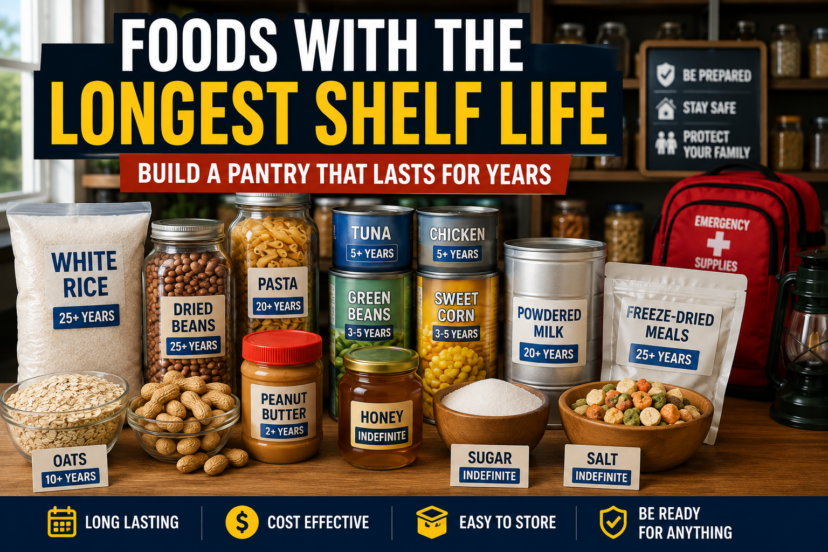
The best longest shelf life foods include white rice, dried beans, pasta, oats, canned meats, canned vegetables, peanut butter, honey, powdered milk, freeze-dried foods, and properly packaged grains. When stored in cool, dry conditions, many of these foods can last several years, while freeze-dried foods may remain usable for 25 years or longer.
⭐ Key Takeaways
Most Likely Cause: Many families struggle with emergency preparedness because they don’t know which longest shelf life foods offer the best value and longevity.
Usually Serious? Relying on foods with short shelf lives can lead to unnecessary waste and leave your pantry underprepared during emergencies.
First Thing To Check: Review expiration dates, storage conditions, and which shelf-stable foods your family already eats.
Best Solution: Build your emergency pantry around affordable, long-lasting foods, rotate supplies regularly, and store everything in cool, dry conditions.
🥫 Why Long Shelf Life Foods Matter
Natural disasters and emergencies often interrupt access to grocery stores.
Examples include:
- Hurricanes
- Winter storms
- Tornadoes
- Flooding
- Wildfires
- Extended power outages
- Supply chain disruptions
A pantry filled with long-lasting foods allows your family to remain comfortable without rushing to crowded stores.
Long shelf life foods also help you:
- Reduce food waste
- Save money
- Prepare gradually
- Build confidence
- Increase self-reliance
Preparedness is much easier when your food lasts for years instead of weeks.
🍚 1. White Rice
White rice is one of the most popular emergency foods.
When stored properly:
- Shelf life: 20–30 years (oxygen-free storage)
- Easy to cook
- High in carbohydrates
- Affordable
Brown rice contains more oils and usually lasts only 6–12 months.
🫘 2. Dried Beans
Beans provide:
- Protein
- Fiber
- Iron
- Long storage life
Examples include:
- Pinto beans
- Black beans
- Kidney beans
- Navy beans
Properly stored dried beans may remain usable for decades, although older beans may require longer cooking times.
🍝 3. Pasta
Dry pasta is inexpensive and stores extremely well.
Benefits include:
- Long shelf life
- Easy preparation
- Family-friendly meals
- Excellent calorie source
Store unopened packages inside sealed containers for additional protection.
🌾 4. Rolled Oats
Oats are excellent for breakfast and baking.
They provide:
- Fiber
- Whole grains
- Slow-releasing energy
Store in airtight containers to maximize freshness.
🥜 5. Peanut Butter
Peanut butter offers:
- Healthy fats
- Protein
- Calories
- No cooking required
Commercial peanut butter typically lasts much longer than natural varieties because it contains stabilizers.
Rotate jars regularly.
🍯 6. Honey
Honey is famous for its incredibly long shelf life.
Properly sealed honey can remain safe almost indefinitely.
If it crystallizes:
Simply warm the container gently in warm water.
Honey never truly spoils under normal storage conditions.
🥫 7. Canned Meats
Excellent choices include:
- Tuna
- Chicken
- Salmon
- Spam
- Roast beef
Canned meats provide valuable protein during emergencies.
Always inspect cans before eating.
Discard any swollen, leaking, rusted, or severely dented cans.
🥕 8. Canned Vegetables
Vegetables help provide:
- Vitamins
- Minerals
- Variety
Popular options include:
- Corn
- Green beans
- Carrots
- Peas
- Mixed vegetables
Rotate supplies every few years for best quality.
🍑 9. Canned Fruit
Fruit provides:
- Natural sweetness
- Hydration
- Vitamin C
Choose fruit packed in juice whenever possible.
🥛 10. Powdered Milk
Powdered milk stores much longer than fresh milk.
It can be used for:
- Drinking
- Cooking
- Baking
Many preparedness experts consider it a pantry essential.
❄️ 11. Freeze-Dried Foods
Freeze-dried foods are among the longest-lasting emergency foods available.
Examples include:
- Fruits
- Vegetables
- Meat
- Complete meals
Many products last 25 years or longer when unopened.
Although more expensive, they provide outstanding long-term value.
🌽 12. Cornmeal
Cornmeal stores well and can be used to make:
- Cornbread
- Pancakes
- Mush
Store in airtight containers.
🌰 13. Nuts And Seeds
While they don’t last as long as grains, properly stored nuts provide:
- Healthy fats
- Protein
- Energy
Rotate them regularly.
🧂 14. Salt
Salt never spoils.
It can also be useful for:
- Seasoning
- Food preservation
- Cooking
Keep it dry.
🍬 15. Sugar
Granulated sugar has an extremely long shelf life.
Store it in airtight containers to prevent moisture absorption.
☕ 16. Coffee And Tea
Coffee and tea help maintain comfort during stressful situations.
Vacuum-sealed coffee lasts much longer than opened packages.
🫒 17. Cooking Oil
Cooking oils provide valuable calories.
Because oils eventually become rancid, rotate bottles according to manufacturer recommendations.
📦 Best Storage Tips
Proper storage dramatically increases shelf life.
Store foods:
- In cool locations
- Away from sunlight
- In dry environments
- Inside airtight containers
- Away from pests
Ideal temperatures are generally below 70°F.
🔄 Rotate Your Emergency Pantry
The easiest system is:
First In, First Out (FIFO)
That means:
- Use older foods first.
- Replace them with newer purchases.
- Inspect supplies twice each year.
This keeps your emergency pantry fresh while reducing waste.
🚫 Foods That Don’t Store Well
Some foods have relatively short shelf lives.
Examples include:
- Brown rice
- Whole wheat flour
- Chips
- Soft crackers
- Fresh dairy
- Fresh meat
- Cooking oils stored too long
These foods are better suited for everyday use than long-term storage.
💰 Build Your Pantry Gradually
You don’t need to buy everything today.
Instead:
💥 Week 1:
- Rice
- Beans
⭐ Week 2:
- Pasta
- Peanut butter
💥 Week 3:
- Canned vegetables
- Canned meat
⭐ Week 4:
- Oats
- Powdered milk
A few extra groceries each shopping trip can build a dependable emergency pantry over time.
🌎 Consider Local Risks
Different emergencies affect food storage differently.
Hurricane Areas
Store foods requiring little cooking.
Wildfire Regions
Maintain portable emergency food kits.
Winter Storm States
Store additional comfort foods and hot beverages.
Earthquake Areas
Secure shelving to prevent falling food containers.
Preparedness should match your local hazards.
👨🔧 When To Consult A Professional
Emergency preparedness sometimes requires professional guidance. Follow recommendations from your local emergency management agency regarding disaster planning, evacuation procedures, and emergency alerts. Consult healthcare professionals if your household requires specialized medical diets, infant nutrition, or prescription nutritional products. If you’re installing backup generators, propane appliances, or emergency cooking systems, work with licensed electricians, plumbers, or qualified technicians. During severe emergencies, always follow instructions from local officials and emergency responders.
❓ Frequently Asked Questions
What foods have the longest shelf life?
White rice, dried beans, honey, salt, sugar, pasta, powdered milk, canned foods, and freeze-dried meals are among the longest-lasting emergency foods.
Can canned food last beyond its expiration date?
Many canned foods remain safe beyond the printed date if the cans are undamaged and stored properly, although quality may gradually decline.
Is freeze-dried food worth buying?
Yes. Freeze-dried food offers one of the longest shelf lives available and is an excellent option for long-term emergency storage.
How often should I rotate emergency food?
Inspect your pantry every six months and replace foods before they lose quality.
Should I store foods my family doesn’t normally eat?
No. Focus on foods your family already enjoys to reduce waste and simplify meal planning during emergencies.
Where is the best place to store emergency food?
Store food in a cool, dry, dark area away from moisture, direct sunlight, and temperature extremes.
How much emergency food should I keep?
Most families should begin with at least a three-day supply and gradually expand to two weeks, one month, or longer based on their needs and budget.
🎯 Final Thoughts On Longest Shelf Life Foods
Choosing the longest shelf life foods is one of the smartest ways to build an affordable, dependable emergency pantry. By focusing on shelf-stable staples like rice, beans, pasta, canned foods, honey, and freeze-dried meals, you can prepare for common emergencies without unnecessary expense or waste.
Preparedness isn’t about fear—it’s about confidence. Every bag of rice, every can of vegetables, and every gallon of stored water strengthens your family’s ability to handle unexpected situations. Start small, build gradually, rotate your supplies regularly, and you’ll create an emergency pantry that provides lasting peace of mind for years to come.
⚠️ Disclaimer
This article is for general educational and preparedness purposes only and should not be considered professional emergency, medical, legal, or safety advice. Food storage needs, dietary requirements, local hazards, and regulations vary by household and location. Always follow guidance from local emergency management officials, healthcare providers, and other qualified professionals, and store food according to manufacturer instructions and applicable laws.
 Explore more:



Comments are closed.