Emergency Supplies For Beginners: Best Emergency Supplies To Buy First If You’re Just Starting
Building an emergency kit can feel overwhelming, especially when you’re faced with endless survival gear lists, expensive gadgets, and conflicting advice. The good news is that emergency supplies for beginners don’t have to be complicated or costly. In fact, the most effective preparedness plans usually start with a handful of practical essentials that help you stay safe, comfortable, and self-reliant during common emergencies.
Whether you’re preparing for power outages, hurricanes, winter storms, tornadoes, wildfires, earthquakes, or unexpected supply chain disruptions, taking small steps today can significantly reduce stress tomorrow. You don’t need to become a survival expert or spend thousands of dollars. By focusing on the basics first, you can build confidence, protect your family, and create peace of mind knowing you’re ready for whatever comes your way.
This guide explains exactly which emergency supplies deserve priority, why they matter, and how to build a dependable emergency kit one affordable step at a time.
📦 Quick Answer: Emergency Supplies For Beginners
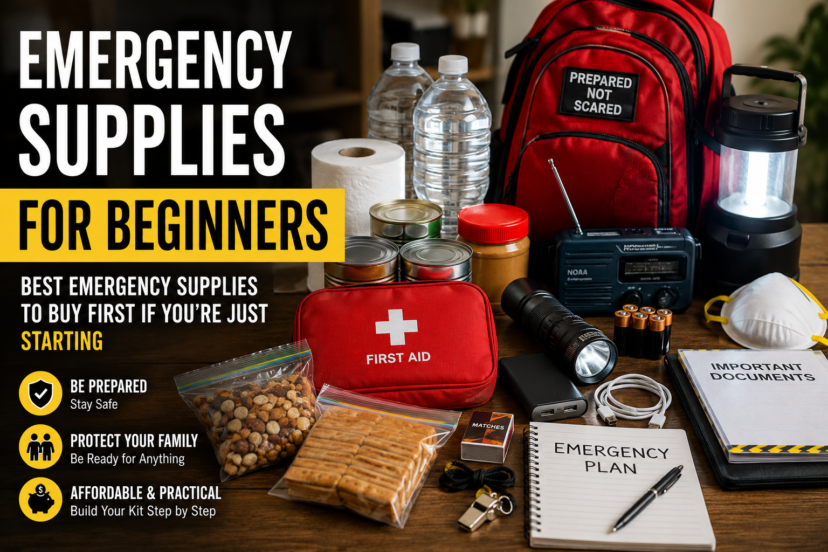
The best emergency supplies for beginners include clean drinking water, non-perishable food, a flashlight, extra batteries, a first aid kit, medications, an emergency radio, phone chargers, sanitation supplies, and important documents. Start with enough supplies to last at least 72 hours, then gradually expand your emergency kit as your budget allows.
Key Takeaways
Most Likely Cause: Many people delay buying emergency supplies for beginners because they believe preparedness is expensive or complicated.
Usually Serious? Emergencies can become much more stressful without basic supplies, even during short-term power outages.
First Thing To Check: Identify which essential items you already own before purchasing anything new.
Best Solution: Build your emergency supplies gradually by prioritizing water, food, lighting, first aid, communication, and sanitation essentials.
🛡️ Why Every Household Needs Emergency Supplies
Most emergencies don’t arrive with much warning.
A severe thunderstorm knocks out power.
A hurricane delays deliveries for days.
A winter storm makes roads impassable.
A wildfire forces an evacuation.
Even short disruptions can leave stores empty within hours.
Having basic emergency supplies helps your family remain calm instead of scrambling for necessities during a crisis.
Preparedness also helps you:
- ✔ Reduce panic
- ✔ Save money by avoiding emergency purchases
- ✔ Stay comfortable during outages
- ✔ Protect children, seniors, and pets
- ✔ Become more self-reliant
Preparedness isn’t about expecting disaster—it’s about being ready for life’s unexpected interruptions.
💧 Start With Water First
If you’re buying one emergency supply today, make it water.
Clean drinking water becomes difficult to obtain surprisingly fast during disasters.
The general recommendation is:
- One gallon of water per person per day
- Store at least three days’ worth
- Seven to fourteen days is even better if space allows
Don’t forget water for:
- Pets
- Cooking
- Basic hygiene
You can also include:
- Water purification tablets
- Portable water filters
- Collapsible water containers
Water should always be your highest priority.
🍲 Build A Simple Emergency Food Supply
Food is your second priority.
Choose foods your family already enjoys eating.
Good beginner options include:
- Canned vegetables
- Canned beans
- Peanut butter
- Tuna and chicken packets
- Instant oatmeal
- Pasta
- Rice
- Shelf-stable milk
- Protein bars
- Crackers
- Canned fruit
Remember to include:
- Manual can opener
- Disposable utensils
- Paper plates
Rotate food every few months so nothing expires.
🔦 Reliable Lighting Is Essential
Power outages are among America’s most common emergencies.
Every home should have:
- LED flashlights
- Extra batteries
- Headlamps
- Battery-powered lanterns
Headlamps are especially useful because they keep both hands free while cooking, repairing, or helping family members.
Avoid relying on candles whenever possible due to fire risks.
Rechargeable lanterns paired with portable power stations are another excellent long-term investment.
📻 Stay Informed During Emergencies
Communication can save lives.
A battery-powered or hand-crank NOAA Weather Radio allows you to receive:
- Severe weather alerts
- Evacuation orders
- Emergency updates
- Local government information
Don’t depend solely on smartphones.
Cell towers can become overloaded or lose power during major disasters.
Also include:
- Portable phone chargers
- Power banks
- Charging cables
- Solar charger (optional)
❤️ Keep A Well-Stocked First Aid Kit
Medical emergencies don’t stop during disasters.
Every emergency kit should include:
- Bandages
- Gauze
- Adhesive tape
- Antiseptic wipes
- Antibiotic ointment
- Tweezers
- Scissors
- Pain relievers
- Disposable gloves
- Instant cold packs
- Thermometer
Don’t forget prescription medications.
If possible, maintain several extra days of necessary medications after discussing refill options with your healthcare provider.
Families with infants should also include:
- Diapers
- Formula
- Baby wipes
- Infant medications
🧻 Don’t Forget Sanitation Supplies
Sanitation becomes surprisingly important during extended outages.
Basic supplies include:
- Toilet paper
- Paper towels
- Trash bags
- Hand sanitizer
- Soap
- Disinfecting wipes
- Household bleach (stored safely)
- Feminine hygiene products
- Toothbrushes
- Toothpaste
If water service becomes interrupted, sanitation supplies help reduce illness and maintain comfort.
🔋 Prepare For Power Outages
Power outages are one of the easiest emergencies to prepare for.
Useful supplies include:
Essential Items
- Flashlights
- Lanterns
- Battery packs
- Extension cords
- Surge protectors
Helpful Upgrades
- Portable power station
- Solar panels
- Generator (used outdoors only)
- Rechargeable batteries
Never operate generators inside garages, homes, or enclosed spaces due to carbon monoxide dangers.
📁 Protect Important Documents
Many beginners overlook paperwork.
Store copies of:
- Identification
- Insurance policies
- Medical information
- Property records
- Emergency contacts
- Banking information
Use:
- Waterproof folders
- Fire-resistant document boxes
- Encrypted USB drive
Digital backups provide additional protection.
🚗 Build A Small Vehicle Emergency Kit
Emergencies don’t always happen at home.
Keep these supplies in your vehicle:
- Jumper cables
- Flashlight
- Reflective triangles
- Blanket
- Bottled water
- Snacks
- Tire inflator
- Basic tools
- Phone charger
- Rain poncho
Winter drivers may also need:
- Ice scraper
- Small shovel
- Sand or cat litter for traction
🐶 Include Pets In Your Preparedness Plan
Pets rely completely on you during emergencies.
Store:
- Pet food
- Water
- Leash
- Carrier
- Medications
- Waste bags
- Vaccination records
Many evacuation shelters require vaccination documentation.
Planning ahead prevents unnecessary stress.
💵 Build Your Emergency Kit On A Budget
Many people postpone preparedness because they assume it’s expensive.
Instead, purchase one or two items each week.
For example:
⭐ Week 1
- Water
- Flashlight
🌟 Week 2
- Batteries
- Canned food
⭐ Week 3
- First aid kit
🌟 Week 4
- Emergency radio
Within a few months, you’ll have a surprisingly complete emergency kit without straining your finances.
Preparedness is a marathon—not a shopping spree.
🌪️ Adjust Supplies For Local Risks
Different parts of the United States face different hazards.
Examples include:
Hurricanes
- Extra water
- Tarps
- Fuel
- Waterproof containers
Wildfires
- N95 masks
- Go bags
- Fire-resistant document storage
Winter Storms
- Blankets
- Hand warmers
- Ice melt
- Snow shovel
Earthquakes
- Sturdy shoes
- Dust masks
- Work gloves
- Crowbar
Think about the emergencies most likely to affect your community.
✅ Common Beginner Mistakes
Avoid these common preparedness mistakes:
- Buying expensive gear before essentials
- Forgetting medications
- Ignoring pet supplies
- Not rotating stored food
- Storing dead batteries
- Buying unfamiliar foods
- Failing to test flashlights and radios
- Keeping everything in one difficult-to-access location
Preparedness should simplify emergencies—not create new problems.
👨🔧 When To Consult A Professional
Some preparedness situations require expert guidance. Follow instructions from your local emergency management agency for evacuation plans, disaster alerts, and community preparedness resources. Consult healthcare professionals about storing prescription medications, medical equipment, or emergency plans for chronic health conditions. Contact licensed electricians before installing backup generators, transfer switches, or home battery systems, and hire qualified plumbers for emergency water storage or plumbing modifications. During severe disasters or utility emergencies, always follow directions from local authorities and emergency responders.
❓ Frequently Asked Questions
What emergency supplies should beginners buy first?
Start with water, shelf-stable food, flashlights, batteries, a first aid kit, sanitation supplies, medications, and an emergency weather radio.
How much water should I store?
Plan for at least one gallon per person per day for a minimum of three days, with more if space and budget allow.
How much food should I keep?
Aim for at least a three-day supply of non-perishable food. Many families gradually expand to two weeks or more.
Is an emergency generator necessary?
Not for everyone. Many beginners can start with flashlights, rechargeable power banks, and portable power stations before investing in a generator.
How often should I replace emergency food?
Check expiration dates every six months and rotate food into your regular meals before replacing it.
Where should I store emergency supplies?
Keep them in a cool, dry, easily accessible location. Consider storing smaller kits in your vehicle and workplace as well.
How can I build an emergency kit without spending a lot?
Purchase a few essential items during each grocery trip. Building your kit gradually is affordable and helps spread out the cost over time.
🎯 Final Thoughts
Getting started with emergency preparedness doesn’t require specialized knowledge or expensive equipment. The most effective emergency supplies for beginners are often the simplest ones: clean water, reliable food, basic medical supplies, dependable lighting, and practical tools that help you stay safe and comfortable during everyday emergencies.
Every item you add to your emergency kit represents another step toward greater self-reliance and peace of mind. Start with the essentials, build your supplies gradually, and review your kit regularly. Over time, you’ll create a reliable preparedness system that helps protect you and your family when unexpected situations arise. Small actions taken today can make a tremendous difference when tomorrow brings uncertainty.
⚠️ Disclaimer
This article is for general educational and preparedness purposes only and should not be considered professional emergency, medical, legal, or safety advice. Emergency needs, local hazards, and regulations vary by location. Always follow guidance from local emergency management officials, healthcare providers, utility companies, and other qualified professionals, and use emergency supplies according to manufacturer instructions and applicable laws.
 Explore more: