Cheap Foods To Stockpile On A Budget: 25 Affordable Emergency Pantry Essentials
Emergencies don’t wait until your budget is perfect. Hurricanes, winter storms, wildfires, power outages, and supply chain disruptions can happen with little warning, making a well-stocked pantry one of the smartest investments you can make.
The good news is that emergency preparedness doesn’t have to cost thousands of dollars. In fact, many of the best emergency foods are inexpensive grocery staples that you may already buy every week.
Learning which cheap foods to stockpile can help you build a dependable emergency pantry over time, giving your family greater peace of mind while reducing financial stress. Small, consistent purchases can add up to a reliable food supply that helps you stay comfortable during unexpected situations.
⭐ Quick Answer: Cheap Foods To Stockpile
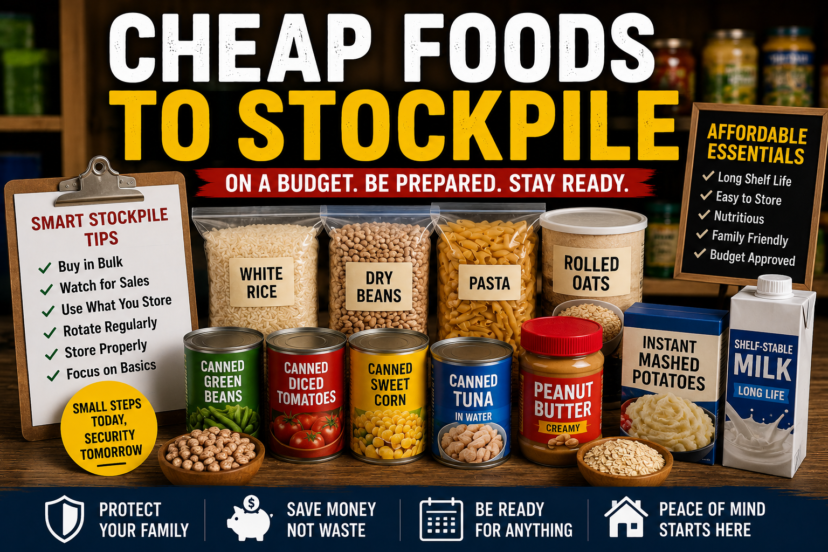
The best cheap foods to stockpile include white rice, dry beans, pasta, rolled oats, canned vegetables, canned fruit, canned meat, peanut butter, lentils, powdered milk, ramen, and shelf-stable soups. These affordable pantry staples provide long storage life, balanced nutrition, and excellent value for emergency preparedness.
Key Takeaways
Most likely cause: Emergency food supplies become expensive when they’re purchased all at once or rely heavily on specialty survival foods instead of ordinary, shelf-stable grocery staples.
Usually serious? No. You don’t need a huge budget to create a useful emergency pantry. Buying a few affordable foods during regular grocery trips can gradually build a dependable supply.
First thing to check: Look through your pantry and identify inexpensive foods your household already eats, such as rice, beans, pasta, oats, canned vegetables, peanut butter, and shelf-stable soups. Check expiration dates and available storage space before buying more.
Best solution: The smartest approach to cheap foods to stockpile is to prioritize affordable, calorie-dense, nutritious foods with good shelf lives, then build your supply gradually. Rotate older items into everyday meals and replace them so your emergency pantry stays fresh and useful.
🛒 Why Cheap Foods To Stockpile Make Sense
Many people delay emergency preparedness because they believe it requires expensive freeze-dried meals or specialty survival kits.
Fortunately, that’s not true.
Affordable grocery store foods can provide:
- Long shelf life
- Good nutrition
- High calorie value
- Easy preparation
- Budget-friendly prices
Building your pantry gradually also spreads costs over months instead of requiring one large purchase.
🥫 Best Cheap Foods To Stockpile For Emergency Preparedness
A balanced emergency pantry includes a variety of food groups.
White Rice
White rice remains one of the most affordable and dependable emergency foods.
Benefits include:
- Long storage life
- Inexpensive
- High calorie content
- Versatile meal ingredient
Dry Beans
Beans provide:
- Protein
- Fiber
- Long shelf life
Choose varieties such as:
- Pinto beans
- Black beans
- Navy beans
- Kidney beans
Lentils
Lentils cook faster than many dry beans, helping conserve fuel during emergencies.
Pasta
Pasta is inexpensive, stores well, and pairs with countless pantry ingredients.
Rolled Oats
Oats offer:
- Fiber
- Complex carbohydrates
- Quick breakfasts
- Affordable pricing
🥜 Affordable Protein Sources
Protein is an important part of emergency meal planning.
Budget-friendly options include:
Peanut Butter
Peanut butter provides:
- Healthy fats
- Protein
- Calories
- No cooking required
Canned Tuna
Tuna stores well and can be used in sandwiches, salads, casseroles, or eaten directly from the can.
Canned Chicken
An excellent pantry staple for soups, pasta, rice dishes, and wraps.
Canned Beans
Ready-to-eat canned beans save cooking fuel during power outages.
🍅 Cheap Shelf-Stable Fruits And Vegetables
Emergency food should include vitamins and minerals.
Affordable options include:
- Canned corn
- Green beans
- Carrots
- Mixed vegetables
- Tomatoes
- Applesauce
- Peaches
- Pears
- Pineapple
Look for low-sodium vegetables and fruit packed in juice when possible.
🥛 Budget-Friendly Pantry Staples
Additional cheap foods to stockpile include:
- Powdered milk
- Shelf-stable milk
- Instant mashed potatoes
- Crackers
- Ramen noodles
- Soup mixes
- Bouillon cubes
- Popcorn kernels
These items add variety while remaining affordable.
💧 Don’t Forget Water
Food storage is only one part of emergency preparedness.
Many inexpensive pantry foods require water for:
- Cooking
- Drinking
- Food preparation
Always store an adequate emergency water supply alongside your food pantry.
💰 How To Build An Emergency Pantry On A Small Budget
One of the easiest ways to prepare is by purchasing a few extra items during every grocery trip.
Simple ideas include:
- Buy one extra can each week.
- Purchase rice during sales.
- Choose store brands.
- Watch for bulk discounts.
- Use grocery reward programs.
- Replace foods after using them.
Preparedness grows through consistency rather than large one-time purchases.
🏠 Store Cheap Foods Properly
Proper storage extends shelf life and protects your investment.
Store foods:
- In cool locations
- Away from sunlight
- In dry conditions
- Off concrete floors
- Inside sealed containers when appropriate
Avoid areas with excessive heat or humidity, such as attics or uninsulated garages.
🔄 Rotate Your Emergency Pantry
Buying affordable food is only part of the process.
You should also:
- Use older food first.
- Replace items during grocery shopping.
- Label purchase dates.
- Check expiration dates twice each year.
This simple First In, First Out (FIFO) system helps minimize waste while keeping supplies fresh.
🌪️ Cheap Foods To Stockpile For Common U.S. Emergencies
Different disasters may require different meal strategies.
Power Outages
Keep ready-to-eat foods such as:
- Peanut butter
- Crackers
- Canned meat
- Granola bars
Hurricanes
Store foods requiring little preparation in case utilities are interrupted.
Winter Storms
Include high-calorie comfort foods that provide warmth and energy.
Supply Chain Disruptions
Maintain extra pantry staples that your family already eats regularly.
Planning for local risks helps make your emergency pantry even more practical.
🚫 Common Budget Preparedness Mistakes
Avoid these common errors.
Buying Foods Your Family Won’t Eat
Emergency food should become part of your normal meal rotation.
Ignoring Expiration Dates
Rotate food regularly to reduce waste.
Buying Everything At Once
Building your pantry gradually makes preparedness much more affordable.
Forgetting Manual Can Openers
Canned food isn’t helpful without a way to open it during power outages.
Neglecting Water Storage
Always plan food and water together.
⚠️ When To Consult A Professional
Most families can build an affordable emergency pantry independently. However, consult a medical professional if someone in your household has food allergies, diabetes, kidney disease, or dietary restrictions that require specialized emergency nutrition. Follow guidance from local emergency management officials during disasters and evacuations. Contact licensed electricians, plumbers, or utility providers if emergencies involve damaged electrical systems, gas leaks, contaminated water, or other hazardous conditions. Always prioritize personal safety and follow official recommendations during emergencies.
❓ FAQs: Cheap Foods To Stockpile
What are the cheapest foods to stockpile?
White rice, dry beans, pasta, oats, canned vegetables, canned fruit, peanut butter, lentils, and canned tuna are among the most affordable emergency foods.
How can I build an emergency pantry on a tight budget?
Purchase one or two extra shelf-stable items during every grocery trip and focus on sales, store brands, and foods your family already eats.
What foods last the longest?
White rice, dry beans, pasta, oats, canned goods, and freeze-dried foods generally have excellent storage potential when stored properly.
Is peanut butter good for emergency storage?
Yes. Peanut butter provides protein, healthy fats, calories, and requires no cooking, making it a valuable emergency food.
Should I buy canned or dried beans?
Both are useful. Dried beans store well and are inexpensive, while canned beans are ready to eat and save cooking fuel.
How much emergency food should I keep?
Many preparedness organizations recommend storing at least several days of food and water per household member, with many families gradually building toward two weeks or longer.
How often should I rotate emergency food?
Inspect your pantry every six months, use older foods during regular meals, and replace them during routine grocery shopping.
🎯 Final Thoughts On Cheap Foods To Stockpile
Choosing the right cheap foods to stockpile proves that emergency preparedness doesn’t have to be expensive. Affordable pantry staples like rice, beans, pasta, oats, peanut butter, canned foods, and powdered milk can provide dependable nutrition while fitting almost any grocery budget.
The key is to start small and stay consistent. Every extra bag of rice, every can of vegetables, and every jar of peanut butter brings your family one step closer to greater resilience and peace of mind. By building your emergency pantry gradually and rotating your supplies regularly, you’ll be well prepared for power outages, severe weather, and unexpected disruptions without overspending.
Disclaimer: This article is for general educational and preparedness purposes only. Emergency food needs, storage conditions, regional hazards, and local regulations vary. Always follow manufacturer storage instructions, official emergency management guidance, and applicable laws. Consult qualified professionals regarding medical concerns, food allergies, or emergency situations that may affect your health or safety.
 Explore more: