Peanut Butter Shelf Life: How Long Does Peanut Butter Last In Storage?
Building an emergency food supply doesn’t have to be expensive or complicated. In fact, some of the best preparedness foods are already sitting on grocery store shelves—and peanut butter is one of them. Whether you’re preparing for hurricanes, winter storms, wildfires, extended power outages, or unexpected supply chain disruptions, peanut butter offers an affordable source of calories, protein, and healthy fats. But one question often comes up when planning an emergency pantry: What is the peanut butter shelf life, and how should you store it?
Understanding how long peanut butter lasts can help you avoid waste, rotate your supplies more effectively, and build a food storage system that gives your family greater confidence during uncertain times.
⭐ Quick Answer: Peanut Butter Shelf Life
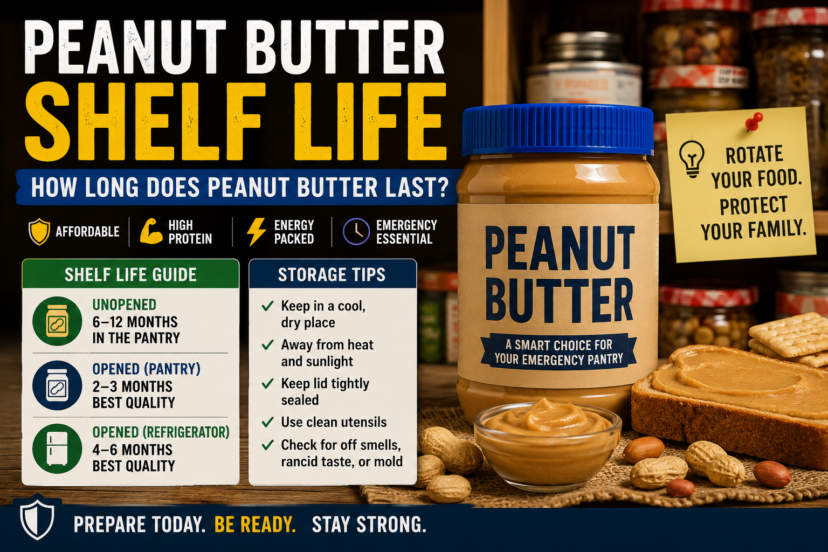
The average peanut butter shelf life is 6–12 months unopened in the pantry, depending on the type and brand. Once opened, it generally stays at its best for 2–3 months in the pantry or 4–6 months in the refrigerator, although many products remain safe beyond these periods if stored properly and show no signs of spoilage.
For emergency preparedness, commercially processed peanut butter stored in a cool, dry place is one of the most practical and affordable pantry staples you can keep.
Key Takeaways
- Most likely cause: Peanut butter loses quality over time because of natural oil oxidation, exposure to heat, air, moisture, and improper storage after opening.
- Usually serious? Usually not. Properly stored peanut butter remains safe for a long time, but it should be discarded if it develops mold, an off smell, a rancid taste, or other signs of spoilage.
- First thing to check: Look at the best-by date, inspect the jar for mold or unusual discoloration, and smell the peanut butter for any sour or rancid odor before eating.
- Best solution: To maximize peanut butter shelf life, store unopened jars in a cool, dry pantry, keep opened jars tightly sealed, use clean utensils, and rotate your emergency food supply regularly to ensure the freshest stock.
🥜 Why Peanut Butter Is A Great Emergency Food
Few pantry foods offer as much value as peanut butter.
It combines:
- Long storage life
- High calorie content
- Good protein
- Healthy fats
- No cooking required
- Affordable pricing
- Easy availability
Unlike many emergency foods, peanut butter is familiar, filling, and enjoyed by both children and adults.
That’s one reason it appears on many preparedness checklists across the United States.
⏳ Understanding Peanut Butter Shelf Life
Several factors influence peanut butter shelf life.
These include:
- Commercial vs. natural peanut butter
- Whether it’s opened
- Storage temperature
- Exposure to air
- Moisture
- Light
Commercial peanut butter usually lasts longer because stabilizers help slow oil separation and oxidation.
Natural peanut butter contains fewer preservatives, making proper storage more important.
Typical Shelf Life
Unopened commercial peanut butter
- About 6–12 months in the pantry
- Often remains good beyond the best-by date when stored properly
Opened commercial peanut butter
- Best quality for about 2–3 months at room temperature
- Longer when refrigerated
Natural peanut butter
- Shorter shelf life after opening
- Refrigeration helps preserve freshness
Always check the manufacturer’s storage recommendations on the label.
🏠 Best Storage Conditions For Peanut Butter
Proper storage has a major impact on peanut butter shelf life.
Keep peanut butter:
- In a cool location
- Away from direct sunlight
- Away from heat sources
- In tightly sealed containers
- In low-humidity environments
Avoid storing jars near:
- Ovens
- Water heaters
- Garage windows
- Outdoor sheds with extreme temperatures
Indoor closets or pantry shelves are often better choices.
🌡️ Does Temperature Affect Peanut Butter Shelf Life?
Yes.
Heat speeds up the breakdown of oils inside peanut butter.
Repeated exposure to high temperatures may cause:
- Loss of flavor
- Oil separation
- Faster rancidity
- Shorter storage life
This is especially important in regions experiencing:
- Arizona summer heat
- Texas heat waves
- Florida humidity
- Desert climates
If your storage area regularly exceeds comfortable indoor temperatures, consider relocating emergency food to a cooler location inside your home.
🥄 Signs Peanut Butter Has Gone Bad
Even foods with long shelf lives eventually decline in quality.
Watch for these warning signs:
Strange Smell
Fresh peanut butter has a pleasant roasted peanut aroma.
A sharp, sour, paint-like, or bitter smell may indicate the oils have become rancid.
Unusual Taste
If peanut butter tastes bitter or stale, it’s best not to continue eating it.
Mold
Discard immediately if mold appears.
Excessive Dryness
Natural oil separation is normal.
However, extremely dry or hardened peanut butter with other signs of spoilage should be discarded.
When in doubt, throw it out.
💪 Why Peanut Butter Belongs In Every Emergency Pantry
Peanut butter offers several preparedness advantages.
High Calories
Just a few tablespoons provide significant energy.
This is valuable during emergencies when physical activity often increases.
Protein
Protein supports muscle maintenance and helps you feel full longer.
Healthy Fats
Healthy fats provide concentrated calories for emergency situations.
Ready To Eat
- No electricity.
- No cooking.
- No water required.
That’s a major advantage during extended power outages.
🛒 Choosing The Best Peanut Butter For Food Storage
Not every jar performs equally well.
For longer peanut butter shelf life, consider:
Commercial Peanut Butter
Often offers:
- Longer storage
- Stable texture
- Less oil separation
- Easier pantry storage
Plastic Vs. Glass
Plastic jars:
- Lighter
- Less likely to break
- Easier for emergency kits
Glass jars may provide excellent storage but require extra care during transport.
Buy Manageable Sizes
Instead of one giant jar:
- Purchase multiple medium-sized jars.
- Open only one at a time.
- Reduce waste.
- Improve rotation.
📦 Rotate Peanut Butter Like Other Emergency Foods
Preparedness is easier when food becomes part of everyday life.
Try this simple rotation system:
- Write purchase dates on jars.
- Place newer jars behind older ones.
- Use the oldest jars first.
- Replace them during routine grocery shopping.
- Check your pantry every six months.
This “first in, first out” approach helps maintain freshness while reducing waste.
🌪️ Peanut Butter During Real U.S. Emergencies
One reason preparedness experts recommend peanut butter is its versatility.
It performs well during:
- Hurricanes that interrupt grocery deliveries
- Winter storms causing power outages
- Wildfires requiring evacuation
- Floods limiting travel
- Tornado recovery
- Supply chain shortages
Pair peanut butter with:
- Crackers
- Tortillas
- Bread
- Oatmeal
- Apples (when available)
- Shelf-stable granola bars
These simple combinations provide quick, filling meals with minimal preparation.
💰 Affordable Preparedness For Every Family
Building emergency food storage doesn’t require freeze-dried meals costing hundreds of dollars.
Instead:
- Add one extra jar of peanut butter during each grocery trip.
- Store it properly.
- Rotate regularly.
- Keep enough for every household member.
Over time, these small purchases create a dependable emergency food supply without straining your budget.
Preparedness is built one smart decision at a time.
⚠️ When To Consult A Professional
Most households can safely include peanut butter in an emergency food supply without difficulty. However, seek guidance from a medical professional if someone in your household has a peanut allergy, severe food sensitivities, or dietary restrictions that affect emergency meal planning. Follow instructions from local emergency management officials during disasters, and contact licensed electricians, plumbers, or utility providers if emergencies involve damaged utilities or unsafe living conditions. Always prioritize safety and follow official guidance during severe emergencies.
❓ FAQs: Peanut Butter Shelf Life
How long does unopened peanut butter last?
Commercial unopened peanut butter typically remains at its best for about 6–12 months in the pantry and may remain usable beyond the best-by date if stored properly.
Does peanut butter need refrigeration?
Commercial peanut butter generally does not require refrigeration after opening but may stay fresh longer if refrigerated. Natural peanut butter is often best refrigerated after opening.
Can peanut butter go bad?
Yes. Over time, oils can become rancid, affecting flavor and quality.
What is the best way to store peanut butter?
Store it in a cool, dry place away from sunlight and heat, with the lid tightly sealed.
Is peanut butter good for emergency preparedness?
Yes. Peanut butter is one of the best emergency pantry foods because it is calorie-dense, requires no cooking, and has a relatively long shelf life.
Can I eat peanut butter after the best-by date?
Often yes, provided it has been stored correctly and shows no signs of spoilage. Check its smell, appearance, and taste before consuming.
How much peanut butter should I keep in my emergency pantry?
The right amount depends on your household size and overall food plan, but many families keep several jars and rotate them into everyday use to maintain freshness.
🎯 Final Thoughts On Peanut Butter Shelf Life
Understanding peanut butter shelf life helps you make smarter decisions when building an emergency food supply. This affordable pantry staple offers an excellent combination of calories, protein, convenience, and long-lasting storage, making it one of the easiest foods to include in your preparedness plan.
By storing peanut butter properly, rotating your supply regularly, and combining it with other shelf-stable foods, you can create a dependable emergency pantry without overspending. Every extra jar, every organized shelf, and every thoughtful purchase brings your family one step closer to greater resilience, confidence, and peace of mind when unexpected challenges arise.
Disclaimer: This article is for general educational and preparedness purposes only. Food storage conditions, product formulations, regional climates, and emergency needs vary. Always follow manufacturer storage instructions, local regulations, and official emergency guidance. Consult qualified medical professionals regarding food allergies, dietary restrictions, or other health concerns.
 Explore more:
- Freeze Dried Food Vs Canned Food
- Foods You Should Never Stockpile For Long-Term Storage
- First Aid Emergency Kit Checklist