Freeze Dried Food Vs Canned Food: Which Is Better For Emergencies?
When people first begin building an emergency food supply, one question almost always comes up: freeze dried food vs canned food—which is better?
Whether you’re preparing for hurricanes along the Gulf Coast, winter storms in the Midwest, wildfires in the West, or unexpected power outages anywhere in the U.S., having dependable food on hand can make a stressful situation much easier to manage.
The good news is that you don’t have to spend thousands of dollars or become a survival expert to build a practical emergency pantry. By understanding the strengths and weaknesses of different food storage options, you can create a balanced supply that fits your family’s budget, lifestyle, and preparedness goals.
⭐ Quick Answer: Freeze Dried Food Vs Canned Food
If you’re comparing freeze dried food vs canned food, neither option is universally better.
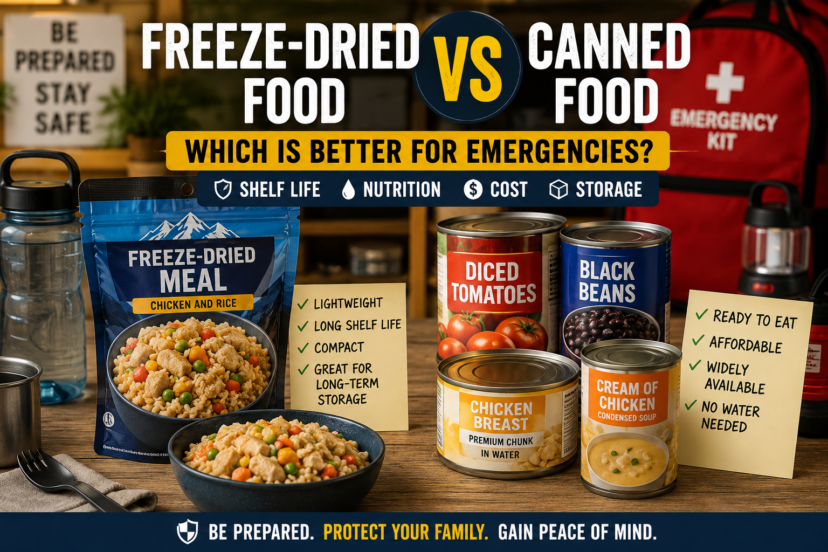
- Freeze-dried food offers exceptional shelf life, lightweight storage, and excellent nutrient retention.
- Canned food is affordable, widely available, ready to eat, and requires no additional water.
For most families, the smartest emergency food plan combines both.
Key Takeaways
Most likely choice: Neither option is universally better. Freeze-dried food is ideal for long-term storage, while canned food is best for affordable, ready-to-eat meals during short-term emergencies.
Usually enough on its own? No. Most emergency preparedness experts recommend keeping a combination of freeze-dried and canned foods to provide flexibility, convenience, and long-term food security.
First thing to check: Consider how long you want to store food, whether you’ll have access to clean water for rehydrating meals, your available storage space, and your emergency preparedness budget.
Best solution: Build a balanced emergency pantry by using canned foods for everyday rotation and short-term emergencies, while gradually adding freeze-dried meals for lightweight, long-term storage and extended emergencies.
🥫 Why Freeze-dried Food And Canned Food Both Belong In Emergency Preparedness
Emergency situations vary greatly.
One disaster may leave you without electricity for several days, while another could disrupt grocery stores for weeks.
Different emergencies create different food needs.
Consider situations like:
- Hurricanes
- Ice storms
- Tornadoes
- Wildfires
- Earthquakes
- Floods
- Supply chain disruptions
- Extended power outages
Having both freeze-dried and canned foods increases flexibility and helps reduce the risk of depending on a single type of emergency food.
❄️ Freeze Dried Food Vs Canned Food Shelf Life
One of the biggest differences in freeze dried food vs canned food is storage life.
Freeze-dried food
High-quality freeze-dried meals often last 20–30 years when unopened and stored in cool, dry conditions.
Benefits include:
- Very long shelf life
- Lightweight packaging
- Excellent for long-term preparedness
- Minimal food waste
Canned food
Most canned foods remain safe well beyond their “best by” dates if cans stay undamaged, although quality gradually declines. Many are commonly rotated within 2–5 years for best taste and texture.
Benefits include:
- Easy to find in every grocery store
- Excellent for regular pantry rotation
- Familiar foods the whole family enjoys
If your goal is decades of storage, freeze-dried foods have the advantage.
💧 Water Requirements Matter During Emergencies
A major consideration when comparing freeze dried food vs canned food is water availability.
Freeze-dried food requires water
Most freeze-dried meals need:
- Clean drinking water
- A container for mixing
- Time to rehydrate
If water supplies become limited, you’ll need stored water or a reliable purification method.
Canned food is ready immediately
Many canned foods can be eaten directly from the can, including:
- Beans
- Chicken
- Tuna
- Vegetables
- Fruit
- Soup
- Chili
This makes canned food especially valuable during short-term emergencies when cooking may not be possible.
🍽️ Nutrition And Food Quality
Many people assume canned foods are healthier than freeze-dried foods—or vice versa—but the answer depends on the product.
Freeze-dried foods
Freeze drying removes moisture while preserving much of the food’s structure and flavor. Many freeze-dried fruits, vegetables, and proteins retain a large portion of their nutrients.
Advantages include:
- Better texture after rehydration
- Less shrinkage
- Good nutrient retention
- Wide variety of meal options
Canned foods
Modern canned foods are also nutritious.
Many provide:
- Protein
- Fiber
- Vitamins
- Minerals
Look for:
- Low-sodium options
- Fruit packed in juice instead of syrup
- Lean proteins
- Reduced-sugar products
Reading nutrition labels helps you build a healthier emergency pantry regardless of food type.
💲 Freeze Dried Food Vs Canned Food Cost
For many families, cost is the deciding factor.
Canned food
Advantages:
- Lower upfront cost
- Easy to buy gradually
- Frequent grocery sales
- Simple pantry rotation
You can build an emergency supply by adding a few extra cans during normal shopping trips.
Freeze-dried food
Although more expensive initially, freeze-dried foods may provide better long-term value because they:
- Last decades
- Require less frequent replacement
- Save storage space
- Reduce long-term waste
Many preparedness experts recommend starting with canned goods before gradually adding freeze-dried meals.
🎒 Storage Space And Portability
Storage efficiency becomes important for apartments and urban homes.
Freeze-dried food advantages
- Extremely lightweight
- Compact packaging
- Easier to carry during evacuation
- Ideal for bug-out bags
Canned food disadvantages
- Heavy
- Bulky
- Difficult to transport
- Requires more shelf space
Families living in apartments often appreciate how much food freeze-dried products can store in relatively little space.
⚡ Which Food Works Better During A Power Outage?
Power outages remain one of America’s most common emergencies.
For outages lasting a few hours or even several days:
Canned food often provides the fastest solution.
You can immediately eat:
- Peanut butter
- Canned meats
- Ready-to-eat soups
- Fruit
- Beans
Freeze-dried meals become more useful if you have:
- Stored water
- A camping stove
- Portable cooking equipment
- Alternative heat sources used safely according to manufacturer instructions
Planning for both short-term and long-term outages gives your family greater flexibility.
🏠 Best Emergency Food Strategy For Most Families
Instead of asking whether freeze dried food vs canned food has a single winner, build a balanced emergency pantry.
A practical approach includes:
Everyday pantry
- Canned vegetables
- Canned fruit
- Soups
- Pasta
- Rice
- Peanut butter
- Oats
Long-term storage
- Freeze-dried vegetables
- Freeze-dried fruit
- Freeze-dried meat
- Complete freeze-dried meals
- Powdered dairy products
Emergency snacks
- Granola bars
- Nuts
- Trail mix
- Crackers
- Shelf-stable protein snacks
This combination provides affordability, convenience, nutrition, and long-term preparedness.
🧰 Simple Tips For Building An Affordable Emergency Food Supply
Preparedness doesn’t have to happen overnight.
Try these simple strategies:
- Buy one or two extra pantry items each shopping trip.
- Rotate older canned goods into everyday meals.
- Store food in cool, dry locations.
- Label shelves with purchase dates.
- Keep enough water for drinking and food preparation.
- Include foods your family already enjoys.
- Practice preparing emergency meals before you actually need them.
Small, consistent steps often build a stronger emergency pantry than expensive one-time purchases.
⚠️ When To Consult A Professional
While building an emergency food supply is something most households can do independently, some situations require professional guidance. Follow instructions from local emergency management officials during disasters and evacuations. Consult a medical professional if someone in your household has special dietary needs, severe food allergies, or medical conditions that affect emergency meal planning. Seek help from licensed electricians, plumbers, or utility providers if storms or disasters create electrical, gas, water, or structural hazards. Never attempt repairs or enter unsafe areas without proper training and authorization.
❓ FAQs: Freeze-Dried Food Vs Canned Food
Is freeze-dried food better than canned food for emergencies?
Freeze-dried food is generally better for long-term storage, while canned food is often more practical for short-term emergencies because it is ready to eat.
How long does freeze-dried food last?
Many commercially packaged freeze-dried foods can last 20 to 30 years when stored properly in cool, dry conditions.
Does canned food expire?
Most canned food remains safe beyond its best-by date if the can is undamaged, but quality gradually declines. Rotate your supply regularly for the best flavor and nutrition.
Which emergency food is cheaper?
Canned food usually costs less upfront, making it easier for families to build an emergency pantry on a budget.
Do freeze-dried meals lose nutrients?
Freeze drying preserves many nutrients well, though nutrient levels vary depending on the food and processing methods.
Should I store both freeze-dried and canned food?
Yes. Combining both provides greater flexibility, nutrition, convenience, and long-term preparedness.
How much emergency food should a family keep?
Many preparedness organizations recommend storing at least several days of food and water for each household member, with many families choosing to build supplies that can last two weeks or longer as their budget allows.
🎯 Final Thoughts
When comparing freeze dried food vs canned food, the best choice isn’t necessarily one or the other—it’s the combination that matches your family’s needs.
Canned foods offer affordability, convenience, and immediate access during short-term emergencies. Freeze-dried foods provide exceptional shelf life, lightweight storage, and excellent long-term preparedness.
You don’t need to build the perfect emergency pantry overnight. Every extra can of soup, every stored meal, and every gallon of water helps increase your family’s resilience. By taking small, consistent steps today, you can reduce stress during future emergencies, become more self-reliant, and gain greater confidence knowing you’re better prepared for whatever comes next.
Disclaimer: This article is for general educational and preparedness purposes only. Emergency situations, regional hazards, food storage needs, and local regulations vary. Always follow guidance from local emergency management officials, public health authorities, and manufacturers’ instructions. Consult qualified professionals for medical concerns, utility issues, or other situations that may affect your safety.
 Explore more: