Emergency Radio Buying Guide: Best Battery-Powered Radios For Emergency Preparedness
Power can disappear in seconds, but reliable information is often the most valuable resource during an emergency. Whether a hurricane knocks out the electrical grid, a winter storm leaves roads impassable, or a wildfire forces evacuations, staying informed can help you make safer decisions and reduce unnecessary stress. That’s why every family’s emergency kit should include a dependable emergency radio. Unlike smartphones, which rely on cellular networks and batteries that may quickly run out, battery-powered emergency radios continue working when other communication methods fail.
Fortunately, you don’t need expensive survival gear or professional training to be prepared. Choosing the right emergency radio is an affordable step that can improve your family’s confidence, safety, and self-reliance during uncertain situations.
⭐ Quick Answer Emergency Radio
A quality emergency radio is one that receives NOAA Weather Radio broadcasts, operates on replaceable batteries or rechargeable power, offers multiple charging options, and provides clear reception during power outages and natural disasters. Models with hand-crank or solar charging offer additional backup when batteries become unavailable.
Key Takeaways
Most likely cause: During power outages and natural disasters, cell networks, internet access, and electricity may become unavailable, making it difficult to receive timely emergency information.
Usually serious? It can be. Losing access to reliable updates may delay important decisions about severe weather, evacuations, or other emergency situations.
First thing to check: Make sure your emergency radio can receive NOAA Weather Radio broadcasts, has fresh or fully charged batteries, and offers backup power options such as hand-crank or solar charging.
Best solution: Keep a dependable emergency radio in your emergency kit, test it regularly, maintain multiple power sources, and use it alongside other emergency supplies to stay informed during power outages and disasters.
📻 Why Every Family Needs An Emergency Radio
When disasters strike, reliable information helps people make better decisions.
An emergency radio allows you to receive:
- Emergency weather alerts
- Evacuation notices
- Shelter information
- Road closures
- Utility updates
- Public safety announcements
- Recovery information
During hurricanes, tornado outbreaks, wildfires, winter storms, and extended blackouts, local radio stations and NOAA Weather Radio often continue broadcasting long after internet and cellular service become unreliable.
Having an emergency radio helps reduce uncertainty while keeping your family connected to official information.
⚡ How An Emergency Radio Helps During Power Outages
Most people depend heavily on smartphones for news and alerts. However, prolonged power outages can create several problems:
- Cell towers may lose power.
- Internet service may fail.
- Charging options become limited.
- Networks may become overloaded.
A battery-powered emergency radio operates independently of many of these systems.
It provides an additional communication layer that improves resilience when modern technology isn’t available.
🔋 Features To Look For In An Emergency Radio
Not all emergency radios offer the same capabilities.
Here are the most useful features.
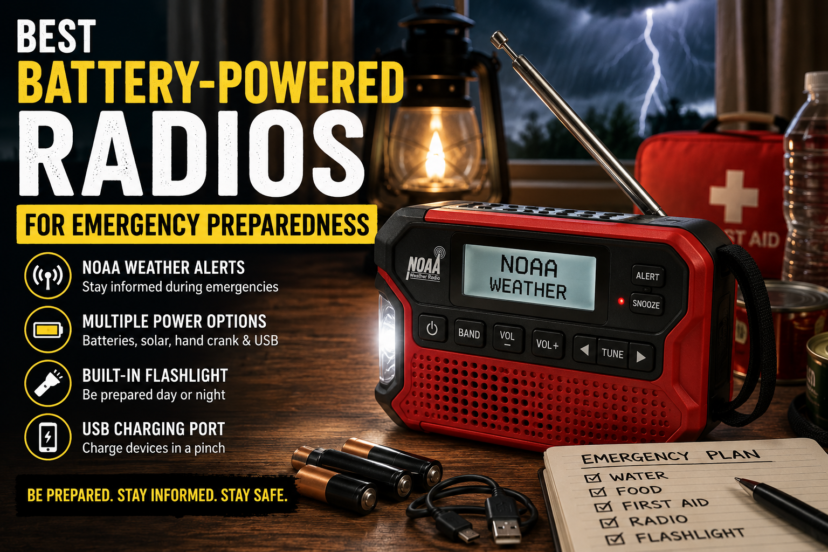
NOAA Weather Radio Reception
This should be your top priority.
NOAA Weather Radio broadcasts:
- Severe weather warnings
- Tornado alerts
- Flood warnings
- Hurricane updates
- Winter storm advisories
- Civil emergency messages
Many radios automatically sound an alert when dangerous weather threatens your area.
Multiple Power Options
The best emergency radio offers more than one way to operate.
Look for models with:
- Replaceable AA batteries
- Rechargeable battery packs
- USB charging
- Solar charging
- Hand-crank charging
Redundant power sources increase reliability during extended emergencies.
Long Battery Life
Efficient LED displays and modern electronics allow many radios to operate for many hours on a single battery set.
Long battery life means:
- Less frequent battery replacement
- Better readiness
- Lower long-term cost
Built-In Flashlight
Many emergency radios include bright LED flashlights.
These are useful for:
- Walking safely
- Reading maps
- Cooking
- Checking electrical panels
- Finding supplies
Having multiple emergency tools in one device saves space in your emergency kit.
USB Charging Capability
Some emergency radios include USB output ports that can provide limited charging for smartphones.
Although they won’t replace a portable power station, they may provide enough power to send emergency messages or make important phone calls.
🏠 Best Places To Keep Your Emergency Radio
A radio only helps if it’s easy to reach.
Consider storing one:
- In your primary emergency kit
- Near your home’s emergency supplies
- In your vehicle
- At your workplace
- Inside an evacuation bag
Some families even keep a second emergency radio upstairs in case one location becomes inaccessible.
🌪️ Emergency Radio Use During Different Disasters
Different emergencies require different preparedness strategies.
Hurricanes
Monitor evacuation orders, storm tracks, flooding updates, and shelter locations.
Winter Storms
Receive information about dangerous travel conditions, power restoration efforts, and warming shelters.
Wildfires
Stay updated on evacuation notices, changing fire conditions, and road closures.
Tornadoes
NOAA weather alerts provide valuable warning before severe storms arrive.
Extended Blackouts
Local emergency broadcasts often provide updates on utility repairs, community resources, and emergency assistance.
💰 Choosing The Right Emergency Radio For Your Budget
Preparedness doesn’t have to be expensive.
Budget Models
Ideal for:
- Small emergency kits
- Apartments
- College students
Typically include:
- AM/FM radio
- NOAA weather channels
- Battery operation
Mid-Range Models
Often include:
- Rechargeable batteries
- USB charging
- LED flashlight
- Solar charging
- Hand crank
These provide an excellent balance between affordability and functionality.
Premium Emergency Radios
Higher-end models may offer:
- Better speakers
- Larger batteries
- Bluetooth capability
- Multiple charging ports
- Digital tuning
- Enhanced weather alerts
Choose the model that best fits your family’s preparedness goals rather than simply buying the most expensive option.
🛠️ How To Maintain Your Emergency Radio
Prepared equipment stays dependable.
Every six months:
- Test radio reception.
- Replace or recharge batteries.
- Check the flashlight.
- Verify charging cables.
- Inspect battery compartments for corrosion.
- Update emergency supply inventory.
Many families perform these checks when changing smoke detector batteries.
🚫 Common Emergency Radio Mistakes
Avoid these common preparedness errors.
- Buying a radio but never testing it
- Forgetting spare batteries
- Ignoring NOAA weather channels
- Waiting until storm season to prepare
- Storing the radio where it’s difficult to access
- Relying on only one communication method
Preparedness works best when you have multiple backup options.
🧰 Build A Complete Emergency Communication Kit
Your emergency radio should be part of a larger preparedness plan.
Consider including:
- Extra batteries
- Flashlights
- Power banks
- Printed emergency contacts
- Local maps
- First aid supplies
- Portable phone charger
- Emergency whistle
- Multi-tool
Together, these items improve your family’s ability to respond confidently during emergencies.
👨🔧 When To Consult A Professional
Using a portable emergency radio generally requires little technical knowledge. However, seek guidance from local emergency management officials for evacuation planning, disaster preparedness recommendations, or community emergency resources. If severe weather, flooding, utility damage, gas leaks, electrical hazards, or medical emergencies occur, always follow official instructions and contact licensed electricians, utility providers, emergency responders, or healthcare professionals when appropriate. Never place yourself in danger while attempting to monitor emergency conditions.
❓ FAQs: Best Emergency Radio
1. What is the best emergency radio for home preparedness?
A quality emergency radio offers NOAA Weather Radio reception, multiple power options, long battery life, and dependable performance during blackouts.
2. Do emergency radios work without electricity?
Yes. Battery-powered, hand-crank, and solar-powered emergency radios continue operating during power outages.
3. Is a hand-crank emergency radio worth buying?
Yes. Hand-crank charging provides an important backup power source when batteries are depleted and electricity is unavailable.
4. Can an emergency radio charge a phone?
Some models include USB output ports that can provide limited smartphone charging for emergency communication.
5. How often should I test my emergency radio?
Testing every six months helps ensure batteries, charging systems, and radio reception remain reliable.
6. Do emergency radios receive weather alerts automatically?
Many NOAA-compatible models include weather alert features that automatically notify users of severe weather warnings.
7. Should every emergency kit include an emergency radio?
Yes. Emergency preparedness experts commonly recommend including a reliable emergency radio in every home emergency kit.
🎯 Final Thoughts
A dependable emergency radio is one of the smartest and most affordable investments you can make for your family’s preparedness. It keeps you connected to critical information when power outages, severe weather, or other emergencies disrupt everyday life. Combined with extra batteries, flashlights, and a well-stocked emergency kit, it provides greater confidence and peace of mind without requiring expensive equipment or advanced survival skills.
Preparedness isn’t about expecting the worst—it’s about making thoughtful decisions today that help protect the people you care about tomorrow. Even one reliable emergency radio can make a meaningful difference when every update matters.
Disclaimer: This article is provided for general educational and preparedness purposes only. Emergency risks, weather hazards, equipment needs, and local regulations vary by location. Always follow guidance from local emergency management officials, the National Weather Service, utility providers, and product manufacturers. Use emergency equipment according to manufacturer instructions and prioritize personal safety during all emergency situations.
 Explore more: