Foods You Should Never Stockpile For Long-Term Storage: Avoid These Costly Emergency Preparedness Mistakes
What are the top foods you should never stockpile for long-term storage? Preparing an emergency food supply is one of the smartest steps you can take to protect your family during unexpected events. Whether you’re preparing for hurricanes on the Gulf Coast, winter storms in the Midwest, wildfires in the West, or supply chain disruptions anywhere in the U.S., having reliable food at home provides confidence and peace of mind.
However, building an emergency pantry isn’t simply about buying large quantities of food. Choosing the wrong items can lead to spoiled supplies, wasted money, and frustration when you need your stockpile the most.
Fortunately, avoiding these mistakes is easier than many people think. By learning the foods you should never stockpile, you can create an emergency pantry that lasts longer, costs less over time, and keeps your family better prepared for whatever comes next.
⭐ Quick Answer: Foods You Should Never Stockpile
The foods you should never stockpile for long-term storage include highly perishable foods, items with short shelf lives, foods requiring constant refrigeration, oils that go rancid quickly, and products your family won’t actually eat.
Instead, focus on shelf-stable foods like canned goods, dried beans, rice, pasta, oats, freeze-dried meals, and properly stored grains that offer longer storage life and greater reliability during emergencies.
Key Takeaways
Most likely cause: Emergency food supplies become unreliable when they contain highly perishable items, foods with short shelf lives, or products that require refrigeration or special storage.
Usually serious? No. Most foods you should never stockpile simply lead to spoiled supplies and unnecessary expense, although eating expired or improperly stored food can increase the risk of foodborne illness.
First thing to check: Inspect expiration dates, storage conditions, and whether the foods are shelf-stable and commonly eaten by your household so they can be rotated into regular use.
Best solution: Build your emergency pantry with long-lasting staples such as canned goods, dried beans, rice, pasta, oats, and freeze-dried foods, while rotating inventory regularly to keep supplies fresh and ready for emergencies.
🥫 Why Choosing The Right Emergency Food Matters
Not every food belongs in a long-term emergency pantry.
Many grocery items look shelf-stable but actually lose quality surprisingly fast. Others require refrigeration after opening or are difficult to prepare during a power outage.
Good emergency food should be:
- Shelf stable
- Easy to prepare
- Nutritious
- Affordable
- Familiar to your family
- Easy to rotate into everyday meals
A well-planned pantry helps reduce food waste while increasing your family’s resilience during emergencies.
🚫 Foods You Should Never Stockpile For Long-Term Storage
Avoiding the following foods can save money and improve the reliability of your emergency food supply.
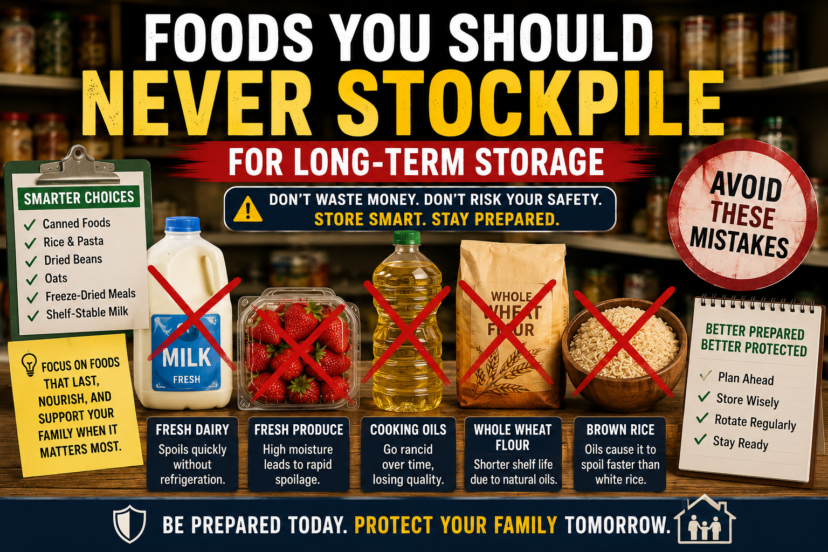
Fresh Dairy Products
Milk, yogurt, soft cheeses, and cream spoil quickly without refrigeration.
During extended power outages, these foods become unsafe within hours if not kept cold.
Better alternatives include:
- Powdered milk
- Shelf-stable milk
- Canned evaporated milk
Fresh Fruits And Vegetables
Fresh produce is healthy but doesn’t belong in a long-term emergency pantry.
Even under ideal conditions, many fruits and vegetables spoil within days or weeks.
Better choices include:
- Freeze-dried fruit
- Freeze-dried vegetables
- Canned fruit
- Canned vegetables
- Dehydrated vegetables
Cooking Oils In Large Quantities
Many people overlook cooking oils when considering the foods you should never stockpile.
Vegetable oil, canola oil, and similar products eventually become rancid, especially when exposed to heat and light.
Instead:
- Buy smaller containers
- Rotate regularly
- Store in cool, dark locations
Olive oil also has a limited shelf life, so avoid buying more than your household can reasonably use before quality declines.
Whole Wheat Flour
Whole wheat flour contains natural oils from the wheat germ.
These oils significantly shorten storage life compared to white flour.
If you’re planning for long-term preparedness:
Choose:
- White flour
- Properly stored whole wheat berries
- Commercially packaged baking mixes with longer shelf life
Brown Rice
Brown rice is often healthier than white rice, but it isn’t ideal for long-term emergency storage.
Its higher oil content reduces storage life considerably.
White rice remains one of the most popular emergency food staples because it stores much longer under proper conditions.
🏕️ Foods That Create Problems During Emergencies
Some foods aren’t necessarily unsafe—they’re simply impractical.
Foods Requiring Large Amounts Of Water
Certain dried foods require significant water for preparation.
If water supplies become limited during:
- Hurricanes
- Earthquakes
- Wildfires
- Winter storms
preparing these meals may become difficult.
Always store adequate emergency water alongside dry food supplies.
Foods Requiring Long Cooking Times
Some dry beans and grains require lengthy cooking.
Without electricity or natural gas, preparing them may consume valuable fuel.
Good alternatives include:
- Canned beans
- Instant rice
- Quick oats
- Ready-to-eat meals
These options reduce fuel consumption during emergencies.
Highly Salty Foods
Salty snacks may seem like good emergency foods, but eating large amounts increases thirst.
If water supplies become limited, this can create unnecessary challenges.
Balance salty foods with:
- Canned fruit
- Unsalted nuts
- Whole grains
- Shelf-stable proteins
⚠️ Foods Your Family Doesn’t Eat
One of the biggest preparedness mistakes has nothing to do with shelf life.
People often buy foods simply because they’re marketed as “survival foods.”
If your family dislikes those foods, they’ll probably remain untouched until they expire.
Instead:
- Store foods everyone already enjoys.
- Rotate pantry items regularly.
- Build meals around familiar ingredients.
- Practice cooking emergency meals before disasters happen.
Preparedness should fit your everyday lifestyle.
📦 Better Foods To Stockpile Instead
Rather than focusing on the foods you should never stockpile, concentrate on dependable foods with proven storage value.
Excellent choices include:
Pantry Staples
- White rice
- Pasta
- Rolled oats
- Dry beans
- Lentils
Canned Foods
- Chicken
- Tuna
- Salmon
- Vegetables
- Fruit
- Chili
- Soup
Long-Term Storage Foods
- Freeze-dried meals
- Freeze-dried vegetables
- Freeze-dried fruit
- Powdered eggs
- Powdered milk
Emergency Snacks
- Peanut butter
- Nuts
- Trail mix
- Crackers
- Granola bars
Combining these foods creates a flexible emergency pantry suitable for both short-term and long-term situations.
💰 How To Build A Smarter Emergency Pantry On A Budget
You don’t need to spend thousands of dollars.
Build your pantry gradually.
Try these practical strategies:
- Buy one or two extra shelf-stable items each grocery trip.
- Watch for grocery sales.
- Rotate food into everyday meals.
- Label purchase dates.
- Store food in cool, dry areas.
- Check expiration dates several times each year.
- Replace damaged packaging immediately.
Small purchases over time often outperform expensive one-time buying sprees.
🏠 Urban Survival Tips For Better Food Storage
Families living in apartments or smaller homes often have limited storage space.
Maximize your pantry by:
- Using under-bed storage containers.
- Organizing shelves by expiration date.
- Keeping foods off concrete floors.
- Protecting supplies from moisture.
- Using airtight containers for dry foods.
- Avoiding garages that experience extreme temperatures.
Proper storage helps food maintain quality for as long as possible.
🔄 Rotate Your Emergency Food Regularly
Even long-lasting foods benefit from regular rotation.
Use the “first in, first out” method:
- Eat older items first.
- Replace them during regular grocery shopping.
- Inspect cans for rust or damage.
- Check for pests.
- Review your pantry every six months.
Rotation reduces waste while keeping supplies fresh and familiar.
👨🔧 When To Consult A Professional
Most families can build an emergency pantry on their own, but certain situations call for expert guidance. Follow instructions from local emergency management officials during disasters and evacuations. Consult a medical professional if someone in your household has food allergies, diabetes, kidney disease, or other conditions requiring specialized nutrition. Seek advice from licensed electricians, plumbers, or utility providers if emergencies involve damaged electrical systems, gas leaks, contaminated water, or unsafe structures. Always prioritize personal safety and follow official recommendations during severe emergencies.
❓ FAQs: Foods You Should Never Stockpile
What foods should never be stored long term?
Foods with short shelf lives, fresh dairy, fresh produce, large quantities of cooking oils, brown rice, and whole wheat flour are generally poor choices for long-term storage.
Why is brown rice not recommended for emergency storage?
Brown rice contains natural oils that reduce its storage life compared to white rice.
Can canned food last for years?
Many canned foods remain safe beyond their best-by dates if the cans stay undamaged and are stored properly, though quality may gradually decline.
What are the best foods for long-term emergency storage?
White rice, dried beans, pasta, oats, canned meats, freeze-dried foods, powdered milk, and canned vegetables are among the most reliable options.
How often should I rotate my emergency food?
Check your pantry every six months and rotate older items into everyday meals before replacing them.
Is freeze-dried food worth buying?
Yes. Freeze-dried food offers excellent shelf life, lightweight storage, and convenience, making it an excellent addition to a balanced emergency pantry.
How much food should I store for emergencies?
Many preparedness organizations recommend maintaining at least several days of food and water for every household member, with many families working toward two weeks or more as space and budget allow.
🎯 Final Thoughts
Learning the foods you should never stockpile is just as important as knowing what belongs in your emergency pantry. Avoiding foods with short shelf lives, poor storage characteristics, or impractical preparation requirements helps reduce waste, save money, and improve your overall preparedness.
Remember, building an emergency food supply doesn’t require expensive gear or years of experience. By focusing on reliable, shelf-stable foods your family already enjoys, rotating your supplies regularly, and adding a few extra items with each grocery trip, you can create a pantry that provides confidence and peace of mind during power outages, severe weather, and other unexpected events.
Preparedness isn’t about fear—it’s about taking smart, manageable steps today so your family is better protected tomorrow.
Disclaimer: This article is provided for general educational and preparedness purposes only. Emergency food needs, storage conditions, regional hazards, and local regulations may vary. Always follow guidance from local emergency management officials, public health authorities, and manufacturers’ storage instructions. Consult qualified professionals for medical concerns, food safety questions, or emergency situations that could affect your health or safety.
 Explore more: