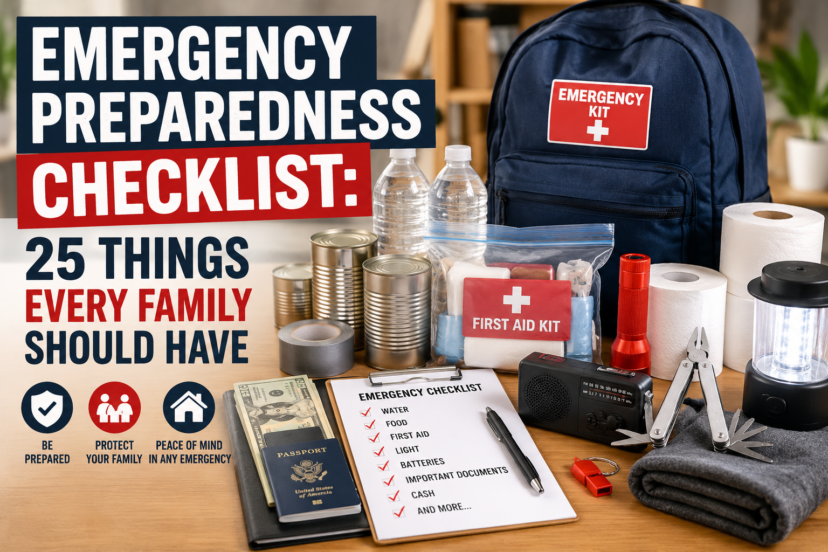
Emergency Preparedness Checklist: 25 Things Every Family Should Have Before Disaster Strikes
Unexpected events can happen when we least expect them. Power outages, hurricanes, winter storms, wildfires, and supply chain disruptions have affected millions of American families in recent years. The good news is that becoming better prepared doesn’t have to be expensive or overwhelming.
Having a reliable emergency preparedness checklist can help you protect your family, reduce stress, and gain peace of mind. Small steps taken today can make a huge difference tomorrow.
Quick Answer
An emergency preparedness checklist should include water, food, first aid supplies, flashlights, batteries, medications, emergency documents, communication tools, and other survival essentials that can support your family for at least 72 hours during a disaster or emergency.
🚨 Why Every Family Needs An Emergency Preparedness Checklist
Emergencies come in many forms:
- Hurricanes along the Gulf Coast
- Winter storms in the Midwest and Northeast
- Wildfires in western states
- Tornadoes throughout the central U.S.
- Long-term power outages
- Supply chain shortages
- Severe flooding
An emergency preparedness checklist helps families:
- Reduce panic during stressful situations
- Save money by preparing gradually
- Become more self-reliant
- Protect children and older family members
- Improve overall peace of mind
🏠 Emergency Preparedness Checklist: 25 Essential Items
1. Drinking Water
Store at least one gallon per person per day for a minimum of three days.
2. Non-Perishable Food
Choose shelf-stable foods such as:
- Canned vegetables
- Peanut butter
- Rice
- Pasta
- Beans
- Protein bars
3. Manual Can Opener
Many people forget this simple but essential item.
4. First Aid Kit
Include:
- Bandages
- Antiseptic wipes
- Gauze
- Pain relievers
- Medical tape
5. Prescription Medications
Keep extra supplies when possible.
6. Flashlights
Avoid relying only on your phone.
7. Extra Batteries
Store batteries in a cool, dry place.
8. Battery-Powered Or Hand-Crank Radio
This can provide updates when internet service is unavailable.
9. Portable Phone Charger
A power bank can help maintain communication.
10. Emergency Blankets
Useful during winter storms and power outages.
11. Multi-Tool
A quality multi-tool can serve many purposes.
12. Personal Hygiene Supplies
Include:
- Soap
- Toothpaste
- Toilet paper
- Wet wipes
13. Cash
Electronic payment systems may not always work.
14. Copies Of Important Documents
Protect:
- Insurance information
- Identification cards
- Medical records
- Emergency contacts
15. Fire Extinguisher
Every home should have one.
16. Emergency Contact List
Keep printed copies in case phones fail.
17. Backup Lighting
Consider LED lanterns and rechargeable lights.
18. Dust Masks
Helpful during wildfires or severe storms.
19. Work Gloves
Useful for cleanup and debris removal.
20. Basic Tools
Include:
- Screwdrivers
- Adjustable wrench
- Pliers
21. Extra Clothing
Store seasonal clothing and socks.
22. Emergency Food Supply For Pets
Don’t forget your animals.
23. Water Storage Containers
Long-term water storage improves disaster preparedness.
24. Whistle
A whistle can help rescuers locate you.
25. 72-Hour Emergency Kit
Keep all essential emergency supplies in one easy-to-access location.
⚡ Better Emergency Preparedness Strategies
A complete emergency preparedness checklist is only part of the solution.
Build Supplies Gradually
You do not need to buy everything at once.
Adding one or two items during each grocery trip makes preparedness affordable.
Rotate Food Storage
Use older items first and replace them regularly.
Create A Family Emergency Plan
Discuss:
- Meeting locations
- Emergency contacts
- Evacuation routes
- Communication methods
Prepare For Regional Risks
Different parts of the United States face different threats.
Examples include:
- Hurricanes in Florida
- Wildfires in California
- Tornadoes in Oklahoma
- Winter storms in Minnesota
💰 Emergency Preparedness Doesn’t Have To Be Expensive
Many people assume survival preparedness requires thousands of dollars.
In reality, simple actions can provide tremendous value.
Start with:
- Water
- Food storage
- First aid supplies
- Flashlights
- Batteries
Even a small emergency kit is better than no preparation at all.
🌎 Benefits Of Following An Emergency Preparedness Checklist
Prepared families often experience:
- Less stress
- Faster response during emergencies
- Greater confidence
- Improved self-reliance
- Better protection for children and seniors
Preparedness is ultimately about peace of mind.
👨⚕️ When To Consult A Professional
Seek guidance from qualified professionals when necessary.
Examples include:
- Emergency management officials during evacuations
- Medical professionals for health concerns
- Licensed electricians after severe power damage
- Licensed plumbers following flooding or pipe failures
- Insurance professionals after disasters
Always prioritize safety over DIY repairs.
❓ FAQs: Emergency Preparedness Checklist
What should be in an emergency preparedness checklist?
Essential items include water, food, medications, first aid supplies, flashlights, batteries, and important documents.
How much water should a family store?
Experts commonly recommend one gallon per person per day for at least three days.
How much food should I keep for emergencies?
Many families begin with a three-day supply and gradually expand to several weeks.
What is a 72-hour emergency kit?
A 72-hour emergency kit contains enough supplies to support basic needs for three days.
How often should emergency supplies be updated?
Check your supplies every six to twelve months.
Should I prepare for power outages?
Yes. Power outage preparedness is one of the most common forms of disaster preparedness in the United States.
Is emergency preparedness expensive?
No. Most families can build supplies slowly and stay within their budget.
📌 Final Thoughts
Preparing for emergencies does not require special skills or expensive equipment. By following a practical emergency preparedness checklist, you can become more self-reliant, protect your loved ones, and enjoy greater peace of mind.
Start small. Add one item today. Over time, those small steps can help your family become stronger, safer, and better prepared for whatever the future brings.
Disclaimer: This article is for general educational purposes only. Emergency needs, local regulations, and disaster risks may vary by location. Always follow local laws, official guidance, and manufacturer instructions when applicable.
 Explore more: