Emergency Water Storage: How Much Water Should You Store Per Person For Emergencies?
When disasters strike, most people immediately think about food. But water is even more important. During hurricanes, winter storms, wildfires, and power outages, access to clean drinking water can disappear much faster than many families realize.
The good news is that emergency water storage doesn’t have to be expensive or complicated. With a few simple steps, you can build peace of mind, protect your family, and become more self-reliant without becoming a survival expert.
Quick Answer
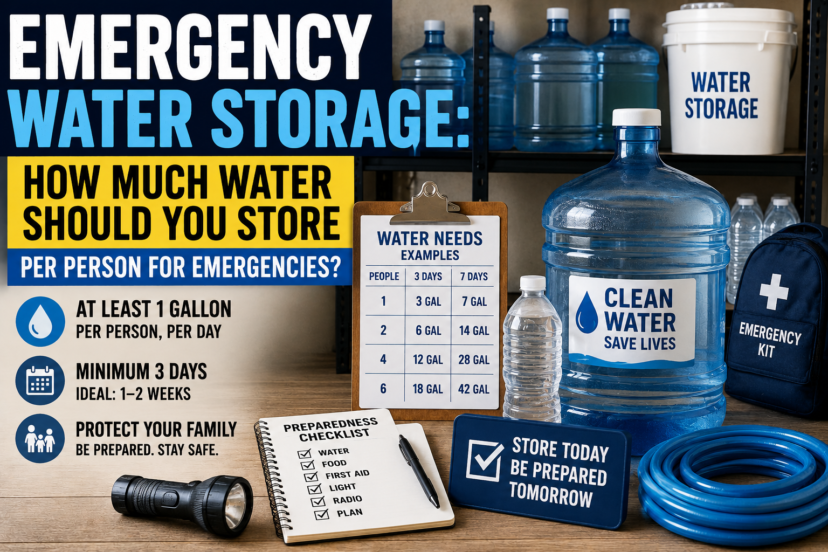
Experts generally recommend storing at least one gallon of water per person per day for a minimum of three days. However, many preparedness experts suggest aiming for one to two weeks of emergency water storage whenever possible.
💧 Why Emergency Water Storage Is So Important
Water supports nearly every basic survival need, including:
- Drinking
- Cooking
- Personal hygiene
- Brushing teeth
- Basic sanitation
- Preparing emergency food supplies
Unlike food, humans can only survive a few days without water. That’s why emergency water storage is one of the most important parts of any preparedness plan.
Common situations that may disrupt water supplies include:
- Hurricanes
- Winter storms
- Wildfires
- Flooding
- Power outages
- Broken water mains
- Supply chain disruptions
🚨 Emergency Water Storage Recommendations Per Person
Minimum Recommendation
Store:
- 1 gallon per person per day
- Minimum of 3 days
For example:
| Family Size | Water Needed For 3 Days |
|---|---|
| 1 Person | 3 Gallons |
| 2 People | 6 Gallons |
| 4 People | 12 Gallons |
| 6 People | 18 Gallons |
Better Recommendation
Many preparedness experts recommend:
- 1–2 weeks of water storage
For a family of four:
- 28–56 gallons
This extra supply provides greater protection during extended power outages or severe weather events.
🏠 Best Emergency Water Storage Methods
Store Commercial Bottled Water
Bottled water is:
- Affordable
- Convenient
- Easy for beginners
Rotate supplies periodically according to manufacturer recommendations.
Use Food-Grade Water Containers
Large water storage containers provide:
- More capacity
- Lower cost per gallon
- Better long-term preparedness
Popular options include:
- 5-gallon containers
- Stackable water bricks
- 55-gallon food-grade barrels
Fill Bathtubs Before Major Storms
If a hurricane or winter storm is approaching, extra water can be stored temporarily for sanitation purposes.
⚡ Factors That May Increase Water Needs
Some people require additional water, including:
Children
Young children often need extra hydration.
Older Adults
Seniors may become dehydrated more quickly.
Pregnant Women
Additional fluids may be necessary.
Hot Weather Conditions
Summer heat and wildfires can increase water requirements.
Medical Conditions
People with certain health issues may need more water.
🥫 Emergency Water Storage And Food Preparation
Many foods require water for preparation.
Examples include:
- Rice
- Pasta
- Freeze-dried meals
- Oatmeal
- Powdered milk
When calculating emergency water storage, remember to account for:
- Drinking water
- Cooking water
- Basic hygiene needs
🌎 Better Urban Survival Strategies For Water Preparedness
Water storage works best when combined with other emergency supplies.
Consider adding:
- Emergency food storage
- First aid kits
- Flashlights
- Battery-powered radios
- Portable phone chargers
- Backup batteries
- Family emergency plans
Preparedness is about creating layers of protection rather than relying on one solution.
🚫 Common Emergency Water Storage Mistakes
Waiting Until A Disaster Is Coming
Store water before hurricane season or winter storms arrive.
Using Unsafe Containers
Always choose food-grade containers designed for water storage.
Forgetting To Rotate Supplies
Inspect and replace stored water when necessary.
Ignoring Additional Family Members
Remember:
- Children
- Pets
- Seniors
Storing Water In Direct Sunlight
Heat can shorten the quality of stored water.
🐶 Don’t Forget Pets
Pets also require water.
Approximate daily needs:
- Small dogs: About 1 quart
- Medium dogs: About ½ gallon
- Large dogs: About 1 gallon
Cats generally require less, but should still be included in your emergency water storage plan.
🔧 Emergency Water Purification Options
If your stored supply runs low, consider:
Water Filters
Portable filters can remove many contaminants.
Water Purification Tablets
Useful for travel and emergency kits.
Boiling Water
Boiling may help make questionable water safer.
Backup Water Sources
Examples include:
- Rainwater collection systems
- Nearby lakes
- Rivers
Always follow local recommendations regarding water safety.
👨⚕️ When To Consult A Professional
Seek advice from qualified professionals when necessary.
Examples include:
- Emergency management officials during disasters
- Medical professionals for hydration concerns
- Doctors regarding medical conditions that affect fluid needs
- Licensed plumbers after flooding or damage to water systems
- Local authorities regarding boil-water advisories
Safety should always come first.
❓ FAQs: Emergency Water Storage
How much water should I store per person for emergencies?
Most experts recommend one gallon per person per day for at least three days.
Is three days of water enough?
Three days is the minimum. One to two weeks provides greater peace of mind.
How long does stored water last?
Commercial bottled water can last a long time when stored properly. Inspect containers regularly and follow manufacturer guidelines.
Can I use old milk jugs for emergency water storage?
Food-grade containers designed specifically for water storage are usually a better choice.
Should I store water for pets?
Yes. Include pets in your emergency preparedness plans.
Where should I store emergency water?
Keep emergency water in cool, dry areas away from direct sunlight and chemicals.
What if my tap water becomes unsafe?
Follow official guidance and use approved purification methods when necessary.
📌 Final Thoughts
Emergency water storage is one of the simplest and most affordable ways to improve your family’s preparedness. You don’t need expensive gear or advanced survival skills to make meaningful progress.
Start small. Add a few gallons this week. Over time, those small steps can provide greater security, peace of mind, and confidence for whatever challenges the future may bring.
Disclaimer: This article is for general educational purposes only. Emergency needs, regional regulations, and disaster risks may vary. Always follow local laws, official guidance, and manufacturer instructions when applicable.
 Explore more: