Common Survival Mistakes: 15 Errors Most People Make During Emergencies
Emergencies often happen with little warning. Hurricanes, winter storms, wildfires, power outages, and supply chain disruptions can quickly turn ordinary days into stressful situations.
The good news is that most survival problems are preventable. You don’t need expensive gear or advanced skills to become better prepared. In many cases, simply avoiding a few common survival mistakes can help protect your family and provide greater peace of mind.
Quick Answer
Common survival mistakes include failing to store water, waiting too long to prepare, ignoring weather warnings, forgetting medications, and relying too heavily on technology. Avoiding these mistakes can improve safety and help families become more self-reliant during emergencies.
🚨 Why Common Survival Mistakes Happen
Many people assume emergencies won’t affect them. Others believe survival preparedness is expensive or only necessary for extreme situations.
In reality, preparedness is about reducing stress and making everyday families more resilient.
Common causes of survival mistakes include:
- Lack of planning
- Procrastination
- Overconfidence
- Panic during emergencies
- Depending entirely on stores and utilities
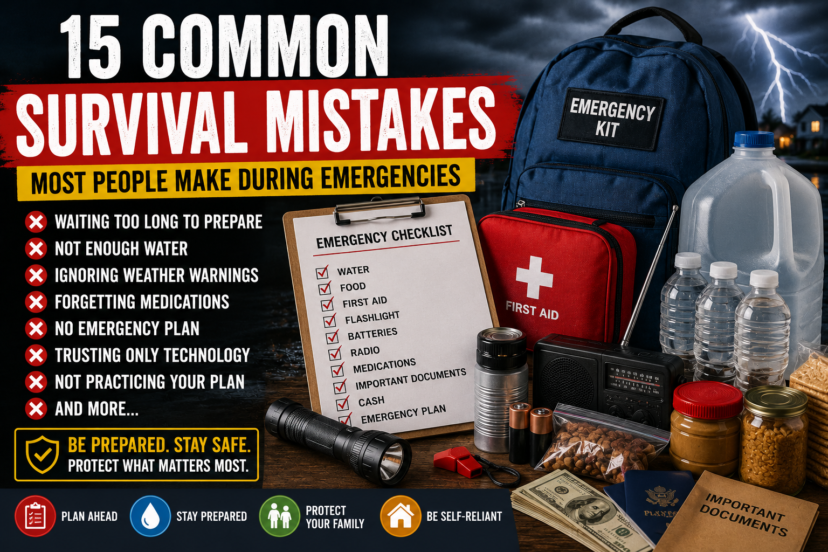
🏠 15 Common Survival Mistakes Most People Make
1. Waiting Until Disaster Is Already Happening
One of the biggest common survival mistakes is preparing too late.
Store shelves often empty quickly before:
- Hurricanes
- Winter storms
- Major power outages
Small preparations made ahead of time are usually far more effective.
2. Not Storing Enough Water
Water is more important than food.
Experts generally recommend:
- One gallon per person per day
- Minimum of three days
- One to two weeks, whenever possible
3. Ignoring Weather Warnings
Emergency alerts exist for a reason.
Never ignore:
- Tornado warnings
- Hurricane evacuation notices
- Flash flood alerts
- Wildfire evacuation orders
4. Depending Entirely On Cell Phones
Phones are useful, but batteries die.
Always keep:
- Portable chargers
- Flashlights
- Battery-powered radios
5. Forgetting Prescription Medications
Many families overlook medication needs.
Consider keeping:
- Prescription lists
- Backup supplies when possible
- Copies of medical records
6. Failing To Rotate Emergency Supplies
Food and batteries eventually expire.
Inspect emergency supplies every six to twelve months.
7. Buying Foods Nobody Eats
Stockpiling unfamiliar foods often leads to waste.
Choose foods your family already enjoys.
8. Forgetting Pets
Pets need:
- Food
- Water
- Medications
- Leashes and carriers
Include them in every emergency plan.
9. Not Having Cash Available
Electronic payment systems can fail during disasters.
Keeping some emergency cash may be helpful.
10. Overlooking Important Documents
Protect copies of:
- Identification
- Insurance policies
- Medical records
- Emergency contacts
11. Assuming Power Will Return Quickly
Extended outages may last several days.
Prepare with:
- Flashlights
- Batteries
- Backup power options
- Shelf-stable foods
12. Depending Only On Refrigerated Foods
Power outages can spoil food quickly.
A pantry with long-lasting foods improves preparedness.
13. Forgetting About Children And Seniors
Young children and older adults often have additional needs.
Examples include:
- Special foods
- Medications
- Extra blankets
- Medical equipment
14. Panic Buying
Panic often leads to poor decisions and unnecessary spending.
Building supplies gradually help avoid this problem.
15. Thinking Survival Requires Expensive Gear
Preparedness does not require thousands of dollars.
Simple items provide tremendous value:
- Water
- Food
- First aid kits
- Flashlights
- Batteries
⚡ Better Urban Survival Strategies
Avoiding common survival mistakes becomes easier with a simple plan.
Build Supplies Slowly
Add a few items during each grocery trip.
Create A Family Emergency Plan
Discuss:
- Meeting locations
- Emergency contacts
- Evacuation routes
Prepare For Local Risks
Examples include:
- Hurricanes in Florida
- Wildfires in California
- Winter storms in the Midwest
- Tornadoes across the central United States
Practice Your Plan
Preparedness improves when families know what to do before emergencies occur.
🌎 Benefits Of Avoiding Common Survival Mistakes
Prepared families often experience:
- Less stress
- Better decision-making
- Greater confidence
- Faster responses
- Improved peace of mind
Preparedness isn’t about fear. It’s about reducing uncertainty.
🛠 Emergency Supplies That Prevent Many Mistakes
A basic emergency kit should include:
- Water
- Shelf-stable food
- Flashlights
- Batteries
- First aid supplies
- Portable phone chargers
- Battery-powered radio
- Important documents
- Prescription medications
These simple items can prevent many common survival mistakes.
👨⚕️ When To Consult A Professional
Always follow official guidance during emergencies.
Seek assistance from:
- Emergency management officials
- Medical professionals
- Licensed electricians after storm damage
- Licensed plumbers after flooding
- Insurance professionals following disasters
Professional advice may help prevent dangerous situations.
❓ FAQs: Common Survival Mistakes
What is the biggest survival mistake people make?
Waiting until a disaster is already happening is one of the most common mistakes.
Why is water more important than food?
Humans can survive much longer without food than without water.
How often should emergency supplies be updated?
Inspect supplies every six to twelve months.
Should I prepare if I don’t live in a hurricane zone?
Yes. Power outages, severe storms, and supply disruptions can occur almost anywhere.
Do I need expensive survival gear?
No. Basic emergency supplies provide the greatest value.
How much food should I keep for emergencies?
Many families begin with a three-day (72-hour) supply and gradually expand it.
Why should I keep emergency cash?
Electronic payment systems may not always work during disasters.
📌 Final Thoughts
Most emergencies are stressful enough without avoidable mistakes making things worse. Fortunately, becoming better prepared doesn’t require special skills or expensive equipment.
By avoiding these common survival mistakes, you can build greater confidence, protect your family, and enjoy more peace of mind.
Start with one small improvement today. Over time, those simple steps can help your family become more resilient and better prepared for whatever challenges the future may bring.
Disclaimer: This article is for general educational purposes only. Emergency needs, regional regulations, and disaster risks may vary. Always follow local laws, official guidance, and manufacturer instructions when applicable.
 Explore more: