Foods To Stockpile For Emergencies: 25 Long-Lasting Staples Every Family Should Have
Unexpected emergencies can happen at any time. Hurricanes, winter storms, wildfires, extended power outages, and supply chain disruptions have reminded many Americans how quickly normal routines can change.
Fortunately, preparing your family doesn’t have to be complicated or expensive. Building a simple food supply is one of the easiest ways to become more self-reliant and gain peace of mind.
Knowing which foods to stockpile can help you protect your family, reduce stress during emergencies, and feel more confident no matter what challenges arise.
Quick Answer
The best foods to stockpile are shelf-stable, affordable, easy to prepare, and long-lasting. Rice, beans, canned foods, pasta, peanut butter, oats, and freeze-dried foods are among the most popular emergency food storage options. Many can last from several years to over 25 years when stored properly.
🥫 Why Foods To Stockpile Matter During Emergencies
An emergency food supply provides security when:
- Severe weather disrupts grocery stores
- Power outages affect local communities
- Hurricanes delay deliveries
- Winter storms keep families home
- Supply chain problems create shortages
Having food to stockpile means you don’t have to panic or rush to crowded stores when emergencies occur.
Benefits include:
- Greater peace of mind
- Increased self-reliance
- Reduced stress
- Better family preparedness
- Lower grocery costs through smart buying
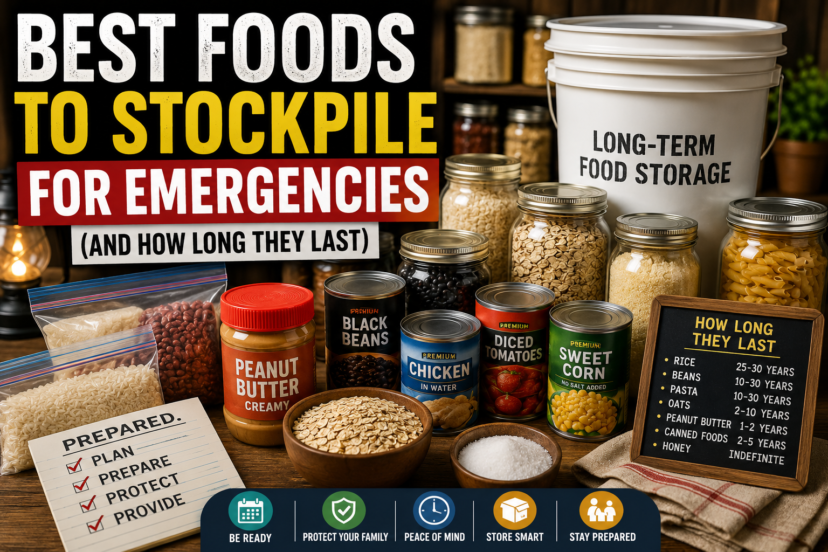
🍚 Best Foods To Stockpile And How Long They Last
White Rice
Shelf Life:
- Up to 25–30 years when stored properly
White rice is affordable, versatile, and easy to prepare.
Dry Beans
Shelf Life:
- 10–30 years
Beans provide:
- Protein
- Fiber
- Essential nutrients
Popular choices include:
- Pinto beans
- Black beans
- Kidney beans
Pasta
Shelf Life:
- 10–30 years
Pasta is inexpensive and stores extremely well.
Rolled Oats
Shelf Life:
- 2–10 years
Oats are ideal for breakfast and emergency meals.
Peanut Butter
Shelf Life:
- About 1–2 years
Peanut butter supplies healthy fats and calories.
Canned Vegetables
Shelf Life:
- 2–5 years
Excellent choices include:
- Corn
- Green beans
- Peas
- Carrots
Canned Fruit
Shelf Life:
- 1–3 years
Fruit provides variety and helps boost morale during stressful situations.
Canned Meat
Shelf Life:
- 2–5 years
Examples include:
- Tuna
- Chicken
- Salmon
- Spam
Canned Soup
Shelf Life:
- About 2–5 years
Soup requires minimal preparation and works well during power outages.
Instant Potatoes
Shelf Life:
- 10–15 years
These are lightweight and easy to prepare.
Powdered Milk
Shelf Life:
- Up to 20 years
Powdered milk is useful for baking and family meals.
Honey
Shelf Life:
- Indefinite when stored properly
Honey is famous for its incredible shelf life.
Salt
Shelf Life:
- Indefinite
Salt supports food preparation and preservation.
Sugar
Shelf Life:
- Indefinite when kept dry
Cooking Oil
Shelf Life:
- 1–2 years
Rotate oils regularly for freshness.
Freeze-Dried Foods
Shelf Life:
- Up to 25 years
Freeze-dried meals are popular among emergency preparedness enthusiasts.
🏠 Foods To Stockpile For Families On A Budget
You do not need expensive survival meals to build an emergency food supply.
Affordable foods to stockpile include:
- Rice
- Pasta
- Beans
- Oats
- Canned vegetables
- Peanut butter
- Canned soup
Buying a few extra items during regular shopping trips can gradually create a strong pantry without overwhelming your budget.
⚡ Foods To Stockpile During Power Outages
Some foods require little or no cooking.
Good options include:
- Peanut butter
- Protein bars
- Crackers
- Canned fruit
- Ready-to-eat soups
- Canned tuna
- Trail mix
These foods are especially helpful during hurricanes and severe winter storms.
📦 How To Store Emergency Food Properly
Proper food storage helps maximize shelf life.
Store Food In Cool Areas
Avoid extreme heat whenever possible.
Protect Food From Moisture
Humidity can shorten shelf life.
Rotate Older Supplies First
Follow the “first in, first out” rule.
Label Containers
Write purchase dates on products.
Inspect Supplies Regularly
Check your emergency food storage every six to twelve months.
🌎 Better Urban Survival Strategies For Food Preparedness
Food storage is only one part of emergency preparedness.
Consider combining your food supply with:
- Emergency water storage
- A first aid kit
- Flashlights
- Backup batteries
- Portable phone chargers
- A family emergency plan
Together, these supplies can help families feel more prepared during unexpected events.
🚫 Common Food Stockpiling Mistakes
Many beginners make these mistakes:
Buying Foods Nobody Eats
Choose foods your family already enjoys.
Ignoring Shelf Life
Rotate supplies regularly.
Forgetting Water Storage
Food preparation often requires water.
Depending Only On Refrigerated Foods
Power outages can spoil fresh foods quickly.
Buying Everything At Once
Build your emergency supplies gradually.
👨⚕️ When To Consult A Professional
Always follow official guidance during emergencies.
Seek advice from:
- Emergency management officials during disasters
- Medical professionals regarding dietary restrictions
- Doctors for medication-related food needs
- Licensed electricians after severe power damage
- Local authorities regarding evacuation orders
Safety should always come first.
❓ FAQs: Foods To Stockpile For Emergencies
What foods should I stockpile first?
Rice, beans, canned foods, oats, peanut butter, and pasta are excellent beginner choices.
How much food should a family store?
Many experts recommend at least a three-day supply, then gradually increasing to several weeks.
What food lasts the longest?
White rice, dry beans, sugar, salt, and freeze-dried foods have some of the longest shelf lives.
Are canned foods good for emergency preparedness?
Yes. Canned foods are convenient, affordable, and easy to store.
Should I stockpile water too?
Absolutely. Water is even more important than food during emergencies.
How often should I rotate my emergency food supply?
Inspect supplies every six to twelve months and replace items nearing expiration.
Is emergency food storage expensive?
No. Most families can build supplies gradually while staying within their budget.
📌 Final Thoughts
Building a food supply doesn’t require special knowledge or thousands of dollars. By choosing practical foods to stockpile, you can protect your family, reduce stress during emergencies, and gain greater peace of mind.
Start small. Pick up a few extra items during your next shopping trip. Over time, those simple steps can help your family become more self-reliant, resilient, and prepared for whatever the future may bring.
Disclaimer: This article is for general educational purposes only. Emergency needs, regional risks, and local regulations may vary. Always follow official guidance, local laws, and manufacturer instructions when applicable.
 Explore more: