Urban Survival Tips: How To Stay Prepared In A City Emergency
Living in a city offers many advantages, but urban areas also present unique challenges during emergencies, making urban survival tips valuable for every household. Power outages, severe weather, transportation disruptions, water shortages, and supply chain interruptions can affect millions of people in a short period of time. In densely populated areas, even a short-term emergency can quickly lead to crowded stores, traffic congestion, limited services, and communication challenges.
Fortunately, you don’t need to become a survival expert to improve your preparedness. A few simple urban survival tips—such as keeping essential supplies on hand, having an emergency communication plan, knowing alternative travel routes, and staying informed through reliable sources—can help you protect your family, reduce stress, and respond more confidently when unexpected situations arise. Taking small steps before an emergency happens can make a significant difference in your safety, comfort, and peace of mind during uncertain times.
⭐ Quick Answer: Urban Survival Tips
The best urban survival tips include storing water and food, maintaining a 72-hour emergency kit, creating a family emergency plan, keeping backup power supplies, and preparing for local risks such as hurricanes, winter storms, wildfires, and extended power outages.
Key Takeaways
Most likely cause: Urban emergencies often disrupt essential services such as electricity, transportation, water, communications, and access to supplies much faster than many people expect.
Usually serious? It can be. Even short-term disruptions in a city can lead to crowded stores, traffic congestion, limited resources, and delays in emergency services.
First thing to check: Identify the risks most likely to affect your area, review your emergency supplies, and make sure your family has a communication plan and multiple evacuation or travel routes.
Best solution: Build a 72-hour emergency kit, store water and shelf-stable food, keep backup power and lighting available, stay informed through reliable sources, and regularly update your emergency plan.
🚨 Why Urban Survival Preparation Matters
Cities depend heavily on:
- Electricity
- Transportation systems
- Grocery stores
- Water infrastructure
- Internet and communication networks
When these systems are disrupted, daily life can change quickly.
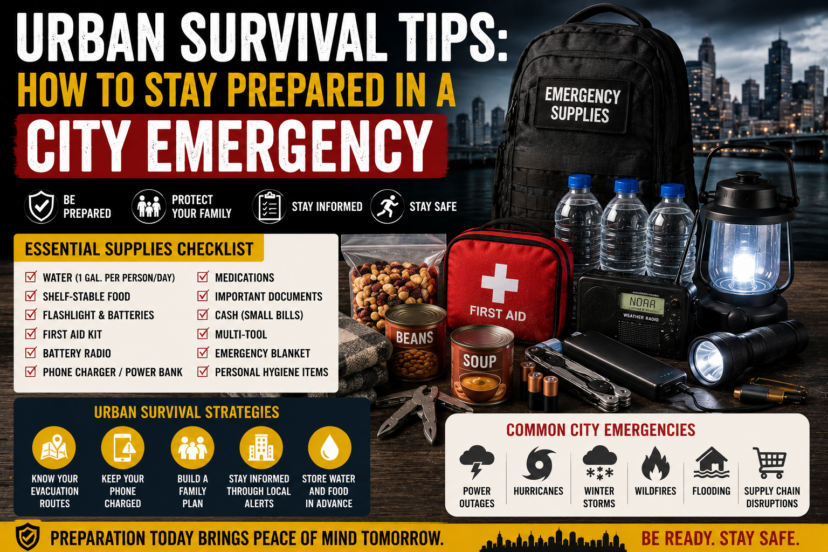
Common city emergencies include:
- Power outages
- Flooding
- Winter storms
- Hurricanes
- Wildfires
- Supply chain disruptions
- Water system failures
Preparedness helps families respond with confidence instead of panic.
🏙 Urban Survival Tips For Everyday Families
1. Store Emergency Water
Water should always be your first priority.
Preparedness experts commonly recommend:
- One gallon per person per day
- At least three days of supplies
Many families aim for one to two weeks.
2. Build A 72-Hour Emergency Kit
Your emergency kit should include:
- Food
- Water
- Flashlights
- Batteries
- First aid supplies
- Portable chargers
Keep supplies easy to access.
3. Store Shelf-Stable Foods
Examples include:
- Rice
- Pasta
- Peanut butter
- Canned soup
- Protein bars
- Oats
Choose foods your family already enjoys.
4. Keep Backup Lighting
Battery-powered lanterns and flashlights are safer than candles.
5. Maintain Portable Power Banks
Phones are important during emergencies.
Backup chargers help preserve communication.
6. Protect Important Documents
Store copies of:
- Identification cards
- Insurance policies
- Medical information
- Emergency contacts
Waterproof containers add extra protection.
7. Prepare For Local Risks
Different regions face different threats.
Examples include:
- Hurricanes in Florida
- Wildfires in California
- Winter storms in the Midwest
- Flooding along coastal areas
💧 Water Preparedness Is Essential
Many urban survival tips begin with water because clean water is critical.
Helpful supplies include:
- Bottled water
- Water storage containers
- Water filters
- Water purification tablets
Water shortages can occur faster than many people expect.
⚡ Prepare For Power Outages
Blackouts are among the most common emergencies in cities.
Helpful items include:
- Flashlights
- Batteries
- Portable phone chargers
- Battery-powered radios
Knowing what to do during the first 24 hours can greatly reduce stress.
🥫 Build A Reliable Food Supply
Urban preparedness doesn’t require huge stockpiles.
Start small with:
- Rice
- Beans
- Oats
- Canned foods
- Pasta
Adding a few items during regular grocery trips helps families build supplies gradually.
🚶 Have Multiple Transportation Options
Traffic congestion can become severe during emergencies.
Consider:
- Walking routes
- Bicycle options
- Public transportation alternatives
Know several ways to reach:
- Home
- Work
- Schools
🐶 Include Pets In Your Plans
Pets need:
- Food
- Water
- Medications
- Carriers
- Leashes
Emergency planning should include every family member.
🌎 Better Urban Survival Strategies
Create A Family Emergency Plan
Discuss:
- Meeting locations
- Emergency contacts
- Evacuation routes
Stay Informed
Monitor:
- Weather alerts
- Local news
- Emergency notifications
Store Emergency Cash
Electronic payment systems may not always function.
Rotate Supplies
Inspect emergency supplies every six to twelve months.
🚫 Common Urban Survival Mistakes
Waiting Until A Disaster Happens
Preparedness works best before emergencies occur.
Ignoring Water Storage
Water remains the most important supply.
Relying Entirely On Technology
Phones and internet services may fail.
Forgetting Pets
Include animals in emergency planning.
Buying Too Much Too Fast
Preparedness should be gradual and affordable.
💰 Urban Survival Doesn’t Have To Be Expensive
Many people assume preparedness requires thousands of dollars.
In reality, simple supplies provide tremendous value:
- Water
- Food
- Flashlights
- Batteries
- First aid kits
Small steps often create long-term peace of mind.
🛠 Benefits Of Following Urban Survival Tips
Prepared families often experience:
- Less stress
- Faster responses
- Greater confidence
- Better self-reliance
- Increased peace of mind
Preparedness is not about fear. It is about reducing uncertainty.
👨⚕️ When To Consult A Professional
Seek guidance from qualified professionals when appropriate.
Examples include:
- Emergency management officials during disasters
- Medical professionals regarding health concerns
- Licensed electricians after storm damage
- Licensed plumbers after flooding
- Local authorities regarding evacuation orders
Always prioritize safety.
❓ FAQs: Urban Survival Tips
What are the most important urban survival tips?
Water storage, emergency food, flashlights, batteries, and family emergency plans are among the most important.
How much water should I store?
Experts generally recommend one gallon per person per day for at least three days.
Do I need a 72-hour emergency kit?
Yes. A 72-hour emergency kit provides critical supplies during the first days of an emergency.
How often should I check emergency supplies?
Inspect supplies every six to twelve months.
Should I keep emergency cash?
Yes. Payment systems may not function during outages.
Is urban preparedness expensive?
No. Most families can build supplies gradually while staying within their budget.
Why is preparedness important in cities?
Urban areas depend heavily on infrastructure, which can be disrupted during emergencies.
📌 Final Thoughts
Learning practical urban survival tips does not require special skills or expensive equipment. Small actions taken today can provide greater peace of mind tomorrow.
Start with water, food, and a simple emergency kit. Over time, those small improvements can help your family become more self-reliant, resilient, and prepared for whatever challenges the future may bring.
Disclaimer: This article is for general educational purposes only. Emergency needs, local regulations, and disaster risks may vary. Always follow local laws, official guidance, and manufacturer instructions when applicable.
 Explore more: