Water Purification Methods: Best Ways To Purify Water During A Power Outage
When the power goes out, most people worry about lights and food. But access to clean water can quickly become an even bigger concern. Hurricanes, winter storms, floods, wildfires, and severe weather events have left millions of Americans without reliable water supplies. Fortunately, you don’t need to become a survival expert to prepare for these situations. Understanding basic water purification methods can help protect your family, reduce stress, and provide valuable peace of mind during emergencies.
⭐ Quick Answer: Water Purification Methods
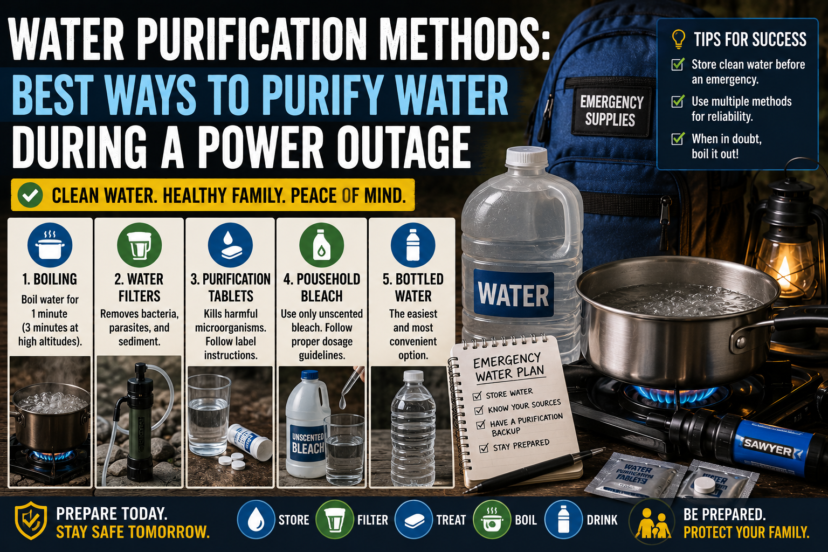
The most common water purification methods include boiling water, using water filters, purification tablets, household bleach (when recommended), and emergency bottled water supplies. The best option depends on the situation and available resources.
Key Takeaways
Most likely cause: During emergencies, normal water supplies may become unavailable or contaminated, making safe drinking water difficult to access.
Usually serious? Yes. Drinking unsafe water can increase the risk of waterborne illness, especially during natural disasters and extended power outages.
First thing to check: Determine whether your tap water is safe to drink and confirm if local authorities have issued any boil-water advisories or other safety notices.
Best solution: Keep multiple water purification options available, such as boiling, certified water filters, purification tablets, or emergency bottled water, and store an adequate supply of clean water before emergencies occur.
💧 Why Water Purification Methods Matter During Emergencies
Clean water is essential for:
- Drinking
- Cooking
- Hygiene
- Preparing emergency food
During power outages, water systems may become contaminated or unavailable due to:
- Hurricanes
- Flooding
- Winter storms
- Broken water mains
- Wildfires
- Infrastructure failures
Learning simple water purification methods helps families become more self-reliant and better prepared.
🚨 Common Sources Of Emergency Water
Possible emergency water sources include:
- Stored bottled water
- Water storage containers
- Rainwater collection systems
- Rivers and lakes
- Melted snow
- Bathtubs filled before severe storms
Whenever possible, use stored water first.
🔥 Boiling Water: One Of The Most Reliable Water Purification Methods
Boiling remains one of the most trusted methods for emergency water treatment.
Benefits include:
- Simple process
- No special equipment required
- Effective against many harmful organisms
Boiling water is especially useful after:
- Flooding
- Boil-water advisories
- Severe storms
Allow water to cool before use.
🧰 Portable Water Filters
Portable filters are popular among emergency preparedness enthusiasts.
Advantages include:
- Easy to use
- Lightweight
- Suitable for travel and emergency kits
Water filters may be useful for:
- Camping
- Power outages
- Evacuations
- Emergency kits
Popular examples in the United States include gravity filters and personal water filtration systems.
🧪 Water Purification Tablets
Water purification tablets are compact and inexpensive.
Benefits include:
- Small size
- Long shelf life
- Good backup option
These tablets are commonly included in:
- Bug-out bags
- 72-hour emergency kits
- Travel emergency kits
Always follow the manufacturer’s instructions carefully.
🚰 Household Bleach As An Emergency Option
Unscented household bleach may sometimes be used for emergency water disinfection when recommended by official authorities.
However:
- Use only plain, unscented bleach.
- Follow official guidance carefully.
- Never guess amounts.
This method should only be used according to trusted recommendations.
🥤 Bottled Water: The Easiest Solution
Commercial bottled water remains one of the simplest emergency solutions.
Benefits include:
- Ready to drink
- Convenient storage
- No preparation required
Preparedness experts often recommend storing at least:
- One gallon per person per day
- Minimum of three days
Many families aim for one to two weeks of emergency water storage.
❄ Can You Use Snow Or Rainwater?
Snow and rainwater may provide emergency water sources, but they may still require purification.
Rainwater collection systems are becoming increasingly popular among preparedness-minded families.
Always treat questionable water before drinking.
⚡ Better Urban Survival Strategies For Water Preparedness
Water purification methods work best when combined with:
Emergency Water Storage
Store clean water before disaster strikes.
Emergency Food Supplies
Many foods require water for preparation.
First Aid Supplies
Medical emergencies often require clean water.
Backup Power Options
Portable power stations can support some filtration devices.
Family Emergency Plans
Prepared families experience less stress during emergencies.
🚫 Common Water Purification Mistakes
Waiting Until Disaster Strikes
Preparation is easier before emergencies occur.
Assuming Tap Water Is Always Safe
Flooding and damaged infrastructure may affect water quality.
Forgetting To Store Water
Stored water remains your first line of defense.
Ignoring Official Advisories
Always follow guidance from local authorities.
Depending On One Method Only
Multiple backup options improve preparedness.
🌎 Benefits Of Learning Water Purification Methods
Prepared families often enjoy:
- Greater peace of mind
- Increased self-reliance
- Less panic during emergencies
- Better health protection
- Greater confidence
Preparedness is not about fear. It’s about reducing uncertainty.
👨⚕️ When To Consult A Professional
Always seek guidance from qualified professionals when appropriate.
Examples include:
- Emergency management officials during disasters
- Local authorities during boil-water advisories
- Medical professionals for dehydration concerns
- Licensed plumbers after flooding or damaged pipes
- Utility companies regarding water system disruptions
Safety should always come first.
❓ FAQs: Water Purification Methods
What is the safest way to purify water during a power outage?
Boiling water is one of the most reliable water purification methods when fuel is available.
Can bottled water expire?
Bottled water can generally remain safe for long periods when stored properly, but containers should be inspected regularly.
Are water filters enough during emergencies?
Many filters are highly effective, but always follow manufacturer recommendations.
Can I drink rainwater without treatment?
Treating rainwater before drinking is generally recommended.
Should every emergency kit include water purification supplies?
Yes. Water purification tablets or portable filters can provide valuable backups.
How much water should I store per person?
Preparedness experts typically recommend one gallon per person per day.
What should I do if officials issue a boil-water advisory?
Follow all instructions from local authorities immediately.
📌 Final Thoughts
Learning basic water purification methods is one of the smartest investments you can make in your family’s preparedness. You don’t need expensive equipment or advanced survival skills to make meaningful progress.
Start small. Store some bottled water, add a backup filter, and build your supplies gradually. Those simple steps can provide greater peace of mind and help your family stay prepared for whatever challenges the future may bring.
Disclaimer: This article is for general educational purposes only. Emergency needs, local regulations, and disaster risks may vary. Always follow local laws, official guidance, and manufacturer instructions when applicable.
 Explore more: