Rotate Emergency Food Supply: How To Rotate Your Emergency Food Supply Without Waste
How to rotate an emergency food supply? Building an emergency food supply is one of the smartest ways to prepare for hurricanes, winter storms, power outages, wildfires, and unexpected supply chain disruptions. But stocking shelves is only half the job. If food expires before you use it, you’ve wasted both money and valuable preparedness resources.
The good news is that learning how to rotate an emergency food supply doesn’t require complicated systems or expensive equipment. With a few simple habits, you can keep your pantry fresh, organized, and ready for emergencies while reducing food waste and stretching your grocery budget.
Whether you’re storing a week’s worth of food or building a long-term emergency pantry, proper food rotation helps protect your investment and gives your family greater confidence during uncertain times.
⭐ Quick Answer: Rotate Emergency Food Supply
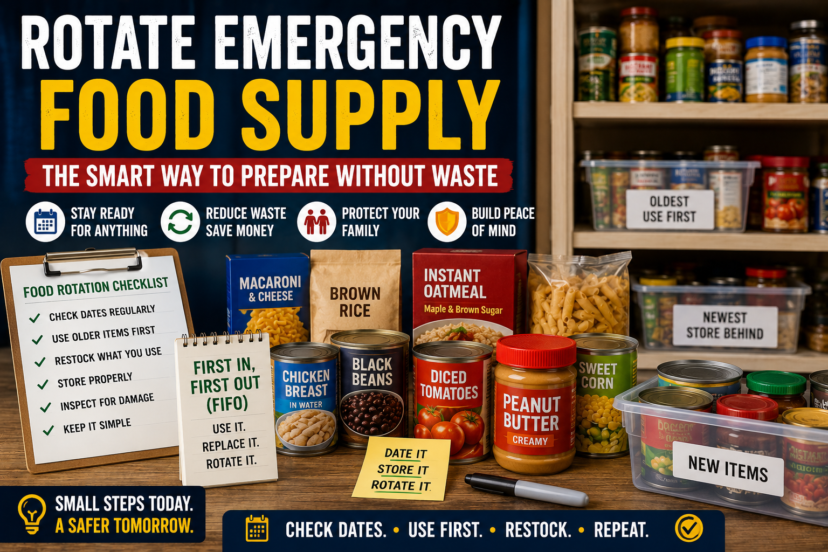
The easiest way to rotate an emergency food supply is to use the “First In, First Out” (FIFO) method. Place newer food behind older items, use the oldest products first during everyday meals, and replace them during your next grocery trip. This simple system helps reduce waste, keeps your pantry fresh, and ensures your emergency food is ready when you need it.
Key Takeaways
Most likely cause: Emergency food often goes to waste because items are stored and forgotten until they are past their best-by dates. Without a simple rotation system, older products can easily get pushed to the back of the pantry.
Usually serious? Usually not, but poor food rotation can waste money and leave you with food that may no longer be suitable when an emergency occurs. Damaged, leaking, bulging, rusted, or otherwise questionable containers should be discarded according to food-safety guidance.
First thing to check: If you’re learning how to rotate an emergency food supply, start by checking dates and package condition, then organize foods so the oldest safe items are easiest to reach and use first.
Best solution: Follow the First In, First Out (FIFO) method. Put newly purchased food behind older supplies, regularly use stored foods in everyday meals, and replace what you consume. A simple inventory with purchase or rotation dates can make the system even easier to maintain.
🔄 Why You Should Rotate Emergency Food Supply Regularly
Many people build an emergency pantry and then forget about it.
Months—or even years—later, they discover expired food, damaged packaging, or products their family no longer wants to eat.
Regular food rotation helps you:
- Reduce food waste
- Save money
- Maintain food quality
- Keep emergency supplies current
- Build confidence in your preparedness plan
Emergency food is much more valuable when it’s part of your everyday pantry instead of something hidden away and forgotten.
📦 What Is The First In, First Out Method?
The easiest way to rotate emergency food supply is by following the First In, First Out (FIFO) method.
The concept is simple:
- Place newly purchased food behind older items.
- Use the oldest products first.
- Replace them during normal grocery shopping.
This keeps your pantry stocked while minimizing expired food.
Many grocery stores use this same inventory system because it works.
🥫 Which Foods Should Be Rotated Most Often?
Nearly every emergency food benefits from rotation, but some foods require more attention than others.
High-Priority Foods
These should be checked regularly:
- Peanut butter
- Cooking oils
- Crackers
- Granola bars
- Breakfast cereals
- Shelf-stable milk
- Nuts
Lower-Maintenance Foods
These generally have longer storage lives:
- White rice
- Dry pasta
- Dry beans
- Freeze-dried foods
- Properly stored oats
Even long-lasting foods should be inspected periodically for packaging damage, pests, or moisture.
🏠 Organize Your Pantry For Easy Food Rotation
Good organization makes it much easier to rotate emergency food supply without feeling overwhelmed.
Helpful ideas include:
- Group similar foods together.
- Store canned goods on dedicated shelves.
- Separate breakfast foods from dinner ingredients.
- Keep snacks in one area.
- Label storage bins clearly.
When everything has a place, it’s easier to see what needs to be used first.
📝 Label Your Emergency Food
Labels simplify pantry management.
Consider writing:
- Purchase date
- Best-by date
- Rotation reminder
A permanent marker works well on cans, boxes, and storage containers.
Visible dates help everyone in the household follow the same rotation system.
🍽️ Use Emergency Foods In Everyday Meals
One of the best preparedness habits is eating what you store.
Instead of keeping emergency food separate forever:
- Use canned vegetables in weeknight dinners.
- Add canned chicken to soups.
- Enjoy peanut butter for lunches.
- Cook rice and pasta regularly.
- Include oats in breakfast routines.
When grocery shopping, simply replace the items you used.
This creates a continuous rotation cycle with very little effort.
💰 Rotate Emergency Food Supply Without Spending More Money
Preparedness doesn’t have to increase your grocery budget.
Instead:
- Buy extra pantry items during sales.
- Replace only what you’ve used.
- Purchase store brands when appropriate.
- Build your pantry gradually.
Over time, you’ll create a dependable emergency food supply without making large one-time purchases.
🌡️ Store Food Properly To Extend Shelf Life
Proper storage makes rotation easier because food stays fresh longer.
Store food:
- In cool locations
- Away from sunlight
- In dry environments
- Off concrete floors
- Protected from humidity
Avoid storing food in garages, sheds, or attics that experience extreme temperatures.
Indoor closets and pantry shelves generally provide the best storage conditions.
📅 Create A Simple Rotation Schedule
You don’t need to inspect your pantry every week.
Many families follow this schedule:
Monthly
- Check frequently used foods.
- Replace opened products.
- Wipe pantry shelves if needed.
Every Six Months
- Review expiration dates.
- Inspect canned goods.
- Check for pests.
- Reorganize shelves.
Every Year
- Evaluate your emergency food plan.
- Adjust supplies for changing family needs.
- Donate unopened food you won’t use before its quality declines, if appropriate.
Small routine checks prevent large problems later.
🌪️ Rotate Food Before Storm Season
Many Americans prepare for seasonal disasters.
Examples include:
- Hurricane season along the Gulf Coast
- Winter storms in northern states
- Wildfire season in western regions
- Tornado season across the Plains
Before these seasons begin:
- Inspect your pantry.
- Replace expired foods.
- Refill drinking water.
- Check manual can openers.
- Review cooking supplies.
Seasonal preparation helps ensure everything is ready before emergencies arrive.
🚫 Common Food Rotation Mistakes
Avoid these common errors when learning to rotate emergency food supply.
Buying Foods Nobody Eats
Emergency food should match your family’s normal eating habits.
Ignoring Expiration Dates
Regular inspections help prevent unpleasant surprises.
Buying Too Much At Once
Gradually building your pantry reduces waste and spreads costs over time.
Forgetting Water
Food storage and water storage always go together.
Poor Storage Conditions
Heat and humidity can shorten shelf life significantly.
Learning from these mistakes helps build a stronger preparedness plan.
⚠️ When To Consult A Professional
Most families can organize and rotate an emergency food pantry without assistance. However, seek guidance from a medical professional if someone in your household has severe food allergies, diabetes, kidney disease, or dietary restrictions that require specialized emergency meal planning. Follow instructions from local emergency management officials during disasters and evacuations. Contact licensed electricians, plumbers, or utility providers if emergencies involve damaged electrical systems, gas leaks, contaminated water, or unsafe living conditions. Always prioritize safety and follow official recommendations during severe emergencies.
❓ FAQs: Rotate Emergency Food Supply
What is the best way to rotate emergency food supplies?
The First In, First Out (FIFO) method is the easiest and most effective approach. Use older food first and place newer purchases behind existing items.
How often should I check my emergency pantry?
A quick monthly check combined with a more thorough inspection every six months works well for most households.
Can I eat food after the best-by date?
Many shelf-stable foods remain safe beyond their best-by dates if stored properly and the packaging is intact. However, always inspect food for signs of spoilage before consuming it.
Should emergency food be separate from my regular pantry?
Not necessarily. Many preparedness experts recommend integrating emergency food into your everyday pantry so it is naturally rotated and replaced.
What foods need to be rotated most often?
Peanut butter, cooking oils, crackers, cereals, nuts, and snack foods generally require more frequent rotation than dry grains or freeze-dried foods.
How much emergency food should I store?
Many preparedness organizations recommend maintaining at least several days of food and water for every household member, with many families gradually building supplies that last two weeks or longer.
How can I avoid wasting emergency food?
Use stored food during everyday meals, replace it during grocery shopping, label purchase dates, and inspect your pantry regularly.
🎯 Final Thoughts On Rotate Emergency Food Supply
Learning how to rotate emergency food supply is one of the simplest ways to improve your family’s preparedness while saving money and reducing waste. By following the First In, First Out method, organizing your pantry, and making emergency foods part of your regular meal planning, you’ll always have fresh, dependable supplies ready when unexpected events occur.
Preparedness isn’t about perfection or spending a fortune. It’s about creating practical habits that fit your everyday life. Every can you rotate, every shelf you organize, and every grocery trip that replaces what you’ve used strengthens your family’s resilience and provides greater peace of mind for whatever tomorrow may bring.
Disclaimer: This article is for general educational and preparedness purposes only. Food storage conditions, product shelf lives, emergency needs, and regional regulations vary. Always follow manufacturer storage instructions, local emergency management guidance, and applicable laws. Consult qualified professionals regarding medical concerns, food allergies, or emergency situations that may affect your health or safety.
 Explore more: