Power Outage Survival: What To Do In The First 24 Hours
Power outages can happen without warning, which is why understanding power outage survival is so important for every household. Severe thunderstorms, hurricanes, winter storms, wildfires, floods, and damaged utility lines leave millions of Americans without electricity every year. While losing power can feel stressful, a little preparation can make a huge difference. You don’t need expensive equipment or survival experience to keep your family safe during an outage.
Having a simple emergency plan, storing a few basic supplies, and knowing how to safely handle food, water, lighting, and communication can help you avoid unnecessary risks. The first 24 hours are often the most important, and staying calm while making smart decisions can protect your family, reduce stress, and make the situation much easier to manage. Whether the outage lasts a few hours or several days, being prepared gives you greater confidence and peace of mind when the lights go out.
⭐ Quick Answer: Power Outage Survival
Power outage survival starts with staying calm, checking for safety hazards, using flashlights instead of candles, protecting food and water supplies, preserving phone batteries, and following updates from local authorities.
Key Takeaways
Most likely cause: Most power outages are caused by severe weather, damaged power lines, equipment failures, or other unexpected disruptions to the electrical grid.
Usually serious? Not usually. Most outages are temporary, but extended power loss can create safety concerns related to food, water, heating, cooling, and communication.
First thing to check: Confirm whether the outage affects only your home or the surrounding area, check for tripped breakers if it’s safe to do so, and monitor updates from your utility company or local authorities.
Best solution: Stay prepared with an emergency kit, use flashlights instead of candles, keep food and water safe, conserve phone batteries, and follow official guidance until power is restored.
⚡ Why Power Outages Happen
Power outages in the United States are often caused by:
- Hurricanes
- Winter storms
- Tornadoes
- Wildfires
- Lightning strikes
- Utility equipment failures
- Vehicle accidents involving power poles
Some outages last only a few hours, while others may continue for several days.
🚨 The First Hour Of Power Outage Survival
The first hour is important.
Stay Calm
Avoid panic and focus on basic safety.
Check Family Members
Make sure everyone is safe, especially:
- Children
- Seniors
- People with medical conditions
Determine Whether The Outage Is Local
Check whether:
- Neighbors have power
- Circuit breakers have tripped
- Utility companies have issued alerts
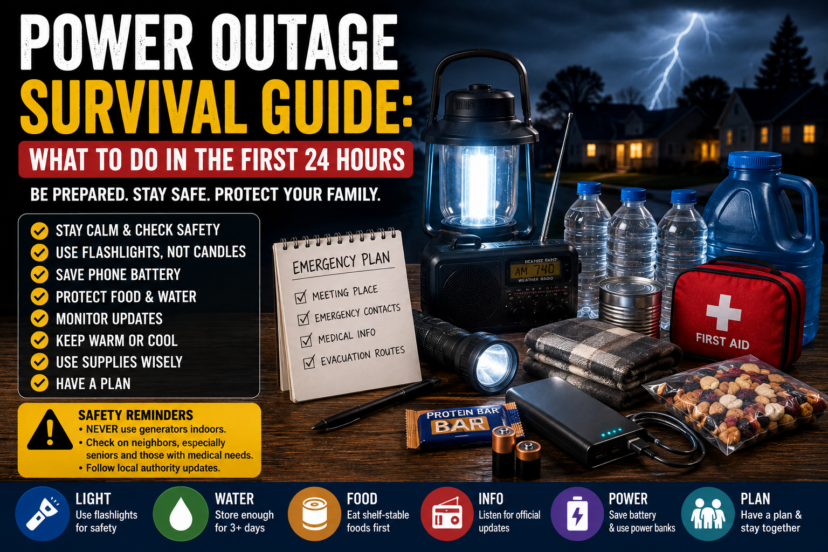
Use Flashlights
Battery-powered flashlights are safer than candles.
🔦 Essential Power Outage Survival Supplies
Helpful items include:
- Flashlights
- Extra batteries
- Portable phone chargers
- Battery-powered radios
- Emergency blankets
- First aid kits
- Bottled water
- Shelf-stable foods
Prepared families often experience less stress during emergencies.
📱 Preserve Phone Battery Life
Communication is critical.
To extend battery life:
- Lower screen brightness
- Close unnecessary apps
- Enable battery-saving mode
- Avoid streaming videos
Portable power banks can provide additional backup power.
🥫 Protect Food During A Blackout
One of the biggest concerns during power outage survival is food safety.
Keep Refrigerator Doors Closed
Cold air escapes quickly.
Avoid Opening Freezers Unnecessarily
A full freezer generally stays cold longer than a partially filled one.
Use Shelf-Stable Foods
Examples include:
- Peanut butter
- Protein bars
- Canned soup
- Crackers
- Trail mix
These foods require little preparation.
💧 Don’t Forget Water
Power outages may sometimes affect water supplies.
Preparedness experts recommend:
- One gallon of water per person per day
- Minimum of three days
Water storage is one of the most valuable forms of emergency preparedness.
🏠 Stay Comfortable During The Outage
Dress In Layers
During winter storms, additional clothing helps conserve body heat.
Close Curtains
Curtains help maintain indoor temperatures.
Use Blankets
Emergency blankets and sleeping bags provide extra warmth.
Stay In One Area
Concentrating family members in one room helps retain heat.
🌎 Better Urban Survival Strategies
Power outage survival becomes easier with a simple plan.
Maintain A 72-Hour Emergency Kit
Include:
- Food
- Water
- Batteries
- First aid supplies
Keep Emergency Contacts Available
Printed lists remain useful if phones fail.
Store Emergency Cash
Electronic payment systems may not work during blackouts.
Prepare For Regional Risks
Examples include:
- Hurricanes in Florida
- Wildfires in California
- Winter storms in Minnesota
- Tornadoes in Oklahoma
🚫 Common Power Outage Survival Mistakes
Using Candles Instead Of Flashlights
Candles increase fire risks.
Opening Refrigerators Constantly
This causes food temperatures to rise faster.
Ignoring Utility Updates
Always monitor official announcements.
Waiting Until Storm Season To Prepare
Preparedness is easier before emergencies occur.
Running Generators Indoors
Generators should only be used according to the manufacturer’s instructions and safety guidelines.
🐶 Remember Pets
Pets need:
- Water
- Food
- Warmth
- Medications
Include animals in your preparedness plans.
💰 Affordable Ways To Improve Power Outage Survival
Preparedness doesn’t need to be expensive.
Start with:
- Flashlights
- Batteries
- Bottled water
- Shelf-stable foods
- Portable phone chargers
Adding one or two items during each shopping trip can gradually build a strong emergency supply.
👨⚕️ When To Consult A Professional
Seek guidance from qualified professionals when necessary.
Examples include:
- Emergency management officials during disasters
- Medical professionals for health concerns
- Licensed electricians after storm damage
- Utility companies regarding service restoration
- Licensed plumbers if flooding affects water systems
Always prioritize safety.
❓ FAQs: Power Outage Survival
What should I do first during a power outage?
Stay calm, check family members, and determine whether the outage affects only your home or the surrounding area.
How much water should I store for a blackout?
Experts generally recommend one gallon per person per day for at least three days.
Are flashlights safer than candles?
Yes. Flashlights greatly reduce fire risks.
How can I keep my phone charged during a power outage?
Portable power banks and backup batteries are helpful options.
Should I open my refrigerator during a blackout?
Minimize opening refrigerator doors to help preserve cold temperatures.
How long should emergency supplies last?
Many families begin with enough supplies for 72 hours (3 days) and gradually expand.
Is a battery-powered radio necessary?
Yes. Radios provide important updates when internet service is unavailable.
📌 Final Thoughts
Power outages are inconvenient, but they don’t have to become emergencies. A few simple preparations can provide tremendous peace of mind and help your family stay comfortable during unexpected blackouts.
Start small. Build your supplies gradually. Over time, those small efforts can improve self-reliance and help your family feel more confident, no matter what challenges arise.
Disclaimer: This article is for general educational purposes only. Emergency needs, local regulations, and disaster risks may vary by location. Always follow local laws, official guidance, and manufacturer instructions when applicable.
 Explore more: