Emergency Water Storage Mistakes Most People Make: 12 Problems That Could Leave Your Family Unprepared
When the power goes out, a hurricane approaches, or a winter storm shuts down roads, most families immediately think about food, flashlights, and batteries. But safe drinking water can become an even more urgent concern. Unfortunately, some of the most common emergency water storage mistakes aren’t obvious until you actually need your supply. Containers can leak, stored water can become contaminated, or a family may simply discover that they didn’t store nearly enough.
The good news is that building a dependable emergency water supply doesn’t require an expensive survival system or a garage filled with equipment. A few food-grade containers, a sensible rotation plan, and basic sanitation practices can dramatically improve your household readiness.
Whether you’re preparing for hurricanes, wildfires, earthquakes, winter storms, boil-water advisories, or extended power outages, avoiding the mistakes below can help you protect your family and feel much more confident when normal services are disrupted.
💧 Quick Answer: What Are The Most Common Emergency Water Storage Mistakes?
The most common emergency water storage mistakes include storing too little water, using inappropriate containers, keeping water near chemicals or heat, forgetting to rotate supplies, and relying on only one water source. A practical emergency plan includes properly stored drinking water, suitable food-grade containers, backup treatment methods, and enough water for everyone in the household—including pets.
Key Takeaways
Most likely cause: Many emergency water storage mistakes happen because families buy a few cases of bottled water but never calculate their actual household needs.
Usually serious? They can be. During a prolonged water outage or contamination emergency, an inadequate or unsafe water supply can quickly become a major problem.
First thing to check: Calculate how much drinking and sanitation water your household currently has available and inspect containers for leaks, damage, or contamination risks.
Best solution: Build a layered water plan using commercially bottled water or properly prepared food-grade containers, safe storage conditions, regular inspections, and reliable backup purification methods.
🚰 Why Emergency Water Storage Matters
Water emergencies don’t always look dramatic. A major hurricane can disrupt municipal systems, but so can a broken water main, frozen pipe, electrical outage, flood, wildfire, or local contamination notice.
That’s why emergency water preparedness should be viewed as basic household insurance rather than extreme survivalism.
A reliable water supply gives you more options. Instead of immediately searching for bottled water when stores are crowded or roads are closed, you already have an essential resource at home.
It can also reduce stress. Knowing that your household has drinking water available allows you to focus on other priorities such as medications, food, communication, heating, cooling, and family safety.
The key is avoiding emergency water storage mistakes that can make a seemingly adequate supply much less useful when an emergency actually happens.
⚠️ 1. Storing Too Little Water
One of the biggest mistakes is underestimating how much water people actually use.
A commonly used emergency-planning baseline is about one gallon of water per person per day, covering drinking and basic sanitation. Actual needs may be higher depending on temperature, activity level, health, age, pregnancy, pets, and other circumstances.
For example, a household of four would need approximately:
- 3 Days: 12 gallons
- 7 Days: 28 gallons
- 14 Days: 56 gallons
That can seem like a lot until you realize how quickly water disappears when you’re using it for drinking, cooking, brushing teeth, and basic hygiene.
Start with what your space and budget allow. Even moving from one day’s supply to three days is meaningful progress.
🧴 2. Using The Wrong Water Containers
Not every plastic container is suitable for long-term drinking water storage.
One of the more dangerous emergency water storage mistakes is filling random household containers without knowing whether they were designed for food or drinking water.
Use containers specifically intended for food or potable water storage. Never reuse containers that previously held pesticides, fuel, household cleaners, or other hazardous substances.
Large water-storage containers can be useful for households with garages or storage rooms, while smaller containers may be easier for apartment dwellers.
Whatever size you choose, consider whether you can safely lift and move it when full. Water is heavy—a five-gallon container weighs more than 40 pounds.
🧼 3. Forgetting To Clean And Sanitize Reusable Containers
A good container can still create problems if it isn’t properly cleaned before filling.
Reusable emergency water containers should be prepared according to their manufacturer’s directions and appropriate public-health guidance. Hands, funnels, caps, hoses, and other equipment used during filling should also be clean.
Avoid touching the inside of caps or openings unnecessarily.
This simple step helps reduce the possibility of introducing microorganisms or other contaminants into water you expect to depend on later.
Commercially sealed bottled water can simplify this process because it arrives packaged for consumption. Just monitor its condition and follow storage and date guidance on the packaging.
🌡️ 4. Storing Emergency Water In A Hot Location
Where you store water matters almost as much as how you store it.
Keeping emergency supplies in extremely hot garages, sheds, vehicle trunks, or other locations exposed to major temperature swings can damage containers and reduce storage quality.
Instead, look for a cool, dry, protected area whenever possible.
Possible locations include:
- A Pantry
- An Interior Closet
- Under Sturdy Shelving
- A Basement Storage Area That Doesn’t Flood
- A Climate-Stable Utility Or Storage Room
Apartment residents can spread smaller containers throughout closets or other appropriate spaces rather than trying to create one massive water-storage area.
🧪 5. Keeping Water Near Gasoline Or Chemicals
Another easily overlooked emergency water storage problem is storing drinking water beside gasoline, paint, pesticides, solvents, cleaning products, or other chemicals.
Emergency supplies are often kept in garages, which makes this mistake particularly easy to make.
Keep drinking water away from potentially hazardous materials and strong chemical odors. Containers should remain tightly sealed and protected from possible spills.
Creating a dedicated emergency-supply shelf or storage zone can make organization much easier.
📅 6. Filling Containers And Forgetting About Them
Emergency preparedness isn’t a “store it and forget it forever” project.
Containers should be periodically inspected for:
- Leaks
- Cracks
- Bulging
- Damaged Caps
- Cloudiness
- Unusual Odors
- Signs Of Contamination
Follow manufacturer recommendations and current public-health guidance regarding storage and replacement.
A simple calendar reminder can help. You can also label containers with the date they were filled so you know how long they’ve been stored.
This avoids one of the most common emergency water storage mistakes: discovering a questionable container only after the tap stops working.
🏠 7. Keeping Your Entire Water Supply In One Place
Centralizing supplies seems convenient, but it creates a single point of failure.
Imagine storing every gallon in the basement and then experiencing flooding. Or keeping everything in the garage and losing access because of structural damage.
A more resilient approach is to divide your emergency supply between a few appropriate locations.
For example, you might keep your primary supply in a pantry or storage room, smaller containers near your emergency kits, and some commercially bottled water with evacuation supplies.
Redundancy is one of the simplest principles of self-reliance.
🔥 8. Assuming Boiling Will Fix Every Water Problem
Boiling is an important emergency water-treatment method because it can kill many disease-causing microorganisms when performed according to official guidance.
But boiling doesn’t make every contaminated water source safe.
For example, water contaminated with certain fuels, toxic chemicals, or other hazardous substances may require a completely different response. In some emergencies, authorities may specifically advise residents not to drink or use contaminated tap water even after treatment.
That’s why households should pay attention to local emergency alerts and public-health instructions.
Don’t assume one purification method solves every contamination problem.
🧰 9. Buying A Filter Without Understanding What It Removes
Portable water filters can be valuable emergency tools, but different products are designed to remove different contaminants.
A filter intended mainly to reduce sediment or improve taste isn’t necessarily designed to remove bacteria, viruses, chemicals, or other hazards.
Before relying on any filtration system, read its specifications carefully.
Check:
- What Contaminants It Is Designed To Reduce
- Whether Replacement Filters Are Required
- How Much Water It Can Treat
- Whether It Requires Electricity
- How It Must Be Cleaned And Stored
- Whether Additional Disinfection May Be Necessary
A filter should be part of a broader emergency water plan rather than an excuse not to store water.
🐕 10. Forgetting Water For Pets
Families frequently calculate water for adults and children but forget dogs, cats, and other animals.
Pets need their own emergency water supply.
The amount varies considerably depending on species, size, diet, temperature, activity level, and health. Your veterinarian can help you determine an appropriate emergency amount for your particular animal.
Keep pet supplies together when practical, including bowls, food, medication, carriers, and water.
During an evacuation, having everything organized can save valuable time.
🚗 11. Relying Only On Water Stored At Home
A strong household emergency plan should account for the possibility that you won’t be home when something happens.
Keep a reasonable amount of drinking water with evacuation or emergency supplies where practical and safe. Your needs may differ depending on whether you commute daily, live in wildfire country, experience severe winter weather, or regularly travel long distances.
Vehicle storage presents challenges because temperatures can become extreme, so supplies should be inspected and replaced as appropriate.
The broader lesson is simple: preparedness works better when it reflects your real life rather than one ideal scenario.
🛒 12. Waiting Until A Disaster Is Coming To Buy Water
Perhaps the easiest emergency water storage mistake to avoid is waiting until everyone else is shopping for the same supplies.
Before hurricanes, winter storms, and other predictable events, bottled water can disappear quickly from supermarket shelves.
Building your supply gradually is usually easier and less expensive.
You don’t need to purchase everything in one weekend. Add a little extra water during normal shopping trips until you reach your household goal.
This approach spreads out the expense and makes emergency preparedness feel much more manageable.
🛡️ How To Build A Better Emergency Water Storage System
A good emergency water strategy has multiple layers.
Layer 1: Stored drinking water. Maintain a readily available supply that can cover immediate household needs.
Layer 2: Additional storage capacity. Keep appropriate empty or filled food-grade containers as your preparedness plan allows.
Layer 3: Water treatment. Have a suitable method for treating water when official guidance says treatment is appropriate.
Layer 4: Backup sources. Understand which water sources may be available during an emergency and which should never be used without proper treatment.
Layer 5: Information. Know how to receive alerts from local emergency management and water authorities.
This layered approach prevents one equipment failure or emergency water storage mistake from undermining your entire plan.
🏙️ Better Water Preparedness For Apartments And Small Homes
Limited space doesn’t mean you can’t prepare.
Instead of one giant barrel, apartment residents can use several smaller water containers that fit inside closets, cabinets, or other suitable storage areas.
Commercially bottled water is another straightforward option.
Focus on gradual progress:
- Build A Three-Day Supply.
- Expand Toward A Week If Space Allows.
- Add A Reliable Backup Treatment Method.
- Create A Small Evacuation Water Supply.
- Review Your Supplies Periodically.
Preparedness isn’t about owning the most equipment. It’s about having useful resources when normal systems temporarily stop working.
👷 When To Consult A Professional Or Follow Official Guidance
Some water emergencies require more than household preparedness.
Follow instructions from local emergency management agencies, public-health departments, and your water utility during boil-water notices, chemical contamination events, floods, and major disasters.
Contact a qualified plumber when damaged pipes, backflow, sewage, or household plumbing could be contaminating your water. Electrical problems involving well pumps or other powered water equipment should be handled by qualified professionals.
Seek medical advice when contaminated water may have been consumed and someone develops concerning symptoms, particularly infants, older adults, pregnant people, or individuals with medical vulnerabilities.
During an active emergency, official local instructions should take priority over general preparedness advice.
❓ FAQs: Emergency Water Storage Mistakes
How Much Emergency Water Should I Store Per Person?
A common preparedness baseline is at least one gallon per person per day for drinking and sanitation. Many emergency plans begin with several days of water and build toward a longer supply when space allows. Hot climates, illness, pregnancy, physical activity, and other circumstances can increase water requirements.
How Long Can Emergency Water Be Stored?
It depends on how the water was packaged, the container used, storage conditions, and applicable manufacturer or public-health recommendations. Commercial bottled water should be stored according to its packaging guidance. Home-filled supplies should be properly prepared, labeled, inspected, and replaced according to current official recommendations.
What Is The Best Container For Emergency Water Storage?
Use containers designed for food or potable water. They should be durable, tightly sealable, and practical for your household to handle. Avoid containers that previously stored chemicals or hazardous substances.
Should I Store Emergency Water In The Garage?
A garage may not be ideal if it experiences extreme heat or freezing temperatures or contains gasoline, pesticides, paint, solvents, or other chemicals. A cool, protected indoor location is generally preferable when available.
Can I Drink Rainwater During An Emergency?
Rainwater can contain microorganisms, chemicals, debris, and contaminants picked up from roofs, gutters, collection equipment, or the environment. Don’t automatically assume collected rainwater is safe to drink. Treatment requirements and rainwater regulations can also vary by location.
Is A Water Filter Enough For Emergency Preparedness?
Not necessarily. Filters vary greatly in what they remove, and some contaminants may require additional treatment or make the water unsuitable for household treatment altogether. Store drinking water first and treat filtration as one component of a layered emergency plan.
Should I Store Water Or Buy A Water Purifier?
Ideally, your plan shouldn’t depend entirely on either one. Stored drinking water provides an immediate supply, while an appropriate treatment method can offer additional flexibility if the emergency lasts longer than expected. Combining the two creates greater resilience.
🏡 Final Thoughts: Small Steps Create Real Preparedness
Avoiding emergency water storage mistakes doesn’t require becoming a survival expert or spending hundreds of dollars on specialized gear.
Start with one simple question: If the water stopped running tonight, how long could my household comfortably manage?
Then improve your answer one step at a time.
Calculate your family’s needs. Add a few gallons. Choose appropriate containers. Store them carefully. Include pets. Learn basic water-treatment principles. Review your supplies periodically.
These small actions can create something extremely valuable: options.
You can’t predict every hurricane, wildfire, earthquake, winter storm, power outage, or water-main failure. But you can make sure your family is better positioned to handle the first difficult hours and days.
Preparedness is less about fear and more about confidence. Every practical step you take today makes your household a little more resilient, a little more self-reliant, and better equipped for whatever comes next.
Preparedness And Safety Disclaimer: This article is for general educational and preparedness purposes only and is not a substitute for professional, medical, public-health, or emergency-management advice. Water safety needs, disaster conditions, and regional regulations vary. Always follow local laws, official emergency guidance, public-health instructions, water-utility notices, and manufacturer directions when applicable.
 Explore more:
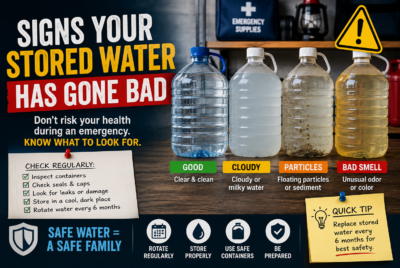
- Bad Stored Water: 9 Warning Signs
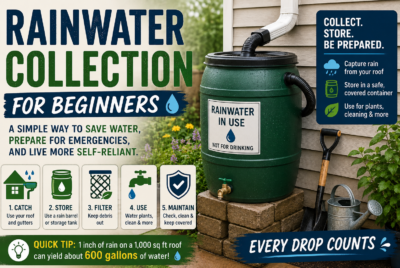
- Rainwater Collection For Beginners
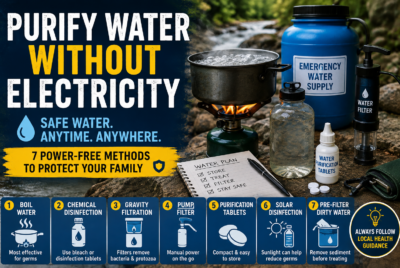
- Purify Water Without Electricity