Long-Term Food Storage: What Foods Actually Last 10–25 Years?
Unexpected emergencies can disrupt daily life faster than many families realize. Hurricanes, winter storms, wildfires, power outages, and supply chain shortages have shown Americans how important it is to have reliable food reserves at home. Fortunately, building long-term food storage doesn’t require expensive survival gear or special training. With a few affordable staples and proper storage methods, you can create greater peace of mind and help protect your family during uncertain times.
⭐ Quick Answer: Long-Term Food Storage
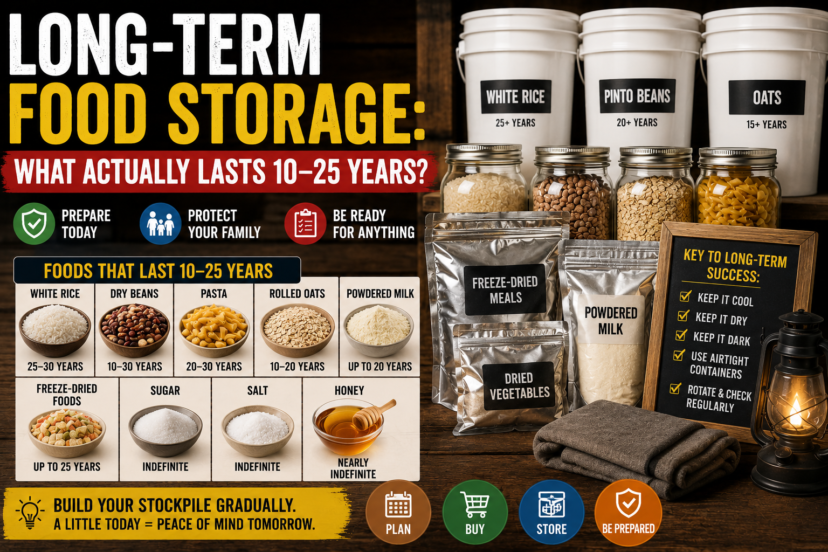
Long-term food storage works best with shelf-stable foods such as white rice, dry beans, oats, pasta, powdered milk, sugar, salt, and freeze-dried meals. When stored properly, many of these foods can last anywhere from 10 to 25 years.
Key Takeaways
Most likely cause: Many households don’t keep enough long-lasting food on hand or store it properly for extended emergencies and supply disruptions.
Usually serious? It can be. An inadequate food supply during a prolonged emergency may increase stress and make it difficult to meet your family’s nutritional needs.
First thing to check: Review your current pantry for shelf-stable foods, expiration dates, storage conditions, and whether you have enough supplies to last beyond a few days.
Best solution: Build a long-term food supply using affordable, shelf-stable staples such as rice, beans, oats, pasta, and freeze-dried foods, then store them in a cool, dry place and rotate your inventory regularly.
🥫 Why Long-Term Food Storage Matters
Most grocery stores only keep a limited supply of food on hand.
Events that may disrupt access to food include:
- Hurricanes
- Wildfires
- Winter storms
- Flooding
- Long-term power outages
- Supply chain disruptions
Long-term food storage helps families:
- Reduce stress during emergencies
- Become more self-reliant
- Avoid panic buying
- Save money over time
- Build confidence and peace of mind
Preparedness is not about fear. It’s about reducing uncertainty.
🍚 Best Foods For Long-Term Food Storage
Not every food stores equally well. Some foods can remain usable for decades when stored correctly.
White Rice
Estimated Shelf Life:
- 25–30 years
White rice is one of the most popular emergency food storage staples because it is:
- Affordable
- Easy to prepare
- High in calories
- Widely available
Dry Beans
Estimated Shelf Life:
- 10–30 years
Popular varieties include:
- Pinto beans
- Black beans
- Kidney beans
Beans provide valuable protein and fiber.
Pasta
Estimated Shelf Life:
- 20–30 years
Pasta stores extremely well when protected from moisture.
Rolled Oats
Estimated Shelf Life:
- 10–20 years
Oats are excellent for breakfast and emergency meals.
Powdered Milk
Estimated Shelf Life:
- Up to 20 years
Useful for:
- Baking
- Cooking
- Family meals
Freeze-Dried Foods
Estimated Shelf Life:
- Up to 25 years
Freeze-dried meals are popular among preparedness enthusiasts because they are lightweight and easy to store.
Sugar
Estimated Shelf Life:
- Indefinite
When kept dry, sugar can last for decades.
Salt
Estimated Shelf Life:
- Indefinite
Salt supports both cooking and food preservation.
Honey
Estimated Shelf Life:
- Nearly indefinite
Honey has an incredible natural shelf life.
🚫 Foods That Do Not Store Well Long-Term
Some foods are better suited for short-term storage.
Examples include:
- Brown rice
- Cooking oils
- Whole wheat flour
- Crackers
- Chips
These foods generally contain oils that may spoil more quickly.
📦 Proper Long-Term Food Storage Methods
Storage conditions matter just as much as the food itself.
Keep Foods Cool
Lower temperatures help preserve shelf life.
Protect Foods From Moisture
Humidity can damage supplies.
Use Airtight Containers
Good options include:
- Food-grade buckets
- Mylar bags
- Oxygen absorbers
Avoid Direct Sunlight
Sunlight and heat accelerate food deterioration.
Label Everything
Write purchase dates clearly.
⚡ Long-Term Food Storage For Power Outages
Some foods require little preparation.
Good options include:
- Peanut butter
- Canned tuna
- Protein bars
- Canned soup
- Trail mix
These foods are especially useful during extended blackouts.
💰 Building Long-Term Food Storage On A Budget
Preparedness does not require huge investments.
Start with affordable staples:
- Rice
- Beans
- Pasta
- Oats
- Canned foods
Buying a few extra items during regular shopping trips allows families to build supplies gradually.
Small steps often produce the biggest long-term results.
🌎 Better Urban Survival Strategies
Long-term food storage works best when combined with:
Emergency Water Storage
Water remains the highest priority.
First Aid Supplies
Medical preparedness is equally important.
Backup Power Options
Portable chargers and flashlights provide additional security.
Family Emergency Plans
Preparation becomes easier when everyone understands the plan.
🛠 Common Long-Term Food Storage Mistakes
Buying Foods Nobody Eats
Choose foods your family already enjoys.
Ignoring Rotation
Inspect food supplies every year.
Storing Food In Hot Areas
Garages and attics may shorten shelf life.
Forgetting Water Storage
Many foods require water for preparation.
Purchasing Everything At Once
Build your pantry gradually.
🏠 How Much Food Should Families Store?
Preparedness experts often recommend:
Minimum Goal
Three days of food.
Better Goal
Two weeks of supplies.
Long-Term Goal
Several months of food storage.
Build at your own pace. There is no need to rush.
👨⚕️ When To Consult A Professional
Seek guidance from qualified professionals when appropriate.
Examples include:
- Emergency management officials during disasters
- Medical professionals regarding dietary restrictions
- Doctors for food allergies or medical conditions
- Local authorities regarding evacuation orders
- Nutrition specialists for special dietary needs
Always prioritize health and safety.
❓ FAQs: Long-Term Food Storage
What food lasts the longest in storage?
White rice, dry beans, salt, sugar, and freeze-dried foods are among the longest-lasting foods.
Can food really last 25 years?
Yes. Properly stored foods can remain usable for decades under ideal conditions.
What foods should beginners buy first?
Rice, beans, oats, pasta, and canned foods are excellent starting points.
Does brown rice last as long as white rice?
No. Brown rice contains oils that reduce shelf life.
How often should I rotate stored food?
Inspect supplies every six to twelve months.
Should I store water with my food?
Absolutely. Water is even more important than food during emergencies.
Is long-term food storage expensive?
No. Most families can build food supplies gradually while staying within their budget.
📌 Final Thoughts
Long-term food storage is one of the smartest and most affordable ways to improve your family’s preparedness. You don’t need expensive equipment or advanced survival skills to get started.
Begin with a few simple staples and add supplies over time. Those small efforts can provide greater peace of mind, improve self-reliance, and help your family stay prepared for whatever challenges the future may bring.
Disclaimer: This article is for general educational purposes only. Emergency needs, regional regulations, and disaster risks may vary. Always follow local laws, official guidance, and manufacturer instructions when applicable.
 Explore more: